Integrated Ceiling Fan Lights vs Light Kits
Choose integrated ceiling fan lighting when you prioritise a clean built-in profile and are comfortable with model-specific lighting parts and controls; choose a ceiling fan light kit when you prioritise replaceable lighting parts or decorative flexibility and the fan is explicitly compatible with that kit. Neither format is inherently brighter or easier to dim: performance and serviceability depend on the actual light source, control system, and supported replacement parts.
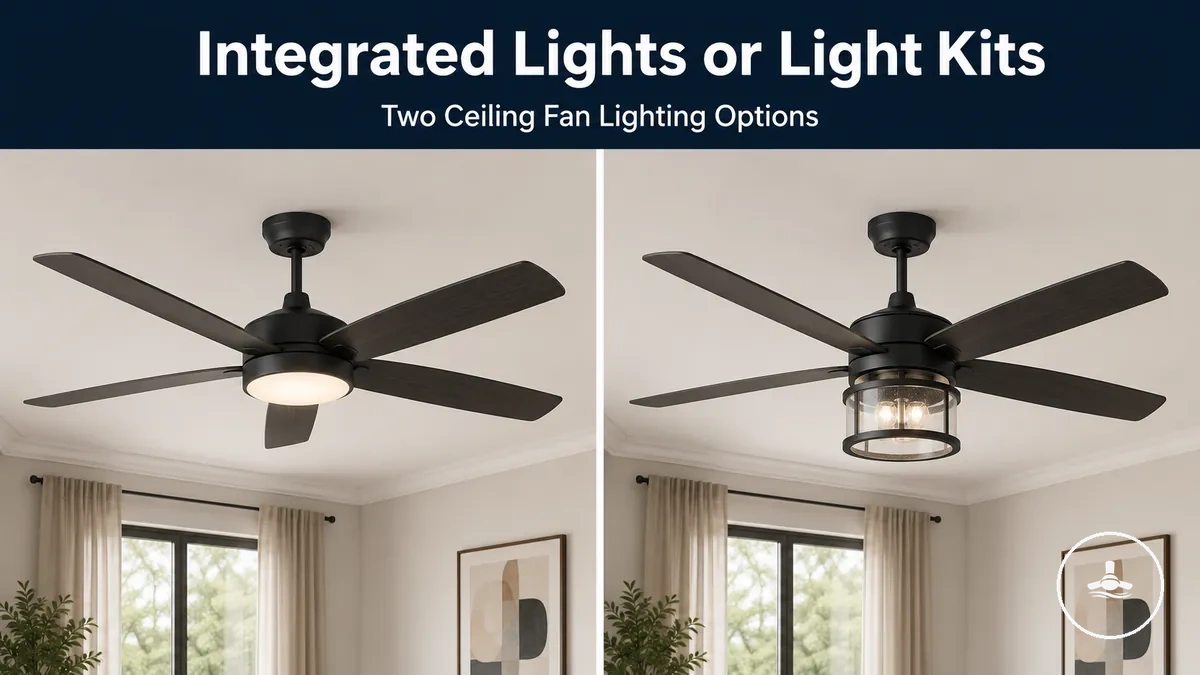
Integrated light or light kit: quick decision guide
Use four decision attributes: fixture profile, compatibility, control fit, and future serviceability. The best format is the one that meets your room and maintenance priorities without leaving a physical, electrical, or parts-support mismatch.
| Lighting option | Best fit when | Verify before buying | Main trade-off |
|---|---|---|---|
| Integrated ceiling fan lights | You want a clean, built-in fixture profile and accept a model-linked lighting assembly. | Lumen output and light distribution; dimming/colour controls; LED module, driver and diffuser serviceability; replacement-part support. | Simpler built-in appearance, but future lighting service may depend more heavily on model-specific parts. |
| Ceiling fan light kits | You want more potential flexibility for bulbs, shades or a replaceable lighting assembly and the fan is light-kit ready. | Mounting/fitter fit; connector and wiring compatibility; receiver/control support; the fan’s supported or approved kit range. | More component flexibility when supported, but compatibility must be checked more carefully before purchase or retrofit. |
Performance
Compare stated light output, distribution and supported controls; do not infer brightness from the lighting format alone.
Compatibility
Treat physical fit, electrical/control fit and manufacturer-supported fit as separate checks. A failure in any one can rule out the option.
Serviceability
Check what can actually be replaced—bulb, shade, LED module, driver, receiver or full assembly—and whether that part is supported for the model.
This comparison is about lighting format, not whether a ceiling fan should have a light at all. Once the format fits the room and fan, compare model-specific brightness, controls, wiring requirements and replacement support.
What Integrated Lights and Light Kits Mean
Integrated ceiling fan lighting is part of the fan’s lighting assembly, commonly using an LED module behind a diffuser. A ceiling fan light kit is a separate lighting assembly attached to a compatible fan. The structural difference changes the replacement path: integrated lighting is usually more model-linked, while a light kit adds a separate compatibility check for its mounting and electrical/control connection.
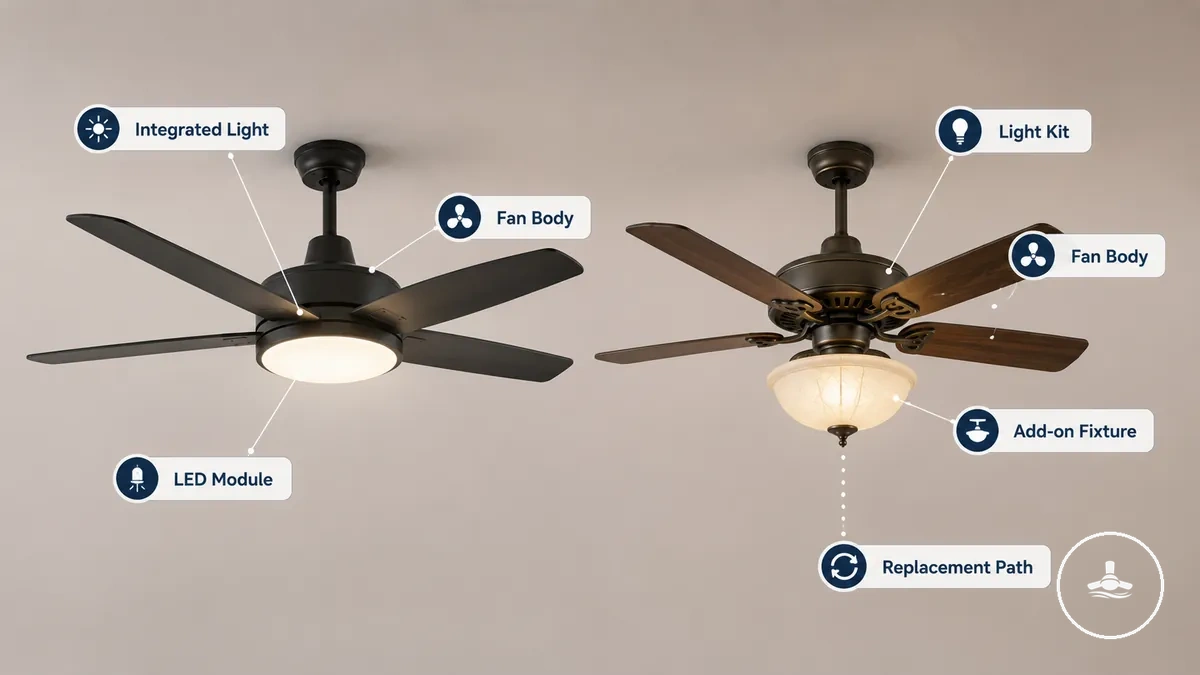
What Integrated Lights and Light Kits Mean becomes clearer when the two lighting formats are viewed side by side. The image below labels the visible difference between a built-in light and a separate light kit.
| Term | What it means | What it affects |
|---|---|---|
| Integrated ceiling fan lights | A built-in lighting system that is part of the fan body, often using an integrated LED module. | The replacement path may be linked to the fan model and its supported components. |
| Ceiling fan light kit | A separate or add-on fixture designed to attach to a compatible ceiling fan. | Compatibility and the replacement path may depend on the fan model and supported light kit. |
A ceiling fan light kit is a separate assembly rather than a built-in part of the fan body. Whether it can be fitted or replaced depends on compatibility with the fan model. For a broader terminology explanation, see light kit meaning.
This page compares lighting format choices rather than the broader decision between a ceiling fan with lights and a ceiling fan without lights. The following H3 sections define each lighting format in more detail before moving into compatibility and replacement considerations.
Integrated LED Modules Built Into the Fan
Integrated LED modules built into the fan are lighting units that form part of the fan housing rather than attaching as a separate fixture. The integrated LED module sits behind a diffuser within the built-in lighting design, creating a cleaner profile. Replacement flexibility, service access, and control options may depend on the fan model, reflecting model dependency.
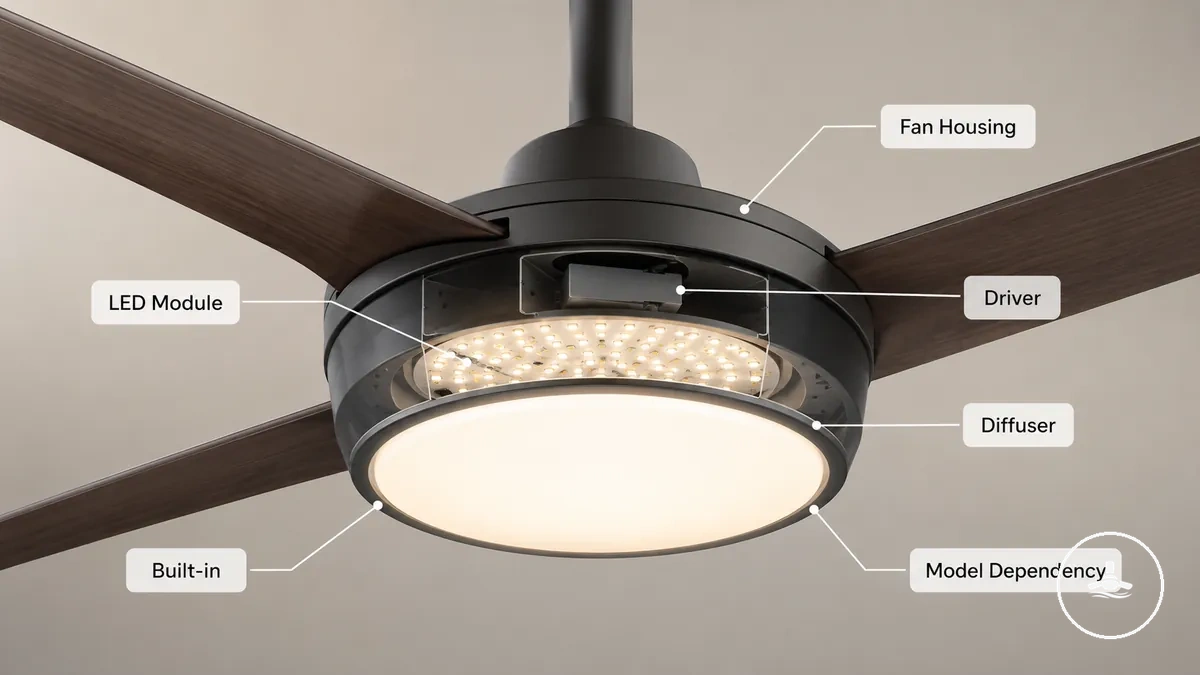
- Integrated LED module: The built-in light source designed as part of the fan housing.
- Diffuser: The cover positioned over the integrated LED module to distribute light.
- Driver: The electronic component that may support the integrated LED module, depending on the fan design.
- Control dependency: Lighting controls, dimming functions, and replacement flexibility may vary according to the fan model and its supported components.
An integrated LED module is built into the fan, but that does not automatically mean it cannot be serviced or replaced. Serviceability and replacement availability depend on the fan model, component design, and available replacement parts.
Add-On and Replacement Ceiling Fan Light Kits
An add-on or replacement ceiling fan light kit is a separate lighting assembly that may be supplied with a fan, added to a compatible fan, or replaced when the fan supports that format. A ceiling fan light kit attaches through a fitter and connector rather than being built into the fan body, and it may include a shade, diffuser, and bulb or LED board. Mounting compatibility and electrical compatibility depend on the compatible fan, so replacement options are model dependent.
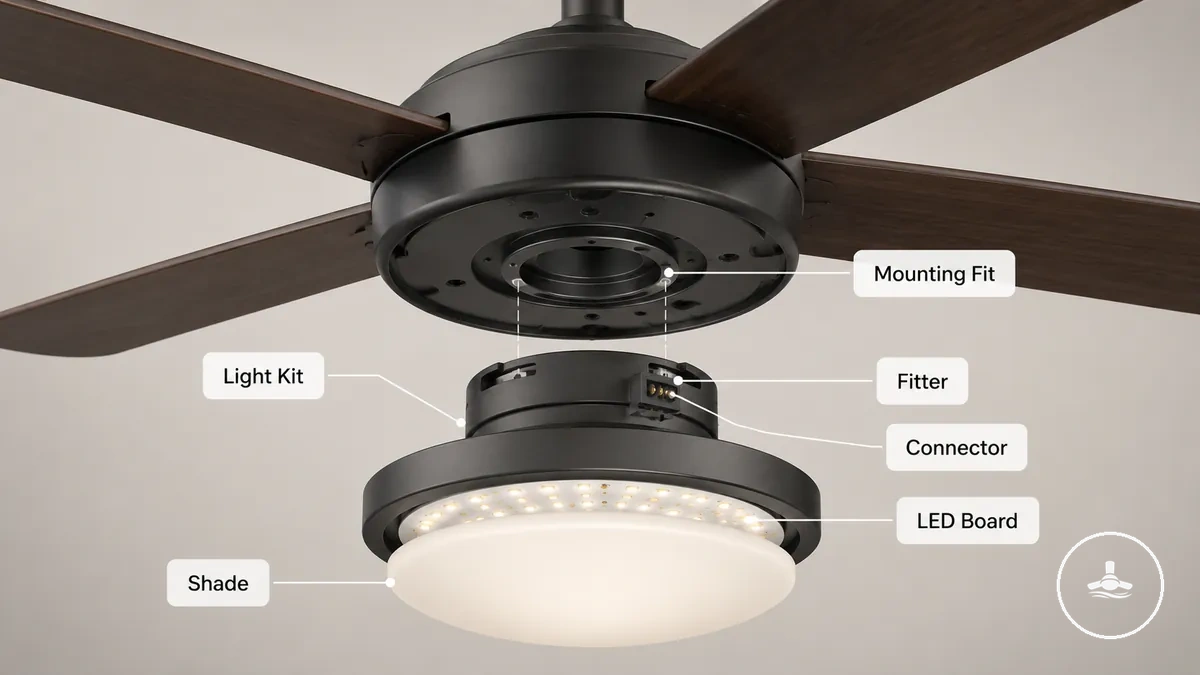
- Fixture body: The main light assembly that attaches to the fan.
- Shade or diffuser: Covers and distributes the light output.
- Bulb or LED board: The light source used within the kit, depending on the design.
- Connector: Links the light kit to the fan's electrical connection.
- Mounting fit: The fitter and mounting arrangement must match a compatible fan.
A replacement light kit is a separate assembly, but replaceable does not mean universally compatible. Add-on light kit compatibility depends on the fan's mounting design, connector arrangement, and supported light kit format.
Lighting Performance and Dimming Differences
Lighting performance is determined by the light source and control chain, not by integrated-versus-kit format alone. Compare stated lumen output and light distribution for brightness, then verify that the LED module or bulb, driver, receiver, remote or wall control, and dimming functions are specified to work together. For colour temperature, compare the fixed or adjustable CCT options stated for the model rather than assuming either format offers tuning.
| Performance factor | Integrated light tendency | Light kit tendency | What to verify |
|---|---|---|---|
| Brightness | May depend on the LED module and driver. | May depend on the bulb type or LED board used. | Lumen output supported by the lighting system. |
| Light distribution | Often influenced by the diffuser and integrated fixture design. | May vary with the shade, diffuser, and bulb arrangement. | Beam spread and room coverage. |
| Dimming | May depend on driver, receiver, and remote control compatibility. | May depend on the bulb type and dimmer support. | Control compatibility with the lighting system. |
| Colour temperature | Depends on the LED module design. | May vary when compatible bulbs or LED boards can be changed. | Available lighting options for the model. |
| Control compatibility | Often operates within the fan's integrated control system. | May depend on the receiver, connector, and supported controls. | Remote control and dimming compatibility. |
When broad, even light distribution is the goal, the diffuser, beam spread, and lighting design can influence room visibility more than the lighting format itself. Integrated lighting may suit a cleaner controlled design, while a light kit may offer more flexibility through bulb type or shade replacement when supported by the compatible fan. The most suitable option depends on the intended room use and the lighting components provided.
Dimming and colour temperature depend on the lighting hardware and supported controls rather than the lighting format alone. Before deciding between the two approaches, review LED brightness and dimming to evaluate dimmer support, lighting control, and remote-control behaviour for the specific fan model.
Brightness and Light Distribution
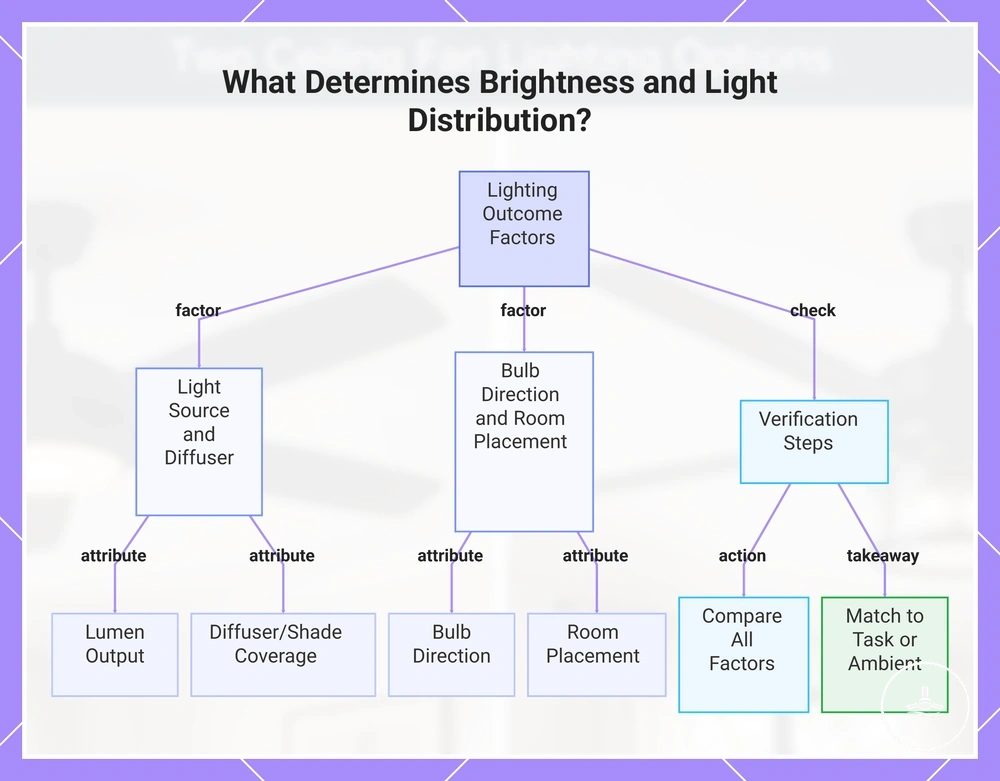
Brightness is the amount of light output, commonly specified in lumens, while light distribution describes where that light is spread. Lumen output, diffuser or shade shape, bulb direction, fixture position and room surfaces can all affect perceived brightness and coverage, so the useful comparison is the model’s stated output plus how its optics suit the room.
- Lumen output: Light output depends on the light source rather than the lighting format by itself.
- Diffuser or shade coverage: A diffuser can promote broader light spread, while a shade may influence light distribution depending on its design and any obstruction it creates.
- Bulb direction: The direction of the light source can affect beam spread and where light is concentrated.
- Room placement: Fixture position can influence room coverage, task lighting, and ambient lighting.
- Verification: Compare the light source, diffuser or shade, bulb direction, and expected room coverage instead of assuming fixed brightness from the lighting format.
For example, a task-lighting area may benefit from more focused light, while ambient lighting may rely on broader light spread across the space. Before selecting a lighting format, verify the expected lumen output, diffuser or shade design, bulb direction, and intended room coverage for the installation.
This chart shows the key factors that influence brightness and light distribution and the verification steps to evaluate lighting outcomes.
Dimming, Colour Temperature, and Remote Control Fit
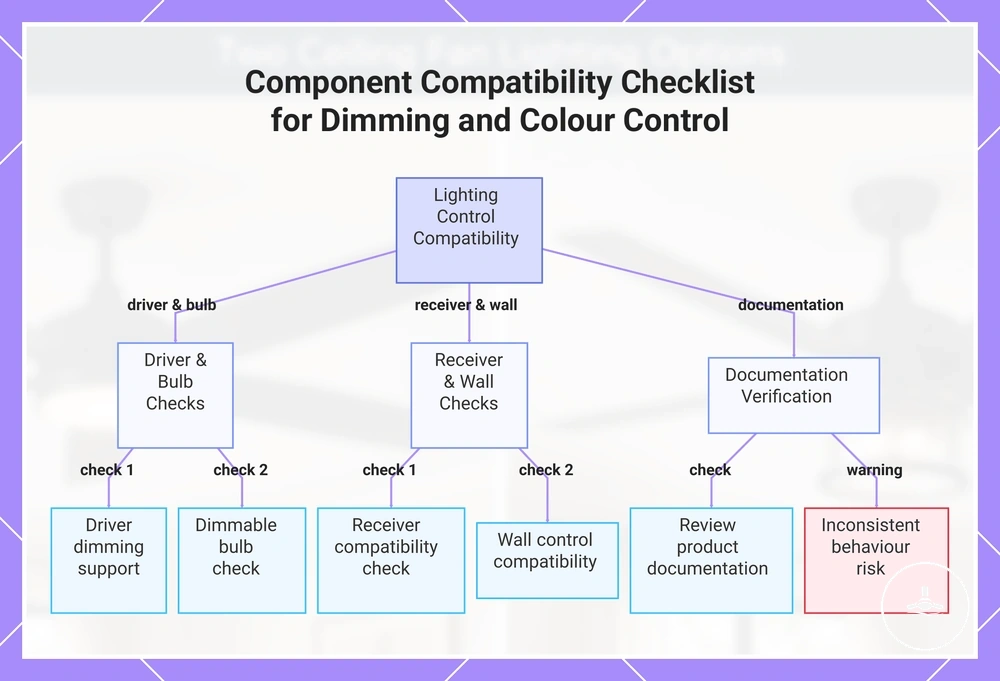
Dimming requires a compatible light source and control path. An integrated LED needs a driver and controls that support the intended dimming function; a light kit needs a dimmable bulb or LED board plus compatible controls. Adjustable colour temperature additionally requires a lighting module or bulb that supports that function, and remote operation depends on receiver/control compatibility.
- Driver support: Confirm that the LED module and driver support the intended dimming or colour adjustment functions.
- Bulb dimmability: Check that any light kit uses a dimmable bulb when dimming is required.
- Receiver compatibility: Verify that the receiver supports the selected remote control and lighting functions.
- Wall-control fit: Confirm that the wall control is a compatible control for the lighting system in use.
- Documentation limits: Review the product documentation to confirm the supported lighting control features before relying on dimming or colour adjustment.
If the driver, receiver, dimmable bulb, or compatible control do not match, dimming response, colour temperature adjustment, or remote control behaviour may become limited or inconsistent because the lighting components may not support the requested function. Checking component compatibility before installation can help achieve more stable operation when the lighting system is designed to support those control features.
This chart summarizes the component compatibility checks required for reliable dimming, colour temperature adjustment, and remote control behaviour.
Compatibility Rules for Light Kits and Built-In Lights
Compatibility should be checked in three separate layers: physical fit, electrical/control fit, and manufacturer-supported fit. A light-kit-ready housing, mounting points, connector type, wiring/control system and replacement-part support determine whether a light kit or replacement integrated-light component belongs with a particular fan model. Passing one layer does not prove the others.
| Entity or part | Compatibility attribute | Value or condition | Effect or decision |
|---|---|---|---|
| Fan housing | Light-kit-ready housing | The fan must be designed to accept the intended lighting format. | If the housing is not light-kit ready, reject the add-on kit path for that fan. |
| Connector | Connector type | The connector and supported electrical interface must match the fan and lighting assembly. | A connector mismatch means the combination should not be treated as compatible. |
| Mounting point | Mounting points | The fitter and mounting points must align with the fan body or switch housing. | A physical mismatch rules out a secure attachment. |
| Control system | Receiver and control support | The receiver, wall control or remote must support the intended light functions. | A control mismatch can remove or limit switching, dimming or colour functions. |
| Replacement parts | Supported part availability | The required module, driver, diffuser, kit or other replacement part must be supported for the model. | Part availability directly affects future serviceability. |
If the fan housing or mounting points do not match, a light kit may not achieve a suitable physical fit. Even when the parts fit physically, the connector type and control system may still prevent an acceptable electrical fit. Manufacturer support and replacement-part availability can provide an additional compatibility check when supported parts are available.
If a lighting option does not satisfy the physical fit, electrical fit, or manufacturer support criteria, it may need to be rejected for that fan model. A safe fit depends on verifying the housing, connectors, mounting points, control system, and available replacement parts before selecting a lighting path.
Light Kit Adaptable Fans and Universal Kit Limits
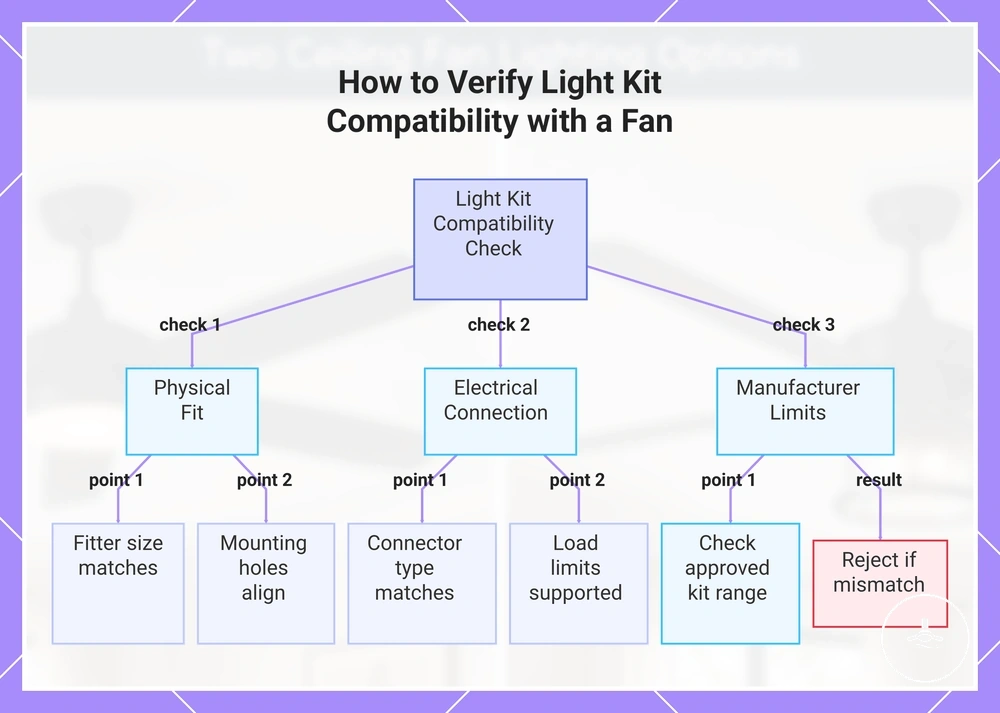
A light-kit adaptable fan must be designed to accept an add-on kit or replacement light kit. A universal kit label can suggest broad use, but it is not final proof of compatibility. The fit still depends on the fan’s fitter size, mounting holes, connector type, switch housing, load limits, and approved kit range.
- Fitter size: Verify that the fitter size matches the fan’s supported light-kit connection.
- Mounting holes: Check that the mounting holes align with the fan body or switch housing.
- Connector type: Confirm that the connector type matches the fan’s supported connection format.
- Switch housing: Verify that the switch housing is designed to accept the add-on kit.
- Load limits: Check whether the fan supports the bulb load or LED load required by the kit.
- Approved kit range: Compare the kit against the approved kit range or manufacturer limits before treating it as compatible.
If a broadly compatible kit does not match the fan’s physical or electrical requirements, the kit may need to be rejected for that fan. Documentation and manufacturer limits should guide the final compatibility check.
This chart outlines the essential compatibility checks for light kits and fans, including physical fit, electrical connection, and manufacturer limits.
Model-Specific Limits for Integrated LED Replacement
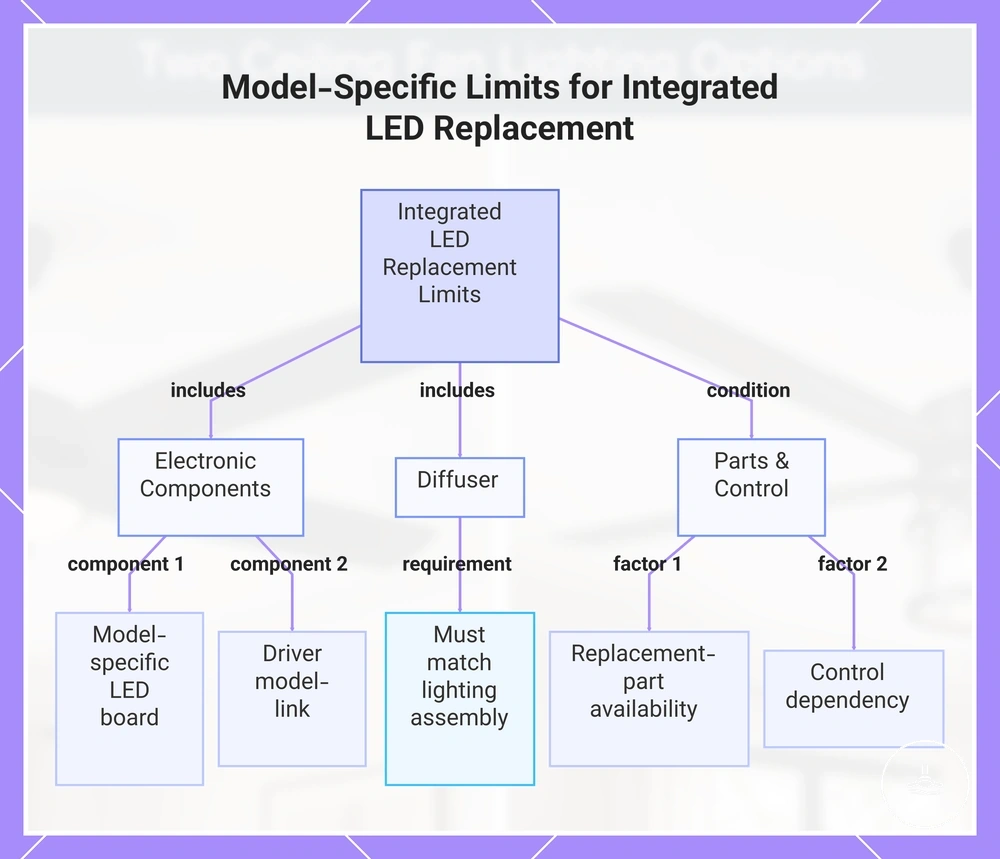
Model-specific integrated LED replacement depends on the fan model, the integrated lighting assembly, and parts availability. The LED board, driver, diffuser, and control dependency may determine whether a replacement module is easier to obtain, harder to source, or unavailable. These conditions describe replacement compatibility rather than confirming a fault or predicting a replacement outcome.
- LED board: Replacement depends on whether a model-specific LED board or replacement module is available.
- Driver: The driver may be model-linked and can influence replacement compatibility.
- Diffuser: The diffuser should match the integrated lighting assembly used by the fan model.
- Parts availability: Service access and integrated LED replacement may depend on replacement-part availability and control dependency for the specific fan model.
When model-specific parts are available, integrated LED replacement may be more straightforward. When compatible components are unavailable, replacement options may become more limited, depending on the fan model and its supported parts.
This chart shows the key components and conditions that determine integrated LED replacement compatibility for a given fan model.
Installation and Wiring Differences
Installation and wiring differences affect suitability; this section is selection guidance, not wiring instructions. The fan’s wiring path, receiver, wall-control arrangement and construction determine whether an integrated light or add-on kit can operate as intended. Electrical installation or alteration should follow the product documentation and the licensing and electrical-safety requirements that apply where the fan is installed.
| Wiring factor | Integrated light consideration | Light kit consideration | Safety or suitability note |
|---|---|---|---|
| Wiring path | May follow the fan's built-in lighting design. | May depend on support for an add-on lighting assembly. | Compatibility depends on the fan model and lighting format. |
| Receiver | May operate through an integrated control receiver. | May require compatibility with the existing control receiver. | Receiver design can influence setup conditions. |
| Wall switch | Wall switch behaviour may depend on the fan's control design. | Wall switch behaviour may vary with the supported light kit. | Control behaviour should be confirmed before selection. |
| Fan construction | Integrated construction may limit lighting changes. | Light-kit-ready construction may allow supported add-on options. | Suitability depends on the fan's design. |
| Documentation | Follow product documentation for supported wiring and controls. | Follow product documentation for compatible light-kit configurations. | Documentation helps confirm safe and suitable installation. |
When comparing an integrated light with a light kit, the wiring path, receiver design, wall switch behaviour, and fan construction may create different setup conditions. Electrical work and compatibility checks should follow local rules and product documentation. The appropriate installation approach depends on the supported configuration described in the product documentation.
A dedicated wiring explanation is helpful when the installation decision depends on existing electrical connections or lighting requirements. For more detailed guidance, see wiring requirements for lights.
Existing Fan Connections for Add-On Light Kits
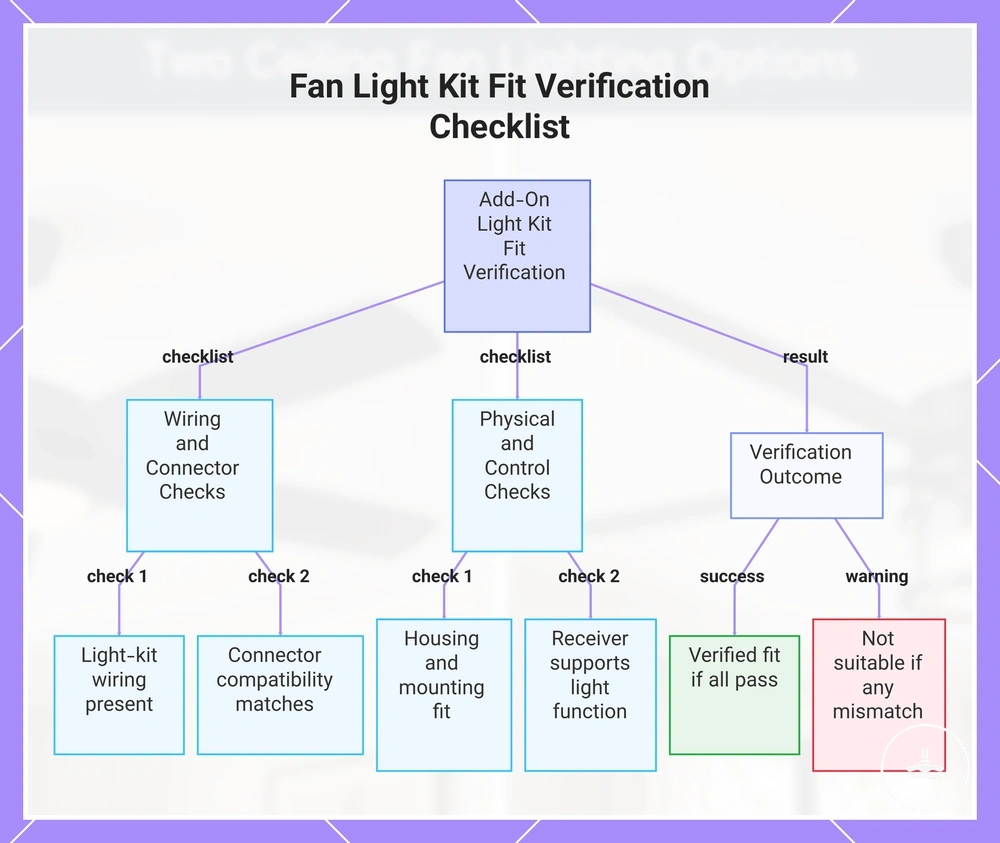
Existing fan connections determine whether an add-on light kit may be ready for use with that fan. The fan needs suitable light-kit wiring, switch housing access, connector compatibility, control receiver support, and mounting hardware before the kit can be considered a verified fit. This checklist verifies readiness only; it does not provide wiring instructions.
- Light-kit wiring: Check whether the existing fan includes supported light-kit wiring or a kit-ready connection.
- Switch housing access: Verify that the switch housing can support the add-on light kit format.
- Connector compatibility: Confirm that connector compatibility matches the fan and kit requirements.
- Receiver support: Check whether the control receiver supports the light function and selected controls.
- Mounting hardware: Verify that the mounting hardware matches the fan body and kit design.
If housing access, connector compatibility, control receiver support, or mounting hardware does not match, the add-on kit may not be suitable for that existing fan. Product documentation and an installer check should guide the final decision without relying on wire-by-wire assumptions.
This chart shows the key checks to verify if an existing fan is ready for an add-on light kit and the possible outcomes.
Control and Wiring Implications for Integrated Lighting
Integrated lighting is designed as part of the fan's electrical system and control system, but light operation still depends on the correct receiver, driver, wall control, remote setup, and switch configuration. Because these components operate as an integrated control path, dimming and lighting adjustment may vary when the supported configuration differs from the fan design. The expected lighting outcome therefore depends on the installed configuration and the product documentation.
- Receiver: The receiver should support the integrated lighting functions provided by the fan.
- Driver: The driver can influence light operation and any supported dimming behaviour.
- Wall control: Wall control and remote setup should match the intended switch configuration.
- Dimming setup: Dimming and light adjustment depend on the supported control system rather than the integrated lighting format alone.
If the receiver, driver, wall control, or switch configuration does not match the designed electrical system, lighting operation or adjustment may be limited. Confirm supported control conditions through the product documentation instead of assuming every integrated lighting system follows the same wiring design.
Design, Fixture Profile, and Shade Replacement
The clearest design trade-off is fixture profile versus future decorative flexibility. Integrated lighting often keeps the diffuser close to the fan body, while a light kit can add depth through a shade, diffuser or visible bulb area. A light kit may offer more changeable visible components when supported; an integrated design may provide a more unified appearance.
| Design factor | Integrated light effect | Light kit effect | Decision cue |
|---|---|---|---|
| Fixture profile | May create a low-profile appearance when the diffuser is built into the fan body. | May add visible fixture depth below the fan. | Choose based on how much projection suits the room style. |
| Diffuser or shade type | Usually depends on the integrated diffuser used by the fan model. | May allow a separate shade or diffuser when supported. | Check whether the visible cover can be changed later. |
| Bulb visibility | Often hides the light source behind a built-in diffuser. | May expose or partially show the bulb depending on the shade design. | Use bulb visibility as an appearance preference, not a performance assumption. |
| Shade replacement | May be limited by model-specific diffuser availability. | May offer more shade replacement options when the kit supports them. | Compare replacement shade availability before selecting the format. |
| Decorative flexibility | May suit a consistent built-in appearance. | May suit future appearance changes through shade or bulb-style updates. | Choose the format that matches the desired maintenance and appearance flexibility. |
Integrated diffuser design may suit a low-profile fixture profile when the goal is a simpler visual profile. A separate light kit may suit shade replacement, visible fixture detail, or decorative flexibility when supported by the fan and kit. Neither format is automatically better for appearance; the preference depends on the desired profile and future replacement needs.
If the room style may change later, a light kit with supported shade replacement may offer more visible adjustment options. If a compact appearance matters more than changing the shade or bulb presentation, integrated lighting may be the clearer format choice.
Failure Risk and Repairability Tradeoffs
Repairability depends on which part failed and whether a supported replacement exists, not on the lighting format alone. A light-kit problem may involve a bulb, socket, shade or full kit; an integrated-light problem may involve the LED board/module, driver, receiver or model-specific diffuser. Use the symptom-to-check table as a repair-path guide, not as electrical fault confirmation.
| Symptom | Likely attribute issue | Check | What it means |
|---|---|---|---|
| Bulb or LED area does not light | Bulb, LED board, or light source condition | Check the supported replacement path for the light kit or integrated LED. | A light kit may allow a simpler part change when supported; an integrated LED may require a model-check. |
| Light cuts out or behaves inconsistently | Driver or control-related condition | Check whether the driver or related control part is replaceable for the fan model. | Repairability may depend on service access and compatible parts. |
| Remote or control response changes | Receiver or control path issue | Check the receiver and supported control configuration. | The decision may involve control service rather than only the light source. |
| Shade or diffuser is damaged | Shade, diffuser, or cover availability | Check whether the shade, diffuser, or replacement cover is available. | A light kit may offer a different replacement path than a model-specific integrated diffuser. |
| Needed part is unavailable | Unavailable parts or model-specific limit | Check parts availability before assuming repair or full replacement. | The outcome may shift toward service review, replacement assembly, or another qualified option. |
If a light kit has a problem, repairability may be easier when the affected bulb, shade, or replacement assembly is separately supported. If an integrated LED has a problem, serviceability may depend more on the LED board, driver, receiver, and model-specific part availability. The practical repair path should be checked against the fan model before deciding what can be replaced.
When a symptom appears, the table helps connect the problem symptom to a likely part and decision path. It should not be used as electrical fault confirmation or as a substitute for qualified service advice.
When a Light Kit Can Be Repaired or Replaced
Light kit repair or replacement is usually possible when supported parts are available and safe access to the affected components exists. Replaceable bulbs, visible shades, and an approved replacement light kit may provide a simpler replacement path, while electrical components often require additional assessment. The appropriate repair path depends on the failed part, kit availability, and suitable professional qualification where electrical work is involved.
- Replaceable bulb: Confirm that the correct bulb type is supported before replacing the light source.
- Shade fit: Check that the replacement shade matches the existing shade fit and mounting arrangement.
- Socket condition: If the socket condition appears damaged or worn, further assessment may be needed before replacement.
- Wiring connector: Verify that the wiring connector matches the approved replacement light kit instead of assuming another connector is suitable.
- Approved replacement assembly: Use an approved replacement assembly when one is available for the fan model and light kit.
A replaceable bulb or correctly fitting shade may provide a straightforward replacement when the light kit supports those parts. Socket condition, wiring connector issues, or replacement of the complete approved replacement assembly may require more careful evaluation because serviceability depends on the specific fault and supported components. Electrical repairs beyond visible replaceable parts should remain within appropriate professional repair limits.
When a Built-In LED Failure Affects the Fan Choice
Built-in LED failure should influence fan choice when part availability or service access is uncertain. An integrated LED may remain a suitable option, but repair confidence can depend on a model-specific module, a driver issue, a control issue, and the level of manufacturer support available after purchase. The replacement-risk should therefore be considered as one buying criterion rather than as evidence that integrated LEDs are inherently poor choices.
- Replaceable module: If a model-specific module is available and supported, replacement may be more practical when suitable service access exists.
- Driver issue: A driver issue may require a different repair path than replacing the LED module, depending on part availability and service access.
- Control issue: A control issue involving the receiver or related controls may affect lighting operation without indicating that the LED module itself has failed.
- Unavailable part: If a model-specific part is unavailable, the replacement-risk may increase, making manufacturer support and warranty coverage more important to verify.
When comparing fan options, consider how a built-in LED failure could affect future service instead of assuming every integrated LED follows the same replacement path. Repair confidence may vary according to model-specific modules, part availability, and service access. Checking manufacturer support and warranty details can provide a clearer basis for evaluating long-term support before making a fan choice.
Long-Term Value and Serviceability
Long-term value depends on serviceability, replacement-part support and future lighting needs rather than headline price alone. Compare what can be replaced, how model-specific the parts are, whether supported parts are likely to be obtainable through the product’s service channel, and whether the lighting controls still match your intended use.
Integrated lighting may suit buyers who prefer a built-in appearance and fewer visible lighting components. Its long-term value can depend on module availability, warranty support, and whether model-specific parts remain available if future service is needed. These conditions should be considered alongside model support rather than assumed.
Light kits may provide value when replaceable parts, shade availability, or repair flexibility are priorities. Future lighting needs may also be easier to address when supported replacement components remain available for the fan. For a broader comparison of cost and replacement value, compare replacement flexibility with expected service needs instead of focusing on purchase cost alone.
The following criteria organise the main serviceability and value factors that can influence each lighting format over time. Comparing these attributes helps connect lighting format choices with likely long-term value outcomes.
| Value factor | Integrated light impact | Light kit impact | Buyer signal |
|---|---|---|---|
| Replacement flexibility | May depend on model-specific modules. | May allow replacement of supported lighting components. | Useful when future repair flexibility is important. |
| Warranty support | May depend on manufacturer support and product terms. | May vary according to the supported light kit and its components. | Check available support before deciding. |
| Future shade or module availability | Module availability may depend on the fan model. | Shade availability may vary with the supported light kit. | Consider future service needs. |
| Dimming compatibility | Depends on the supported integrated control system. | Depends on compatible bulbs, drivers, and controls. | Verify compatibility with intended lighting use. |
| Maintenance preference | May suit buyers who prioritise a built-in lighting design. | May suit buyers who prioritise replaceable parts and repair flexibility. | Choose according to long-term ownership priorities. |
For long-term ownership, choose the format whose supported replacement path matches your tolerance for future service. Integrated lighting can be a strong fit when model-specific modules and support are available; a light kit can be a strong fit when the fan supports separately replaceable lighting components. Neither format guarantees lower lifetime cost without model-specific parts and warranty information.
Which Lighting Option Fits the Buying Decision
The final choice is conditional: integrated lighting is usually the stronger fit when a clean built-in profile matters most and you accept model-linked serviceability; a light kit is usually the stronger fit when component replacement or decorative flexibility matters more and compatibility is explicitly verified. Dimming, brightness and reliability still need to be checked at model level.
Choose integrated lighting when
A clean built-in profile is the priority and you are comfortable checking model-specific module, driver, control and replacement support.
Choose a light kit when
Replaceable lighting components or decorative flexibility are priorities and the fan is explicitly compatible with the kit’s mounting and electrical/control requirements.
The decision matrix below compares each lighting option by buyer condition and practical constraint. For the broader boundary between choosing a fan with lighting and choosing a fan without lighting, see fans with lights versus without lights. The matrix organises room need, compatibility certainty, design preference, dimming expectations, and serviceability into a final selection direction.
| Buyer condition | Integrated light fit | Light kit fit | Caution |
|---|---|---|---|
| Clean design preference | May fit buyers who want a clean built-in look. | May add visible fixture depth or a separate shade. | Choose based on design preference, not assumed performance. |
| Flexible replacement need | May depend on model-specific parts. | May fit when supported replaceable parts are available. | Verify replacement tolerance before choosing. |
| Dimming expectation | May depend on the integrated control system. | May depend on compatible bulbs, receiver, and controls. | Confirm dimming expectations against supported controls. |
| Compatibility certainty | Depends on the fan model and integrated design. | Depends on light-kit-ready housing and supported kit range. | Avoid assuming fit from format alone. |
| Future repair friction | May be lower when model support and parts remain available. | May be lower when supported parts can be replaced separately. | Serviceability depends on parts, access, and documentation. |
Integrated lighting may be the better direction when the buyer prioritises a clean built-in look and accepts model-dependent serviceability. A light kit may be the better direction when flexible replacement and lower future repair friction matter, provided compatibility is verified. For broader category navigation, use the ceiling fans with lights hub after matching the lighting option to the buying decision.
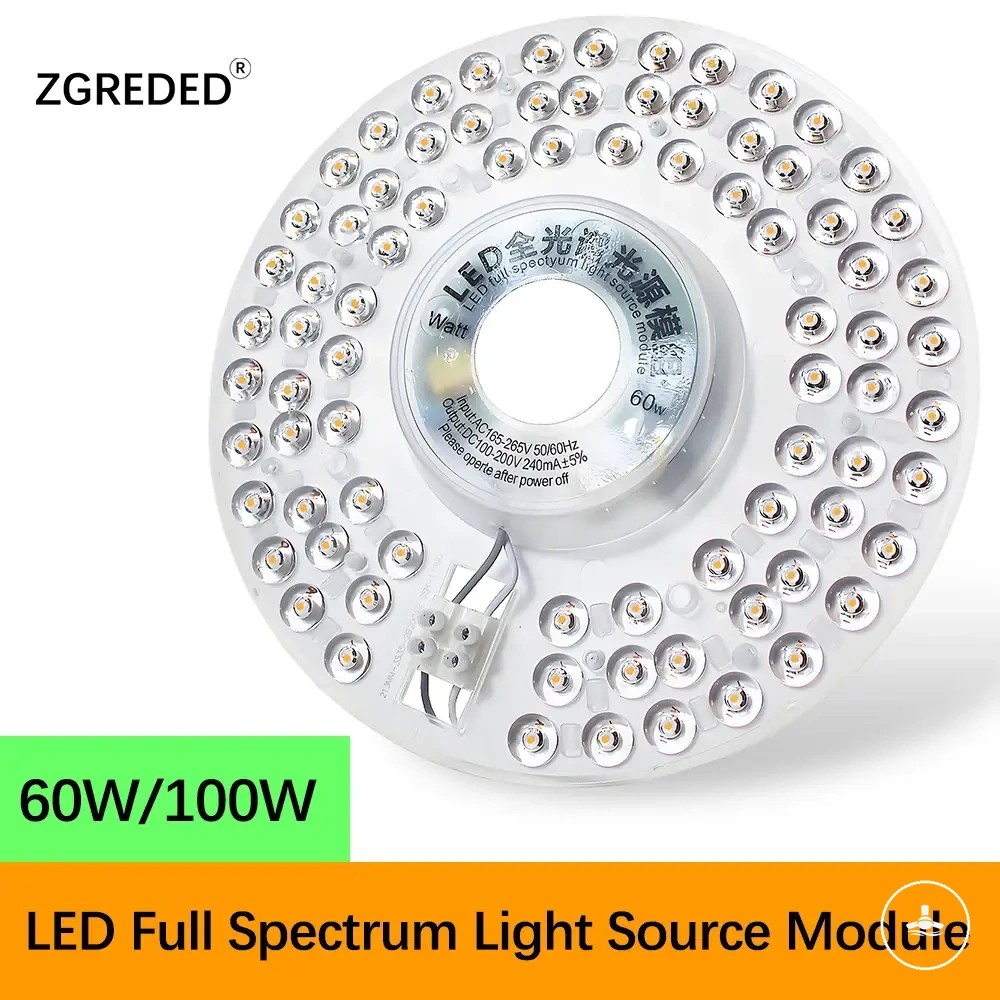
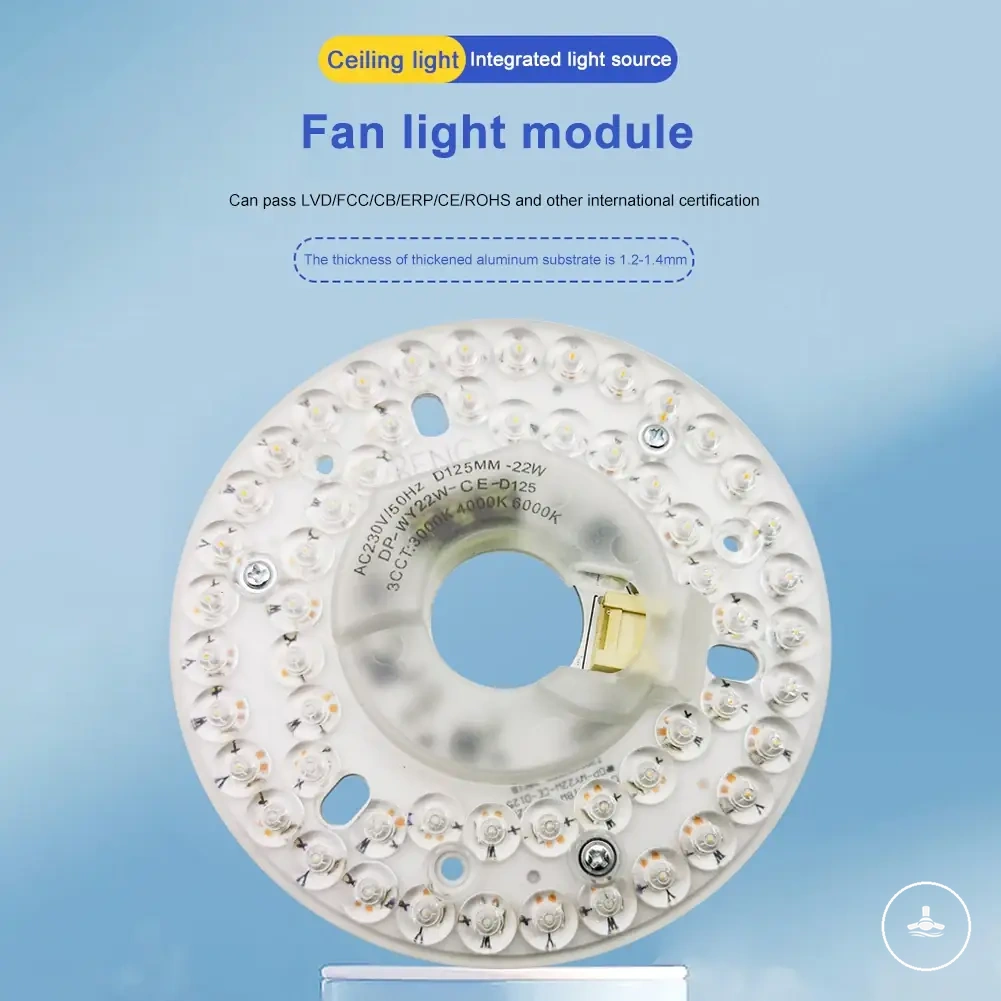
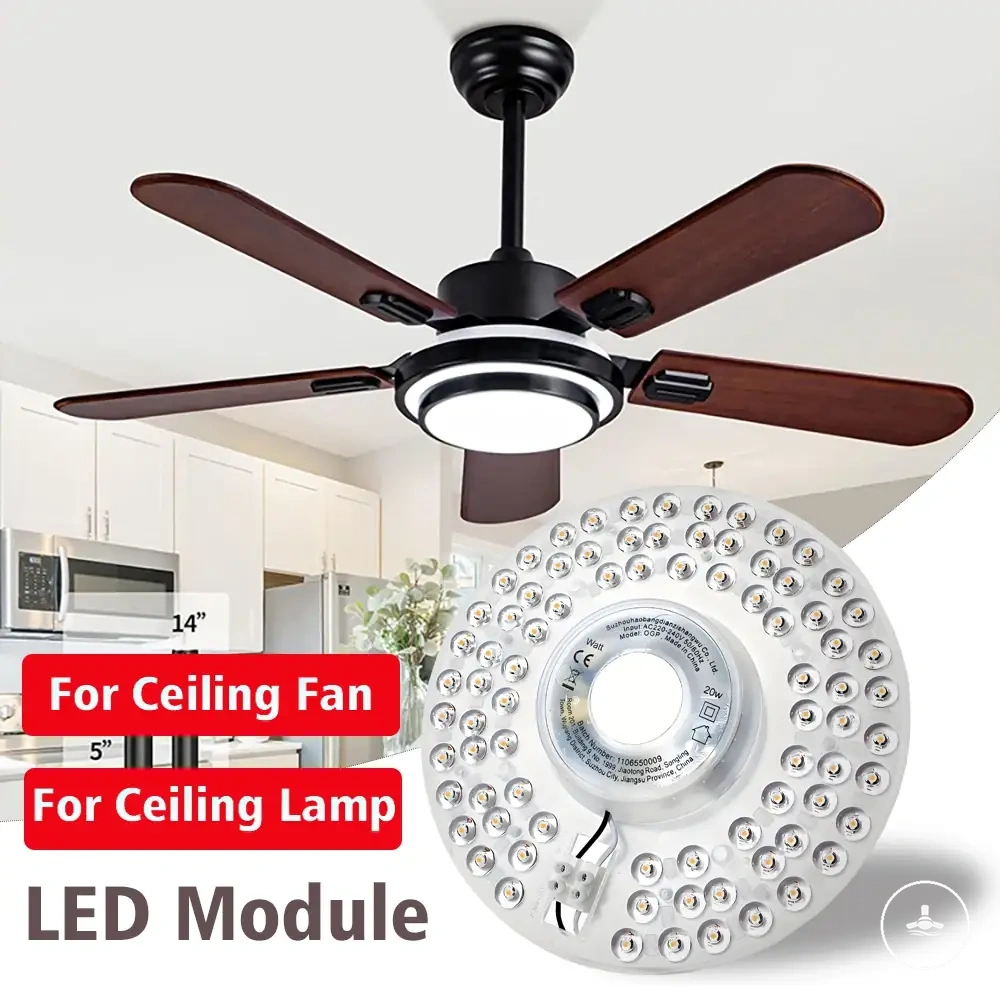
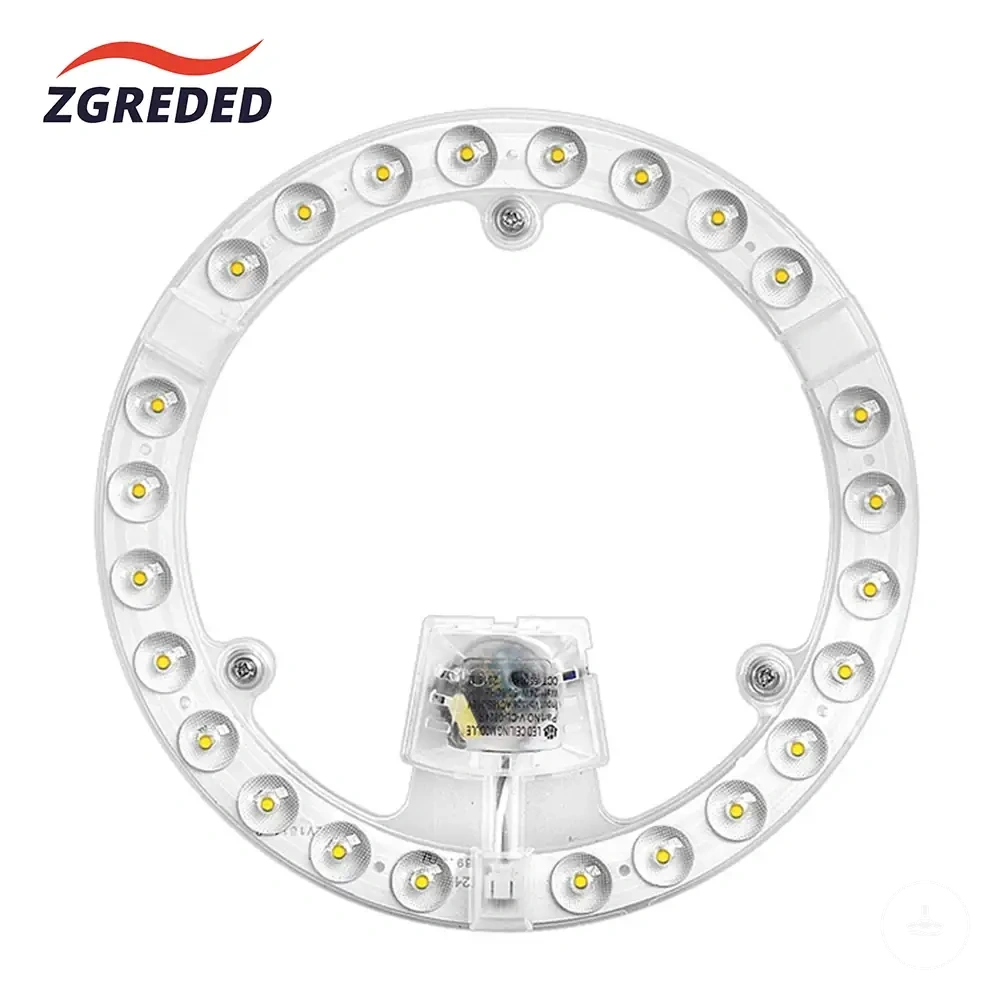
The product examples below are for discovery after you have matched the decision criteria. A product listing is not proof of fan compatibility. Verify the fan model, mounting fit, connector/control requirements and product details before purchase.