Best Ceiling Fans with Lights for Room-Based Selection
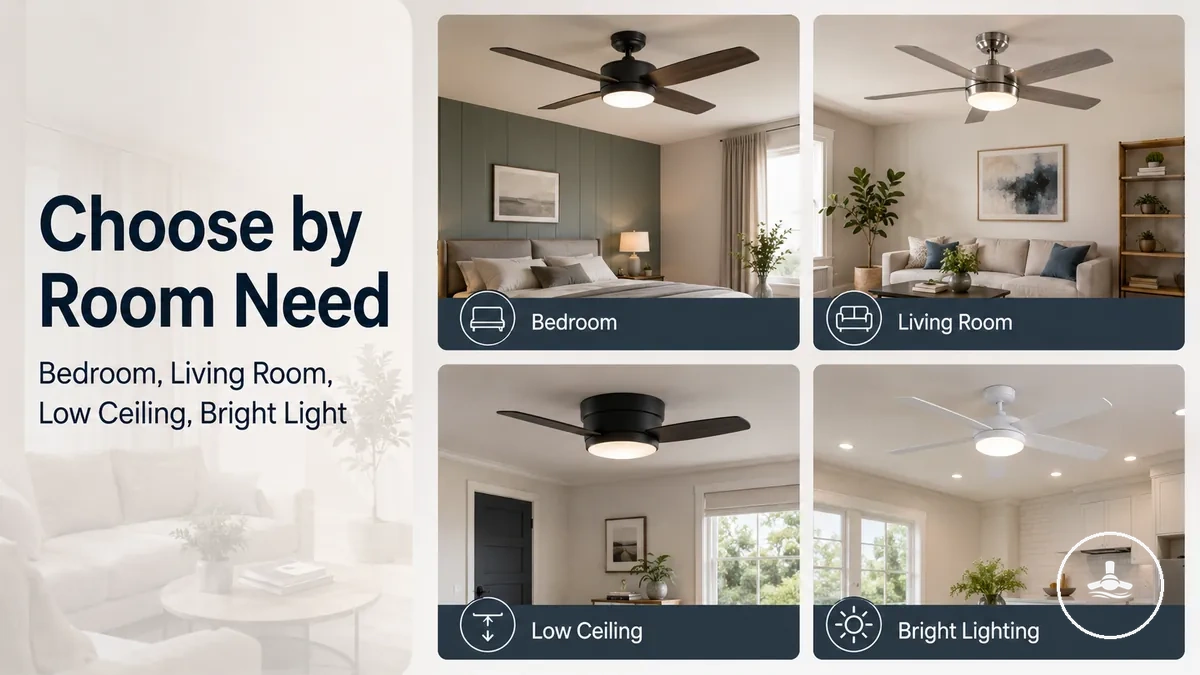
The best ceiling fan with light is the one that fits the room first: match mounting clearance and blade span to the space, then choose the lighting, airflow/noise profile, and controls that suit how the room is used. Bedrooms usually favour quiet low-speed operation and dimmable light; living and large rooms place more weight on coverage and usable brightness, while low ceilings make overall drop and clearance the first constraint.
Room-and-feature selection assistant
Choose the room condition and the feature that matters most. The result identifies a selection profile, not a universal product ranking, and keeps room fit ahead of optional features.
- Fit firstClearance, overall drop, blade span, and room layout.
- Match the room taskAirflow comfort and integrated-light requirements.
- Refine the shortlistControls, serviceability, and value.
Balanced room-fit profile
Start with physical fit, then require lighting and airflow that suit normal room use before paying for secondary control features.
- Mounting clearance and overall drop suit the ceiling condition.
- Blade span and airflow distribution suit the room layout.
- LED light output, colour appearance, and dimming suit the intended use.
- Remote, wall, or smart controls are useful only when the setup supports them.
Watch for: a feature-rich model that still misses the room's basic fit, airflow, or lighting need.
Review the relevant article sectionMarketplace price, stock, shipping, seller ratings, and warranty terms are not used in this selector because they can change independently of product fit.
Use the room condition as the first filter and feature priority as the second. Compare light output and colour temperature as separate attributes, treat airflow and operating noise as model-dependent performance characteristics, and confirm that the preferred control method is compatible with the intended setup.
Use the recommendations as a selection framework, not as a fixed ranking for every room. For broader category context before comparing room-led options, see the ceiling fans with lights hub.
Price, stock, seller terms, and other marketplace details can change at an external destination, so keep those volatile details separate from product-fit decisions. Compare the room need first, then fit, lighting, airflow, controls, serviceability, and value.
Ceiling Fans with Lights Selection Criteria
Room fit, lighting, airflow, control type, and value are the primary selection criteria for ceiling fans with lights. Their priority changes with ceiling height, room layout, comfort expectations, and everyday use, so fit should be resolved before optional convenience features.
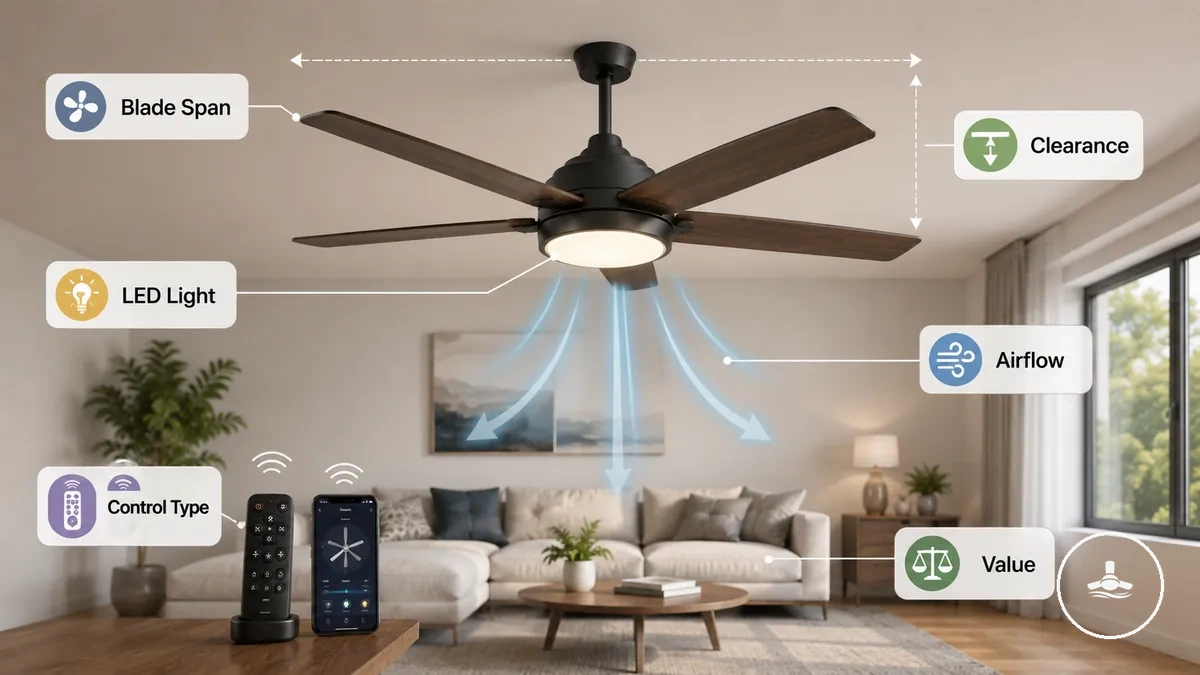
The comparison below turns those criteria into explicit checks and decision conditions. It separates physical compatibility from comfort and convenience so one attractive feature does not hide a poor room fit.
| Criterion | What to check | Better fit when | Selection impact |
|---|---|---|---|
| Blade span | Fan diameter from blade tip to blade tip, room dimensions, and layout | Span and airflow distribution suit the occupied area | Supports more even room coverage |
| Clearance | Mount type, overall drop to the lowest point, blade position, and ceiling condition | The complete fan-and-light profile fits the available space | Filters out physically unsuitable options first |
| Lighting | LED lumen output, colour temperature, dimming, and light spread | Light output and appearance suit the room's task or ambient use | Improves lighting comfort without confusing brightness with colour |
| Airflow and quiet operation | Rated airflow where available, usable speed range, blade balance, and operating noise | Air movement is adequate at a noise level acceptable for the room | Balances circulation with acoustic comfort |
| Control type | Remote, wall, or smart control functions and setup requirements | The preferred controls are supported by the fan and installation | Improves daily access without assuming universal compatibility |
| Value | Useful features, serviceability, installation needs, and overall cost | The paid-for features solve an actual room requirement | Supports value comparison beyond headline price |
A bedroom may place greater emphasis on quiet operation and lighting control, while a larger shared area may give more weight to blade span and airflow distribution. The order of the criteria changes with the room; the need to verify fit does not.
This criteria overview helps filter suitable options before detailed room-specific recommendations without replacing a fuller evaluation. For a broader review of fit checks and decision factors, continue with the buying checklist.
Room size and blade span fit
Room size narrows suitable blade-span choices, but room shape, ceiling height, furniture layout, and airflow path also affect coverage. Blade span is the fan diameter measured from blade tip to blade tip; use it as a room-fit attribute rather than a universal quality score.
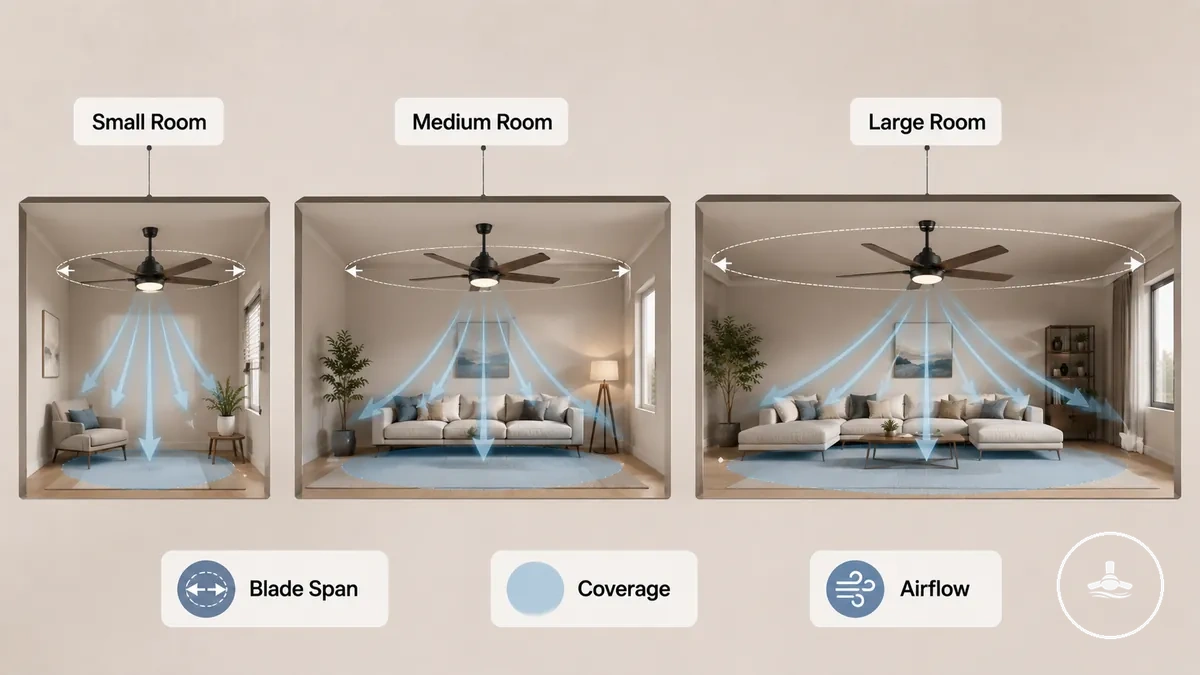
Room size and blade span fit become easier to compare when viewed as a local sizing filter.
- Small room: A compact blade span may provide suitable coverage while helping maintain comfort in a smaller area.
- Medium room: A balanced blade span can support even airflow when room coverage and everyday comfort carry similar priority.
- Large room: A wider blade span may improve coverage across a large room, although the final airflow result depends on layout and room conditions.
Use this sizing filter to narrow the shortlist, then check the manufacturer's room-coverage and installation guidance for the actual model. A larger span alone does not guarantee better comfort if the layout or mounting condition is unsuitable.
Ceiling height and mounting clearance
Ceiling height and mounting clearance can exclude unsuitable fans before any feature comparison. Check the overall installed drop to the lowest point of the fan or light, not only the depth of the motor housing, because the light diffuser and mount can change usable clearance.
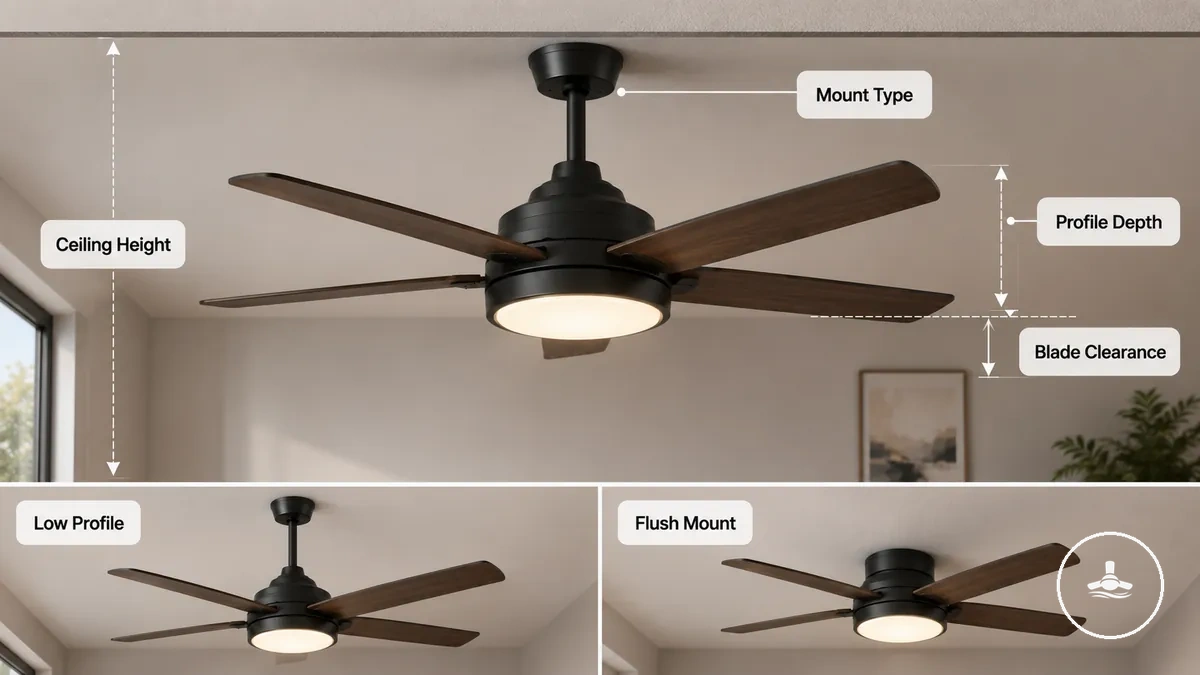
Ceiling height and mounting clearance are easier to assess when each visible fit condition is checked first.
- Mount type: Check whether a standard/downrod, close-to-ceiling, or flush-mount configuration matches the ceiling condition and the model's supported installation method.
- Overall profile: Compare the complete installed drop, including the light, with the available vertical space.
- Blade clearance: Confirm the installation can meet the manufacturer's instructions and applicable local safety requirements; do not assume every low-profile model is suitable.
- Light depth: Include any diffuser or light housing that extends below the fan body when judging the lowest point.
- Ceiling condition: Check ceiling slope, mounting surface, and available support as installation constraints before comparing airflow, lighting, or controls.
This is a compatibility filter, not an installation guarantee. The final installation must follow the fan manufacturer's instructions and the requirements that apply to the property.
Lighting brightness, colour, and dimming
Lighting performance changes how suitable a ceiling fan with light is for different room uses. Brightness and colour temperature are different attributes: lumen output describes the amount of light, while colour temperature describes its warm-to-cool appearance.
Compare the lighting attributes separately so a brighter light is not mistaken for a cooler-coloured light, or dimming for colour adjustment.
- LED brightness: Compare lumen output where it is provided, then judge whether that output suits the room size, task, and existing lighting.
- Colour temperature: Warmer settings appear more yellow/soft; cooler settings appear whiter or bluer. This changes appearance, not the amount of light by itself.
- Dimming: Dimming changes light output. Colour temperature changes only when the light separately supports tunable-white or similar colour adjustment.
- Diffuser style: A diffuser changes glare and light distribution, so two lights with similar output can still feel different in the room.
Judge integrated lighting by the room task and the other light sources already present. A ceiling-fan light can be useful general or ambient lighting without necessarily replacing dedicated task or accent lighting.
Airflow strength and quiet operation
Airflow and operating noise jointly determine comfort. Strong air movement is useful only when it reaches the occupied part of the room, while quieter operation becomes more important in bedrooms and other noise-sensitive spaces.
Compare airflow and quietness through the conditions that affect use-case comfort.
- Airflow output: Prefer a manufacturer airflow rating when available and compare like-for-like units or test conditions rather than motor wattage alone.
- Speed control: More usable speed steps can make it easier to balance circulation and noise across different comfort levels.
- Motor type: DC-motor designs often support multiple speeds and efficient operation, but actual noise and airflow remain model- and installation-dependent.
- Noise level: Give this more weight in sleep or concentration spaces, and remember that blade balance and installation quality can affect unwanted sound or vibration.
Compare airflow, speed range, and noise as a combined comfort profile. Motor power alone is not a reliable substitute for delivered airflow, and a quiet claim should not be assumed to apply equally at every speed.
Remote, wall, and smart control needs
Remote, wall, and smart controls change how the fan and light are operated, but convenience depends on compatibility. Compare the functions you need—speed, light switching, dimming, scheduling, or voice control—with the functions the specific fan and setup actually support.
Use this comparison to decide which control type matches the use case before treating controls as a feature priority.
| Control type | Best use case | Watch for |
|---|---|---|
| Remote control | In-room access to supported fan speeds and light functions | Check which functions the supplied remote actually controls and whether the receiver is integrated or separate. |
| Wall control | Fixed, always-located control point | Requires a compatible controller and wiring arrangement; do not assume an existing wall switch can provide every fan/light function. |
| Smart control | App, scheduling, automation, or voice functions when supported | Compatibility depends on the fan, controller, network/platform requirements, and the specific functions exposed to the smart-home system. |
Wall and smart control are conditional features, not automatic upgrades. Choose them only when their setup requirements and supported functions match how the fan will be used.
Best Ceiling Fans with Lights Overall
There is no single ceiling fan with light that is best for every room. The strongest all-round profile is one that fits the room physically and balances usable airflow, suitable lighting, practical controls, and value without relying on an extreme feature.
Use the summary below to judge whether an option has balanced shortlist relevance before comparing room-specific needs.
- Fit: The fan should suit the room condition before decorative or advanced features become important.
- Lighting: LED light quality should match the expected room use without assuming it replaces every other light source.
- Airflow: Air movement should support comfort for the room rather than focus only on maximum output.
- Controls: Remote, wall, or smart controls should improve daily use when the setup supports them.
- Value: The feature set should make sense for the intended use instead of adding features that do not affect the decision.
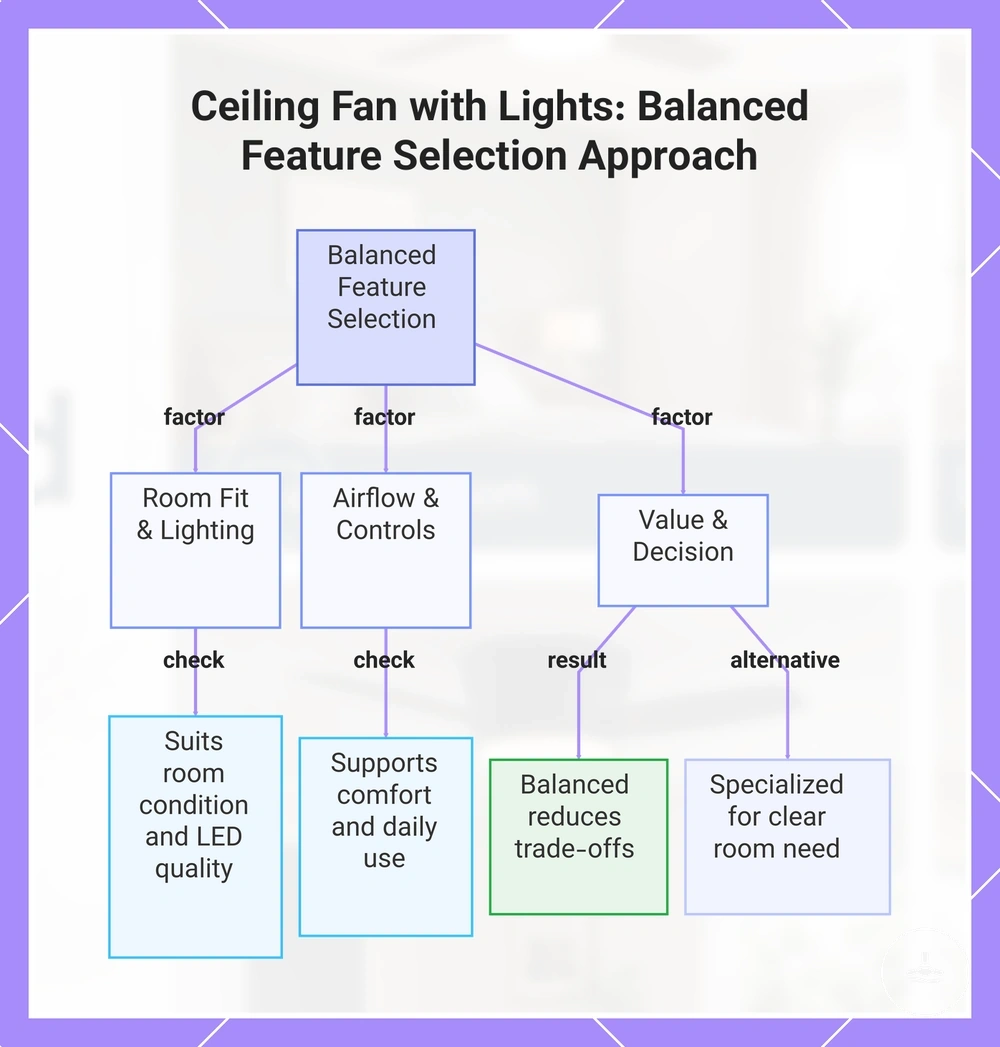
A balanced profile is the better default when no single room constraint dominates. A specialised profile becomes more appropriate when one need—such as low clearance, quiet night-time operation, wider coverage, or stronger lighting flexibility—clearly changes the decision.
This chart outlines the key factors for evaluating a ceiling fan with lights, focusing on balanced features and the choice between general performance and specialised priorities.
Best Ceiling Fans with Lights for Bedrooms
Bedroom ceiling fans with lights generally benefit from quiet low-speed comfort, adjustable lighting, and convenient controls rather than maximum output. Fit blade span and overall drop to the bedroom first, then prioritise the features used at night.
Low-speed airflow matters because sleep comfort often requires gentle circulation without distracting sound. Dimming can reduce light output for evening use, while a remote can reduce the need to reach a wall control when those functions are supported.
Use these bedroom criteria to filter options before comparing more detailed recommendations.
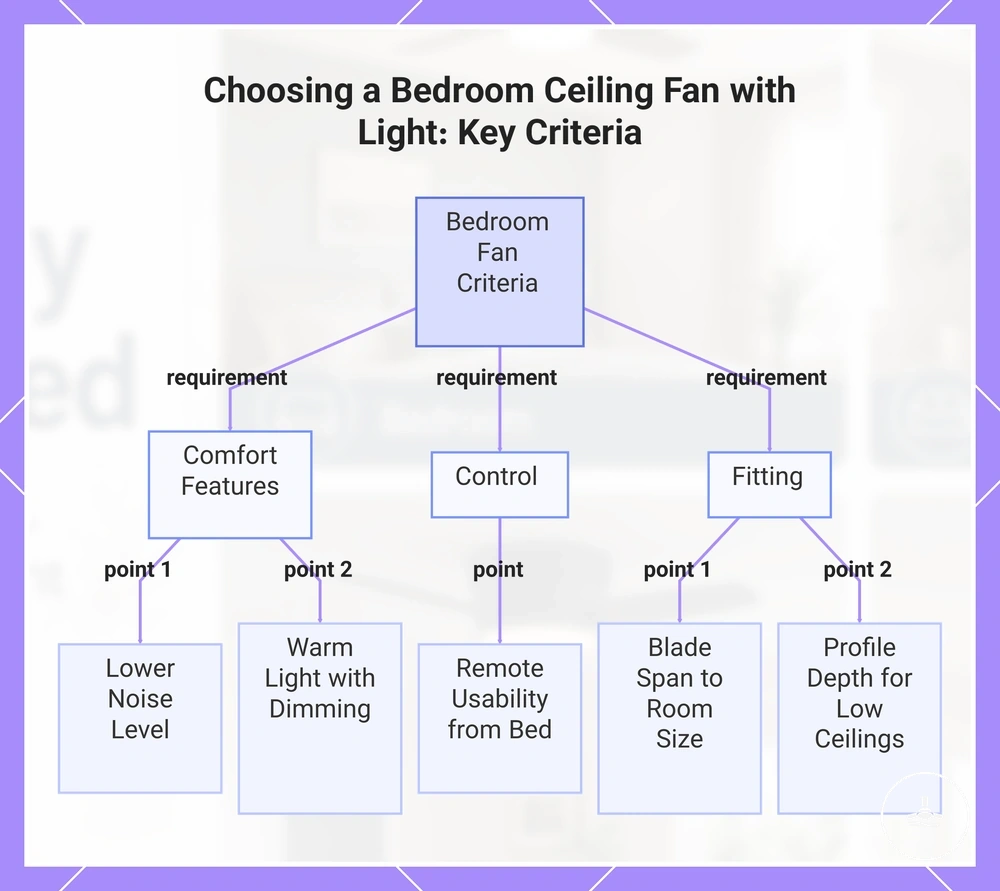
- Quiet comfort: Prioritise lower noise level when the bedroom is sensitive to sound.
- Soft lighting: Warm light and dimming can support a calmer bedroom setting when available.
- Remote control: Remote control can improve night-time usability because speed access and light control are easier from the bed.
- Blade span: Match blade span to the bedroom size instead of assuming every bedroom fan needs the same coverage.
- Low ceiling fit: A low ceiling may make profile depth and clearance more important than extra features.
For a deeper bedroom-focused comparison after these criteria are applied, continue with bedroom ceiling fans with lights.
This chart summarises the essential criteria for selecting a ceiling fan with light suitable for a bedroom, focusing on comfort, control, and fitting factors.
Best Ceiling Fans with Lights for Living Rooms
Living-room ceiling fans with lights should usually be chosen for coverage, usable brightness, control convenience, and visible fit within a shared space. Match blade span and airflow distribution to the layout before treating finish or smart features as decisive.
A living room often has a wider seating or activity area than a bedroom, so airflow distribution matters as much as nominal fan size. In open or irregular layouts, judge how the occupied zones are arranged rather than assuming one central fan will cover every area equally.
Use these living-room criteria to filter options before comparing detailed recommendations.
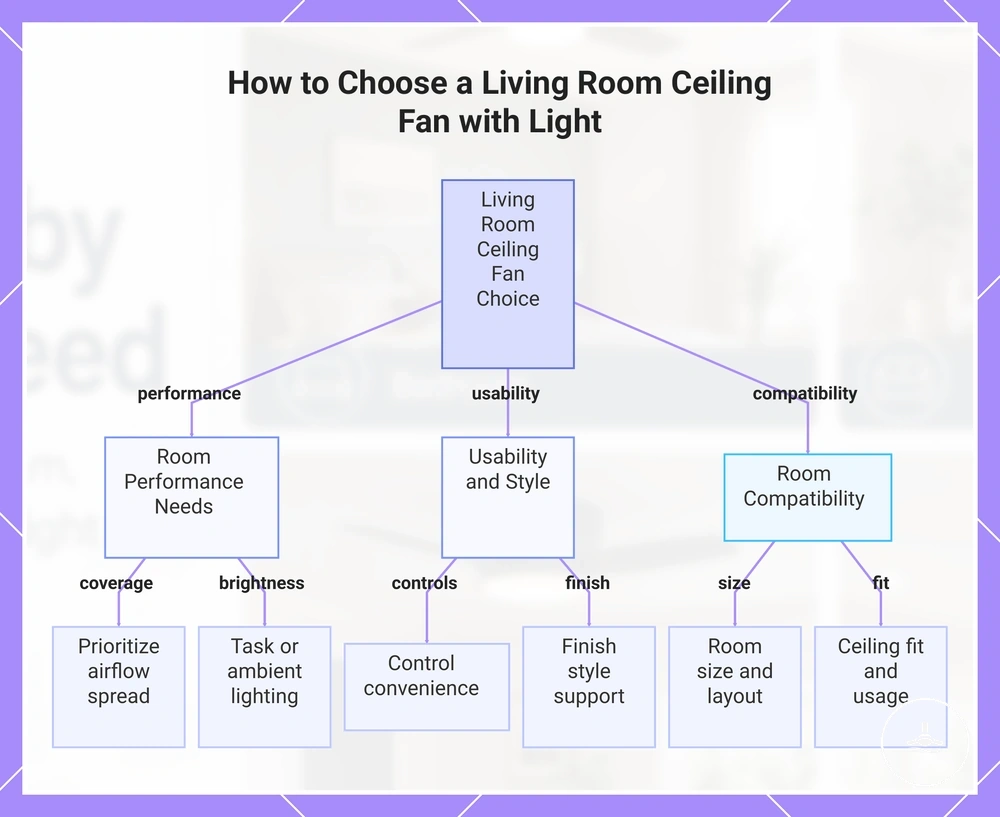
- Coverage: Prioritise airflow spread when the living room is open or shared by several people.
- Brightness: LED brightness may matter more when the room needs task lighting, while ambient lighting may suit softer shared-space use.
- Controls: Control convenience can improve daily use when fan speed and lighting are adjusted often.
- Finish style: Finish style should support the visible room setting without becoming more important than fit or performance.
- Room condition: Match the ceiling fan with light to the living room’s size, ceiling fit, and expected use before treating it as a recommendation.
For a deeper room-specific comparison after these criteria are applied, continue with living room ceiling fans with lights.
This chart outlines the key criteria for selecting a ceiling fan with light for a living room, including performance, usability, and room compatibility.
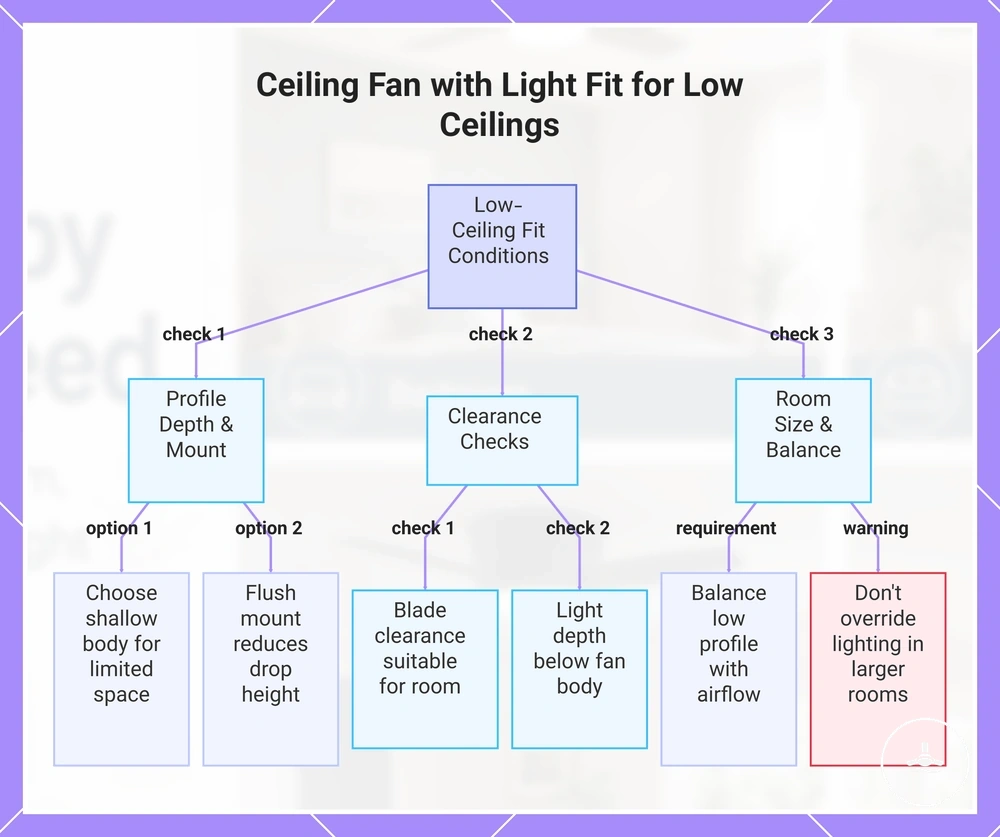
Best Ceiling Fans with Lights for Low Ceilings
For a low ceiling, overall installed drop and required clearances are the first selection constraints. A low-profile or flush-mount design is useful only when the specific model, light depth, blade position, and installation conditions fit the available space.
Use this low-ceiling checklist to verify the main fit conditions before comparing style or extra features.
- Overall drop: Measure the complete distance from ceiling to the lowest point of the installed fan/light, not only the housing depth.
- Flush mount: A close-to-ceiling configuration can reduce drop where the model supports it, but it does not remove the need to verify clearance and airflow needs.
- Blade clearance: Confirm the installation can satisfy the manufacturer's instructions and applicable local safety requirements before prioritising other features.
- Light depth: Consider whether the light extends below the fan body and affects the usable clearance.
- Room size: Do not let low profile design override airflow and lighting requirements in a larger room.
Low-profile fit should still be balanced against airflow and lighting requirements. A shallower fan is not automatically the better choice if it cannot meet the room's comfort or lighting need.
This checklist chart shows the key fit conditions to verify before selecting a ceiling fan with light for a low ceiling.
Best Ceiling Fans with Lights for Large Rooms
Large-room ceiling fans with lights should be chosen for airflow distribution and usable brightness across the occupied area. Blade span helps define coverage, but rated airflow, room shape, ceiling height, and layout determine whether that span is useful.
Use this comparison to judge the main large-room factors before treating a model as suitable.
| Large-room factor | What it affects | Selection cue |
|---|---|---|
| Blade span | Wide coverage across the room | Choose a span that matches the large room condition without assuming exact area coverage. |
| Airflow rating | Delivered air movement at a stated operating condition | Use manufacturer airflow data where available; compare the same unit or test context rather than motor wattage alone. |
| Airflow spread | Air movement across seating or activity zones | Prioritise airflow distribution when comfort needs to reach more than one part of the room. |
| LED output | Usable brightness for shared space | Check whether the light supports the room use without assuming it replaces all lighting. |
| Control range | Convenience across a bigger room | Remote, wall, or smart control may matter more when the fan is used from different positions. |
| Layout | Coverage and lighting consistency | Open-plan space may need more cautious expectations because layout can affect airflow and brightness. |
Blade span, rated airflow, distribution, and LED output should work together because large-room comfort depends on more than size alone. In long or open-plan layouts, one central fan may not distribute air or light evenly to every zone, so layout remains a key condition.
Best Ceiling Fans with Lights by Feature Priority
Feature priority should refine a shortlist only after room fit is acceptable. Choose the feature that solves the strongest use-case problem without creating a larger compromise in airflow, lighting, control compatibility, or value.
Use this comparison to decide which priority feature should shape the final shortlist. The table compares supporting attributes, likely trade-offs, and better-fit conditions without ranking products.
| Priority | Supporting attributes | Trade-off | Better fit when |
|---|---|---|---|
| Quiet airflow | Quietness, speed range, motor behaviour | Maximum airflow may matter less than lower noise | Room sensitivity makes noise level more noticeable |
| Bright LED lighting | LED lighting, brightness, dimming, light spread | Stronger light may not suit every ambient use case | Visibility is more important than soft background light |
| Remote control | Speed access, dimming access, convenience | Control convenience depends on the model and daily habits | Frequent adjustment from within the room is useful |
| Smart control | App control, scheduling, compatibility | Smart control may depend on setup and supported features | Scheduling or connected control supports the use case |
Quietness and airflow create the clearest comfort trade-off. A lower-noise ceiling fan with light may suit sensitive rooms, but the airflow still needs to support the room condition.
LED lighting and controls change usability in a different way. Brighter LED lighting may suit visibility-focused use, while remote control or smart control may matter more when convenience, scheduling, or access changes daily operation.
Choose the feature priority that solves the strongest use case after fit, lighting, airflow, and control compatibility are acceptable.
Quiet airflow priority
Quiet airflow should dominate the shortlist when distracting fan noise would undermine the room's purpose. The better-fit profile provides usable gentle airflow at the speeds you expect to use, rather than simply making a broad “silent” claim.
Use these quiet airflow factors to organise the selection conditions.
- Motor behaviour: Smoother operation may support lower-noise airflow when the room is sensitive to sound.
- Speed settings: Usable lower speeds can help balance gentle airflow with comfort during quiet-use periods.
- Blade balance: Better blade balance may reduce unwanted movement or noise that affects comfort.
- Room sensitivity: Quietness should override other feature priorities when noise level is more noticeable than extra output.
Motor behaviour, usable speed settings, blade balance, and installation quality can all affect perceived noise. A fan that is quiet at one speed should not be assumed to be equally quiet across its full operating range.
Bright LED lighting priority
LED lighting should dominate the shortlist when the room depends heavily on the integrated light. In that case, compare lumen output, light spread, dimming, and colour-setting capability separately instead of treating “bright LED” as one undivided feature.
Use these LED lighting factors to compare suitability.
- LED output: Use lumen output, when provided, as the light-output measure; electrical wattage alone does not describe perceived brightness.
- Colour setting: Choose warm, neutral, or cooler appearance according to the room task and preference when the light supports selectable or tunable colour temperature.
- Dimming range: Check whether the integrated light offers useful low-to-high output control for the activities expected in the room.
- Light spread: Judge whether the diffuser and fixture distribute light across the useful area; a central fan light may still need support from task or accent lighting.
When task lighting, ambient lighting, or mixed lighting drives the decision, LED output, colour setting, dimming range, and light spread become the key selection criteria. The suitability of a ceiling fan with light still depends on the room condition, so integrated LED lighting may not replace every other light source.
Remote and smart control priority
Control convenience should dominate the shortlist when frequent access to speed or lighting settings materially improves daily use. Compare the functions actually exposed by the controller, not only whether a model is labelled remote- or smart-controlled.
Use this comparison to understand how remote, wall, and smart controls differ.
| Control method | Convenience gain | Compatibility check |
|---|---|---|
| Remote control | In-room access to supported speed and light functions | Verify which functions the remote controls and whether a separate receiver is required. |
| Wall control | Fixed control point that is easy to locate | Confirm controller and wiring compatibility with the selected fan/light functions. |
| Smart control | App, scheduling, automation, or voice functions when supported | Verify fan/controller, network or hub, platform, and function compatibility before relying on smart features. |
Remote, wall, and smart control differ mainly in access and setup dependency. Compatibility is the decision boundary: a convenient control method adds little value if the installation cannot support the functions you intend to use.
Value and Reliability Checks Before Choosing
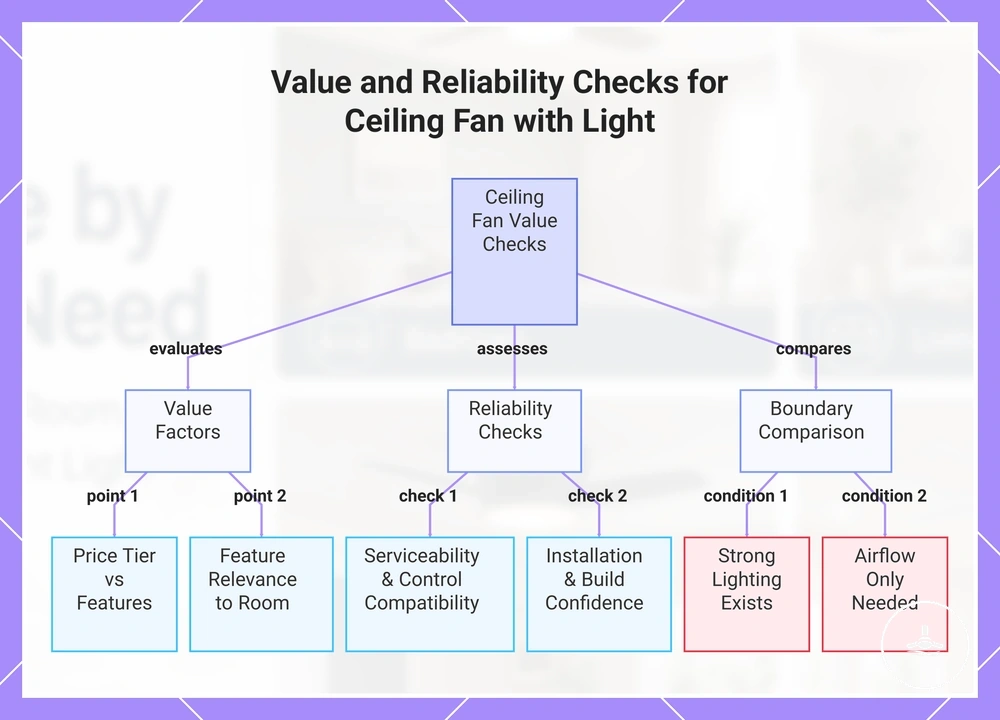
Value and reliability checks should confirm that the selected fan fits the room and that the paid-for features remain useful after installation. A higher price is easier to justify when fit, useful features, serviceability, control compatibility, and installation needs align with the room condition.
Use this mini-checklist before moving to an external purchase destination. Each check should connect the feature set to a value condition rather than only comparing price.
- Price tier: Compare the price level with the features that are actually useful for the room.
- Feature relevance: Give more weight to lighting, airflow, or controls only when they support the use case.
- Serviceability: Check whether the LED module, driver, remote receiver, or other model-specific parts can be serviced or replaced if long-term maintainability matters.
- Control compatibility: Confirm that remote, wall, or smart controls suit the expected setup.
- Installation needs: Consider whether fit condition and installation needs may affect the final decision.
- Reliability: Use build quality, parts/service support, and clearly stated warranty terms at the current destination as evidence to check; do not treat a product name or price tier as a reliability guarantee.
Price tier and feature relevance should be judged together because a cheaper option can be poorer value when it misses the main room need, while a higher-priced option can also be poor value when its extra features are unused. For a deeper criteria view, compare the cost and value factors before treating price as the deciding factor.
Serviceability, control compatibility, and installation needs affect long-term practicality. Integrated LEDs, receivers, and control systems can be model-specific, so confirm replaceability, support, and setup requirements for the exact option rather than assuming they are universal.
A fan with light is not always the right boundary choice if the room already has adequate lighting or needs airflow only. Use fans with lights versus without lights as a boundary comparison before choosing a combined fixture.
After these checks, confirm current price, stock, seller terms, warranty details, and availability at the external destination. Those marketplace values are volatile and are not treated as fixed product attributes in this guide.
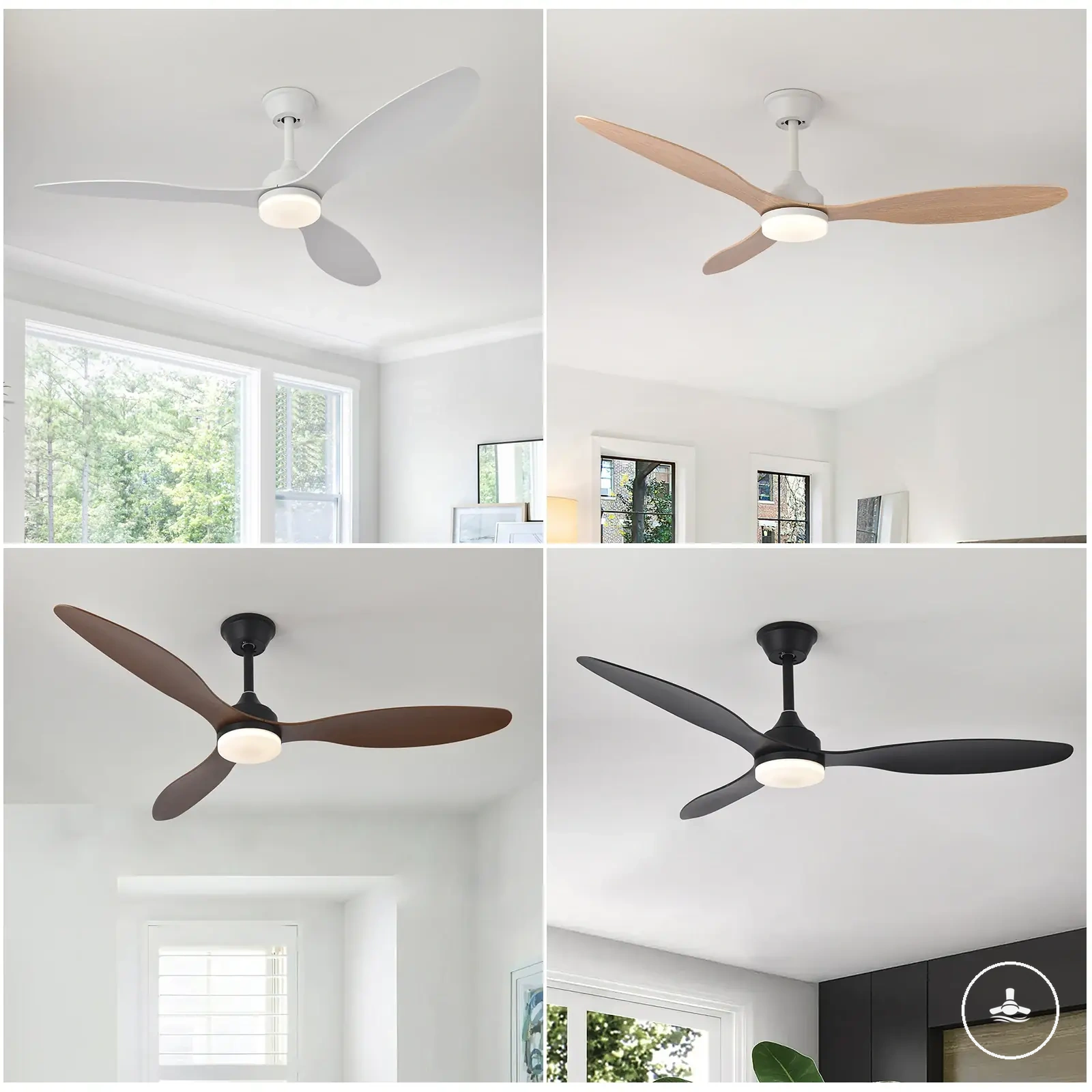
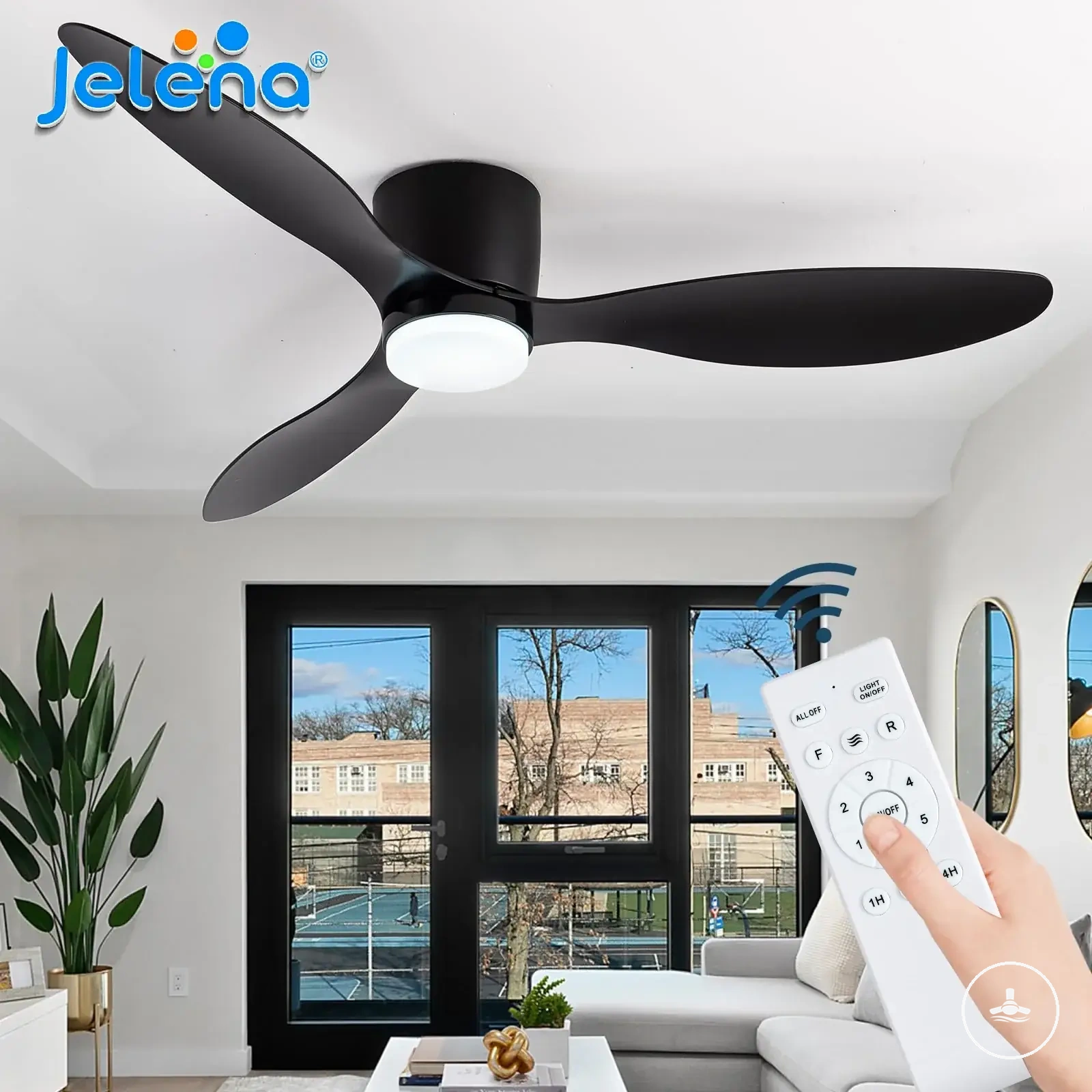
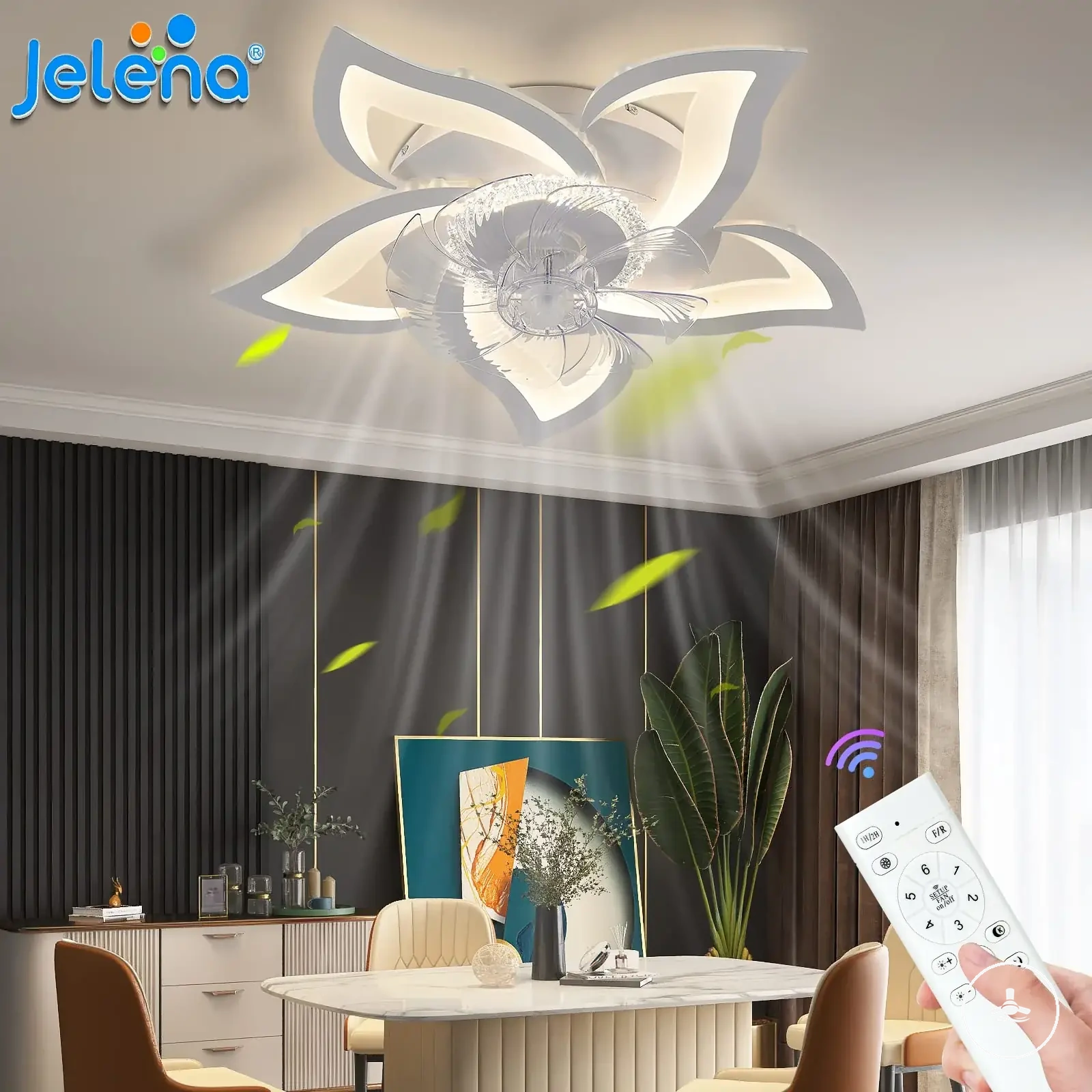
The products below are useful examples for comparing available options. Before buying, check that the compatibility criteria, key features, and product details match your needs.
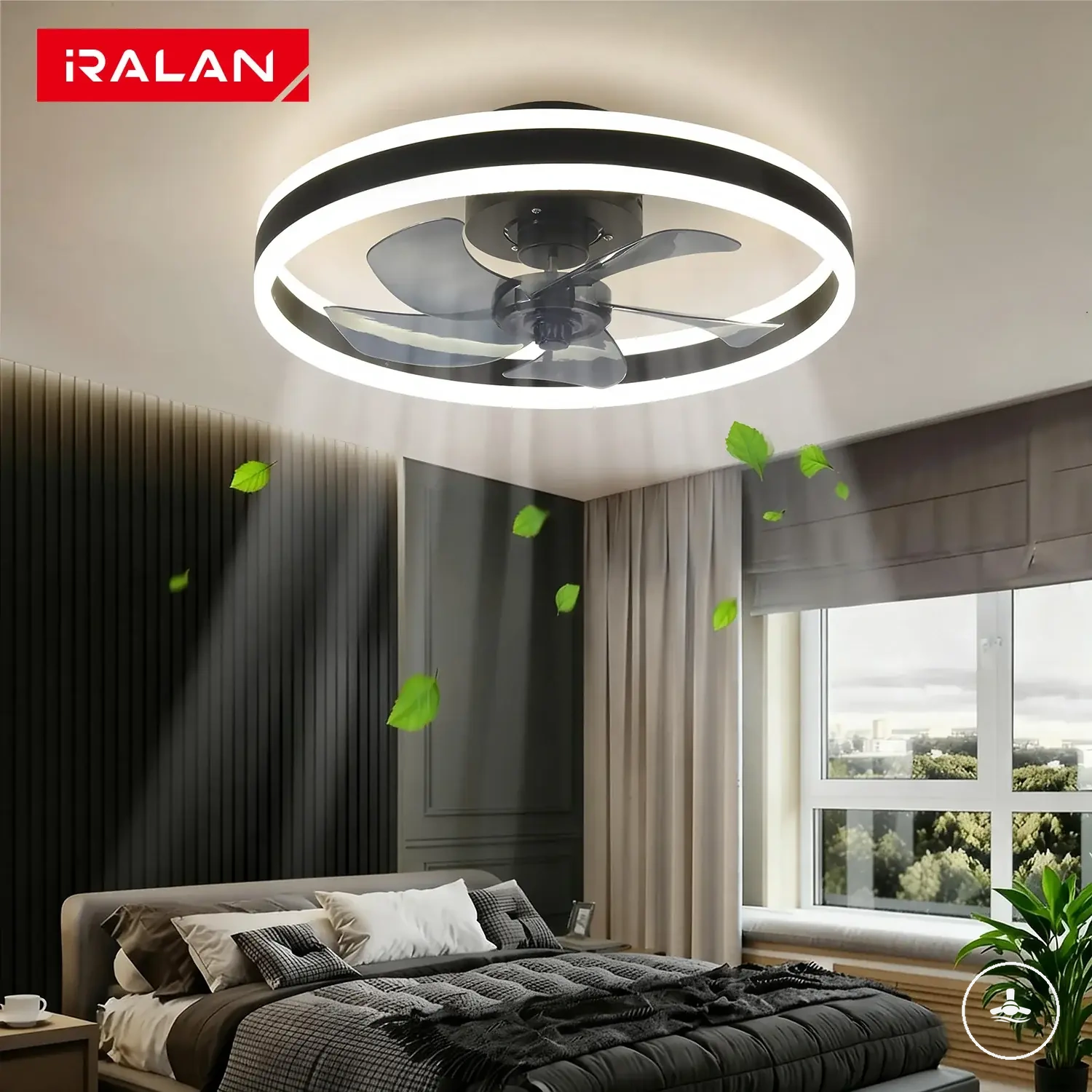
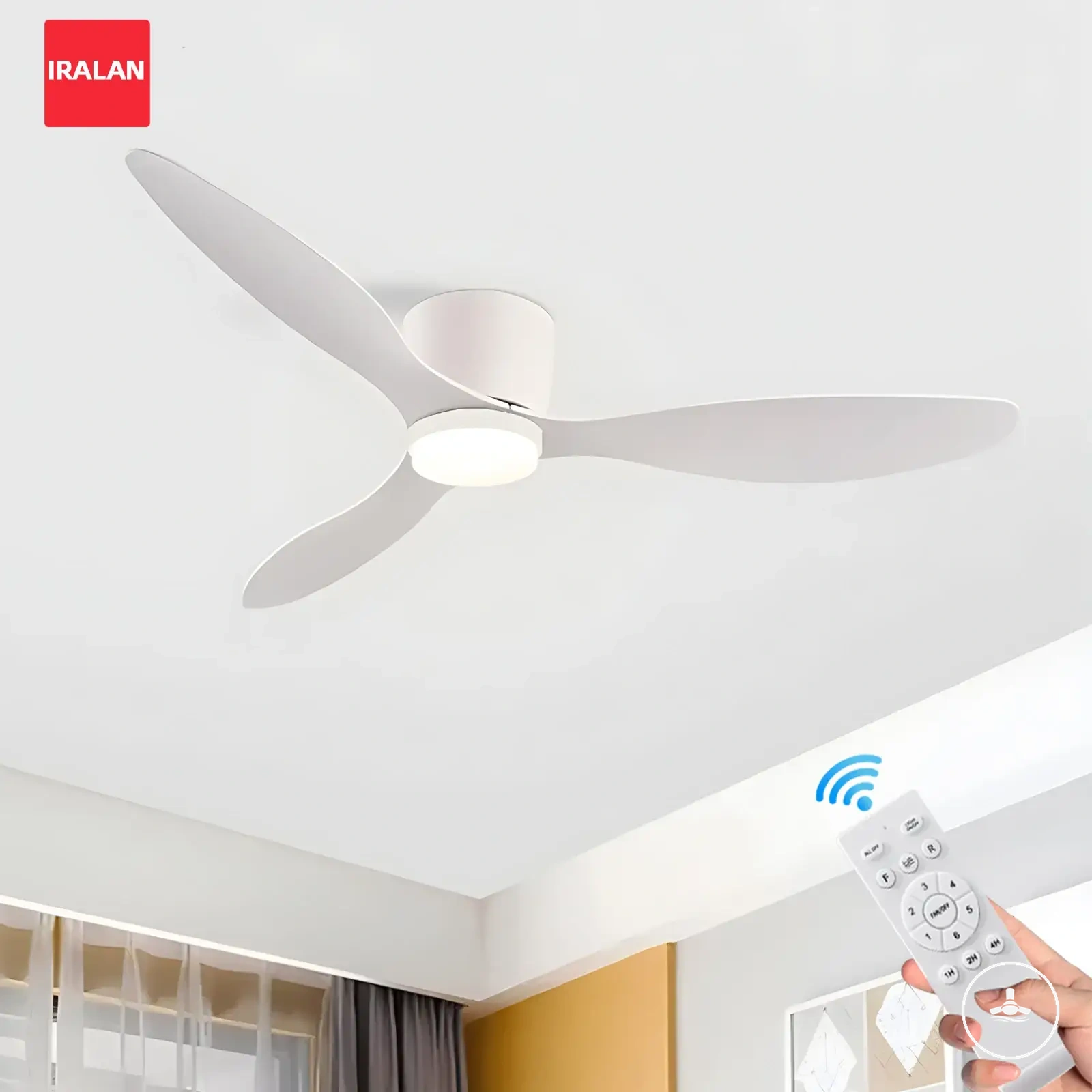
This chart summarises the key value and reliability checks to perform before choosing a ceiling fan with light, including a boundary comparison between fan with light and fan without light.