Ceiling Fans with Lights Size Guide for Room Coverage
Size a ceiling fan with light by using the room or occupied-zone area as the first filter, then verifying layout and clearance. As a starting guide, this page uses 29–36 in (74–91 cm) up to about 7 m², 42–48 in (107–122 cm) for about 7–16 m², 52–56 in (132–142 cm) for about 16–32.5 m², and 60 in (152 cm) or larger above about 32.5 m²; blade span indicates physical size, not guaranteed airflow performance.
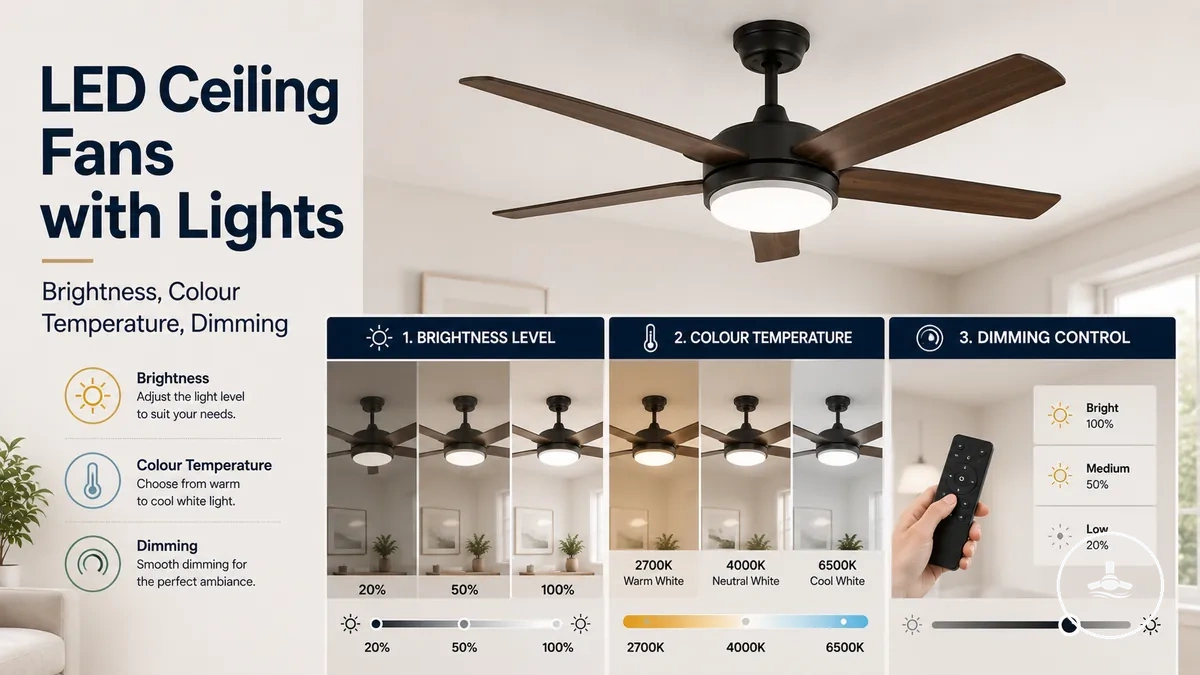
Room-to-blade-span decision assistant
Enter the dimensions of the room or the occupied zone you want one fan to serve. The result uses this page's room-area bands to identify a starting blade span; it does not estimate airflow or replace model-specific installation checks.
Next check: confirm blade-tip clearance, ceiling height, mounting method and light-kit drop for the specific fan. A larger span should not be treated as proof of higher airflow or equal coverage across an irregular or open-plan space.
A good fit gives the fan enough sweep for the area people actually use without crowding walls, beams, cabinetry or other fixtures. Room area sets the initial size range; room shape, mounting position and the fixture's vertical drop determine whether that range is practical in the real space.
Treat sizing, airflow and lighting as separate checks. Blade span answers “how large is the fan?”; airflow performance depends on the fan's motor, blade design, speed and installation, while lighting suitability depends on the light output and distribution.
How Room Size Changes Ceiling Fan Coverage
Room area sets the starting blade-span range, while layout and placement determine how well that sweep aligns with the occupied zone. A larger room generally calls for a wider span, but a wider fan is not automatically a higher-airflow fan; motor, blade design, speed and installation still control performance.
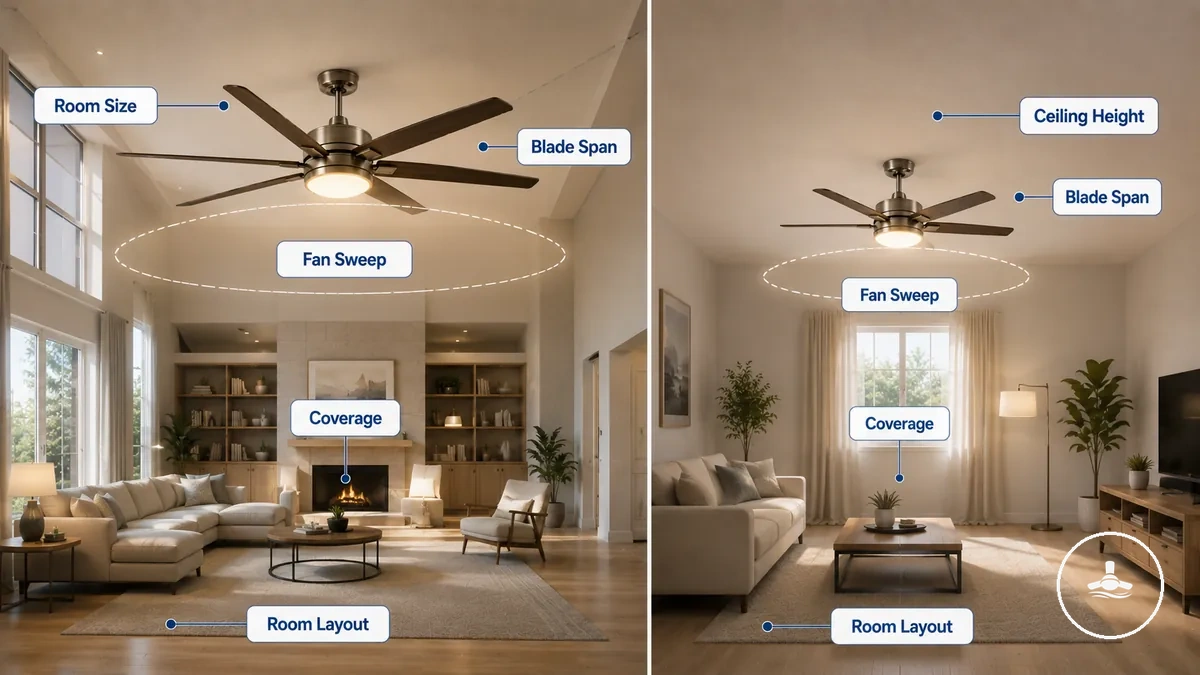
For the broader page context, the ceiling fans with lights hub connects sizing to lighting, controls, installation limits, and room-use decisions. Room size stays focused on coverage expectations rather than the full buying or installation process.
A fan that fits the room area can still feel mismatched if the room is long, divided, crowded with furniture, or mounted away from the main occupied zone. Room size sets the starting expectation, but layout explains why the same blade span may feel more effective in one room and less effective in another.
Sizing coverage is not the same as airflow and comfort performance. Room size helps define how much area the fan should reach, while airflow strength, speed settings, blade design, and placement may change how that coverage feels in use.
Blade Span as the Main Sizing Measurement
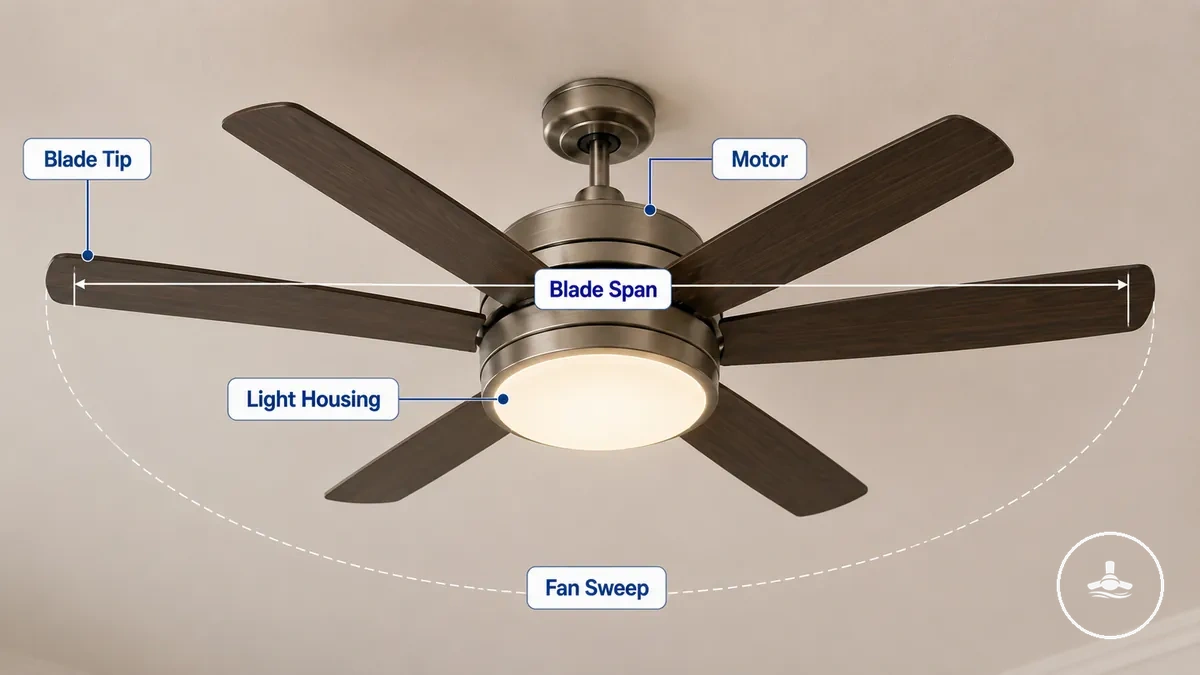
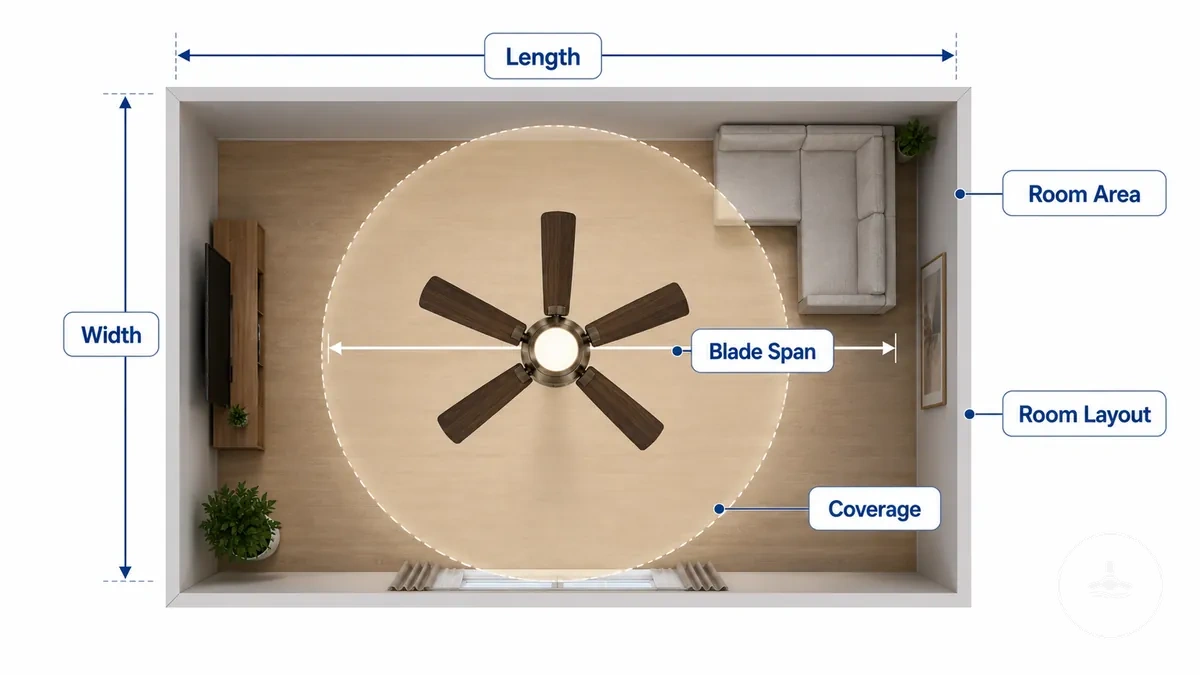
Blade span is the primary fan-size measurement: measure from one blade tip to the opposite blade tip across the centre of the fan. It represents the diameter of the rotating blade sweep and is the dimension used in this guide's room-size bands.
- Measure
- Blade tip to opposite blade tip across the fan centre.
- Represents
- The diameter of the rotating blade sweep.
- Does not include
- Motor-housing width or the light-kit width.
- Use it for
- Comparing physical fan size with room or occupied-zone area.
The illustration below highlights blade span as the key sizing measurement. Blade span refers to the rotating blades rather than the width of the light housing, motor casing, or overall fixture body. A larger light kit may make the fixture appear wider, but it does not change the blade span used for sizing comparisons.
Room Area as the Main Coverage Condition
Room area = length × width. Use that area as the primary sizing input, then check the occupied zone, room shape, ceiling conditions and intended fan position before treating a blade-span band as a final fit.
Area formula: length × width = floor area.
Example: 4.0 m × 3.5 m = 14 m², which falls within this page's ~7–16 m² starting band of 42–48 in (107–122 cm).
The calculation selects a size band; it does not account for an off-centre mount, long narrow geometry or installation clearance.
The illustration highlights how room area guides sizing decisions before other factors are considered. Length and width support the area calculation, but room area remains the primary reference for blade-span selection rather than the measurements being treated as separate sizing criteria.
Measuring a Room Before Choosing Blade Span
Measure in a sequence that separates size selection from fit verification. The room dimensions identify a starting span; the occupied zone and clearances determine whether that span can be used sensibly in the intended position.
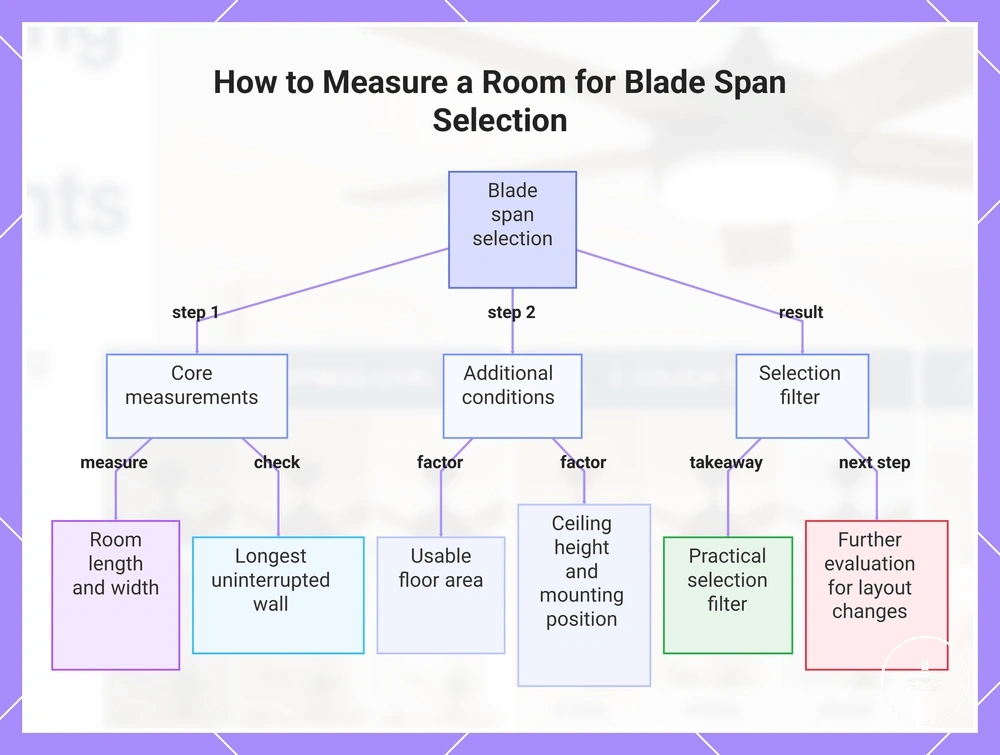
Measure the room length and width first so the room area can guide blade-span selection. Then consider the longest uninterrupted wall, the usable floor area, ceiling height, and the intended mounting position because these conditions can influence whether a fan appears undersized, oversized, or has limited clearance within the room.
- Measure length and width. Multiply them to calculate total floor area.
- Mark the occupied zone. Identify the seating, sleeping, dining or work area the fan is intended to serve.
- Check room proportions. Note a long or narrow shape and the longest uninterrupted wall as a secondary proportion check.
- Locate the fan position. Confirm the intended mount is aligned with the occupied zone rather than simply assuming geometric centre is best.
- Verify clearance. Check nearby walls, beams and cabinetry, then ceiling height, mounting method and light-kit drop for the chosen model.
These measurements provide a practical selection filter rather than a guarantee of the final result. A fan that matches the measured space may still require further evaluation if the room layout or installation position changes how the available area is used.
This chart shows the key measurements and conditions to consider when selecting a fan blade span based on room dimensions.
Square Footage and Longest-Wall Measurements
Floor area is the primary numerical sizing input; the longest-wall measurement is a secondary geometry and proportion check. They should not be treated as two equivalent blade-span formulas.
| Measurement | What it tells you | Use it when |
|---|---|---|
| Floor area (m² or ft²) | Which room-size band to start from. | Every sizing comparison. |
| Longest wall | How elongated or visually large the room is. | The room is long, narrow or irregular. |
| Occupied-zone dimensions | Where coverage is actually needed. | Open-plan, divided or off-centre layouts. |
Use the area band first, then let the longest wall and occupied zone explain whether a nominally suitable fan could still feel undersized, oversized or poorly positioned.
Usable Room Area Around Furniture and Fixtures
Furniture does not change the measured room area, but it can change the occupied zone you want the fan to serve and can create placement constraints. Use total area for the initial size band, then use the occupied zone and obstructions to refine placement and fit.
- Identify where people normally sit, sleep, dine or work.
- Note walls, beams, tall cabinetry and existing fixtures near the intended blade sweep.
- For open-plan rooms, define the functional zone one fan is expected to serve.
- If the mount is off-centre, judge coverage from the occupied zone rather than from the outer room boundary alone.
This distinction prevents a common sizing error: treating the full footprint as the only target when the fan's real task is to serve a specific occupied zone from a specific mounting point.
Ceiling Fan Blade Span Chart by Room Size
Use the chart as a starting size framework. The room-area bands identify a practical blade-span range; layout, mounting position and clearance decide whether the range fits the actual room.
Metric areas and centimetre spans below are approximate conversions so the same relationships are usable in an Australian context.
| Room or occupied-zone area | Starting blade span | Typical context | What to verify next |
|---|---|---|---|
| Up to ~7 m² (75 ft²) | 29–36 in (74–91 cm) | Small room or compact zone | Side clearance and fixture scale |
| ~7–16 m² (75–175 ft²) | 42–48 in (107–122 cm) | Bedroom, study or similar room | Occupied-zone alignment and clearance |
| ~16–32.5 m² (175–350 ft²) | 52–56 in (132–142 cm) | Living room or larger bedroom | Room shape, placement and ceiling fit |
| Above ~32.5 m² (350 ft²) | 60 in (152 cm) or larger | Large room or large occupied zone | Whether one fan can sensibly serve the whole zone |
This chart is a sizing guide rather than an exact-fit rule. If room layout, clearance, or usable area differs from a typical room, blade-span selection may need adjustment to better suit the available space.
Small Rooms and Compact Ceiling Fans with Lights
Compact ceiling fans with lights may suit small rooms when the blade span matches the available floor area and the fixture remains proportionate to the space. A smaller fan is not automatically the better choice because ceiling clearance, usable area, and the fan's physical scale can all influence the final fit.
Compact fans are often appropriate for bedrooms, studies, and small dining areas where a larger fixture may appear oversized or reduce the sense of available space. The most suitable blade span still depends on room dimensions, usable area, and the surrounding clearance.
For room-specific guidance, see bedroom ceiling fan size needs, which expands on compact sizing considerations for sleeping spaces without changing the general sizing principles described here.
Medium Rooms and Standard Blade Spans
Medium rooms and standard blade spans work together when the fan is proportionate to the available floor area and positioned to serve the main occupied space. Final fit can still depend on room layout, ceiling clearance, fan design, and the usable space around furniture and fixtures.
Medium rooms often need a balanced sizing approach because neither a compact span nor an extra-wide span is automatically more suitable. A centrally positioned fan with an appropriate blade span may support more even coverage across the primary activity area, although the result can vary with room shape and ceiling conditions.
When evaluating a standard blade span, consider how furniture zones, walkways, and the intended mounting position affect usable coverage. These conditions help determine whether a standard-sized fan is likely to suit the room without appearing undersized or oversized.
Large Rooms and Wider Blade Spans
Large rooms may require wider blade spans because a broader fan sweep is often better suited to covering a larger occupied area. The final fit still depends on available space, room layout, ceiling clearance, and fan design, so a wider span should be selected in relation to these conditions.
Living rooms, larger seating areas, and other spacious layouts often create greater coverage demand than smaller rooms. A wider blade span may help address that demand, but it should not be assumed to provide stronger airflow because airflow performance can also vary with the fan's design and installation.
For room-specific sizing guidance, see living room coverage needs, which expands on larger-room planning while building on these wider blade-span principles.
Room Shape and Layout Effects on Coverage
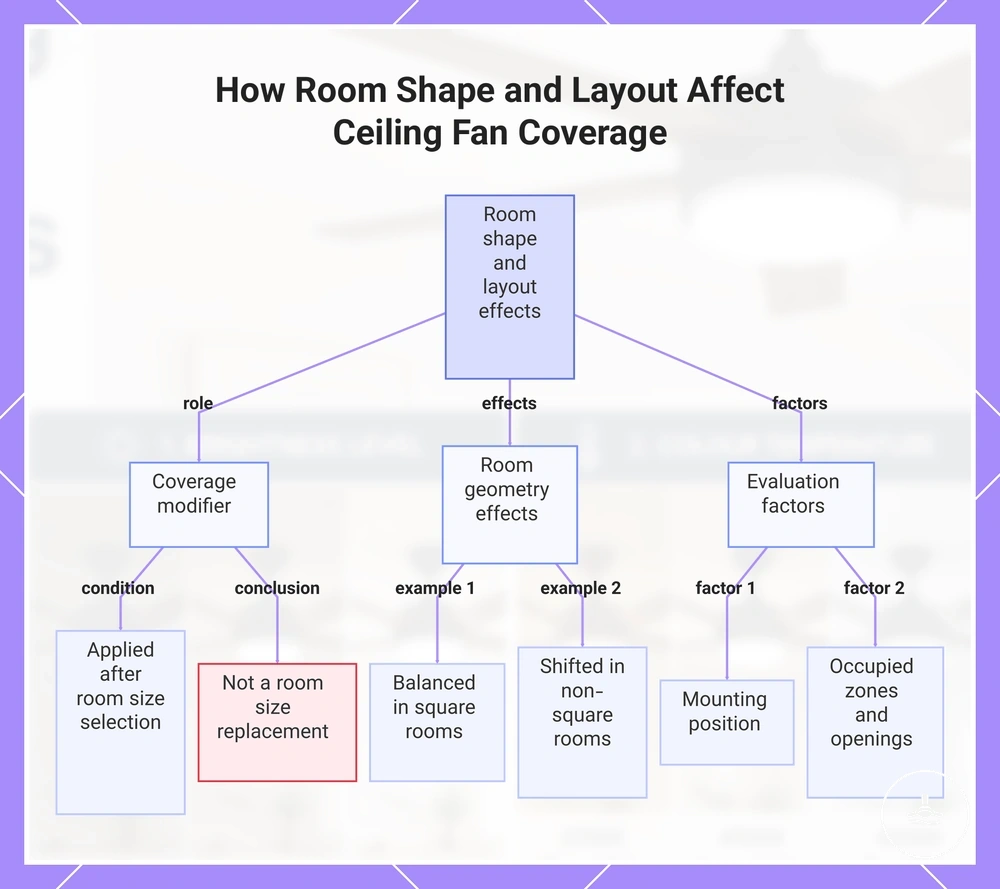
Room shape is a coverage modifier, not a replacement for area sizing. After choosing a starting span from area, use geometry, mounting position and occupied zones to judge whether the fan sweep is centred on the space that matters.
Square, rectangular, and open-plan rooms can influence coverage in different ways even when the floor area is similar. A centrally mounted fan may provide more balanced coverage in one layout, while a long, narrow, or more open arrangement can shift the relationship between blade span and the primary occupied zone.
Mounting position, occupied zones, and room openings should be evaluated together because the same blade span may produce different coverage results in different layouts. Room shape is therefore a coverage modifier rather than a replacement for room-size selection.
This chart shows how room shape and layout act as coverage modifiers, the main geometry effects, and the key evaluation factors that determine ceiling fan performance.
| Layout | Primary sizing input | Coverage check | Practical implication |
|---|---|---|---|
| Square / regular | Full room area | Can the fan sit over the main occupied zone? | A central position often aligns the sweep more evenly with the room. |
| Long / narrow | Full area plus room proportions | Are the far ends outside the useful sweep? | Do not assume a wider span alone solves poor longitudinal coverage. |
| Open-plan | Defined occupied-zone area | Which functional zone is one fan intended to serve? | Size the target zone instead of automatically treating the entire floor plate as one room. |
| Obstructed / divided | Area plus mounting constraints | Do beams, walls or fixtures limit fan position? | Placement and clearance can override the nominal area band. |
Square and Rectangular Room Coverage
Two rooms can have the same floor area but different coverage geometry. A square room distributes distance from a central mount more evenly, while a long rectangular room can leave the ends farther from the fan even when the same blade-span band applies.
Room shape should be considered alongside fan placement rather than as a separate sizing rule. Corner use, occupied zones, and mounting position can all influence how effectively the same blade span serves a square or rectangular layout.
Open-Plan Spaces and Coverage Boundaries
In an open-plan space, define the functional zone one fan is expected to serve before choosing its size. A dining area, lounge area and kitchen can share one floor plate while still having different coverage needs and mounting constraints.
- Measure the intended seating, dining or activity zone.
- Place the fan relative to that zone, not merely the centre of the entire open plan.
- Treat connected spaces beyond the target zone as separate coverage demands rather than assuming equal reach.
Coverage boundaries should be evaluated using the intended activity area, fan position, and open connections between spaces. Larger open areas and competing air paths can influence practical coverage, so room zoning remains an important sizing criterion.
Clearance Limits for Sized Ceiling Fans with Lights
A blade-span range is usable only when the selected model fits the available space. Clearance is a compatibility gate: check the rotating blade sweep, vertical position, light-kit drop, ceiling form and mounting method before confirming size.
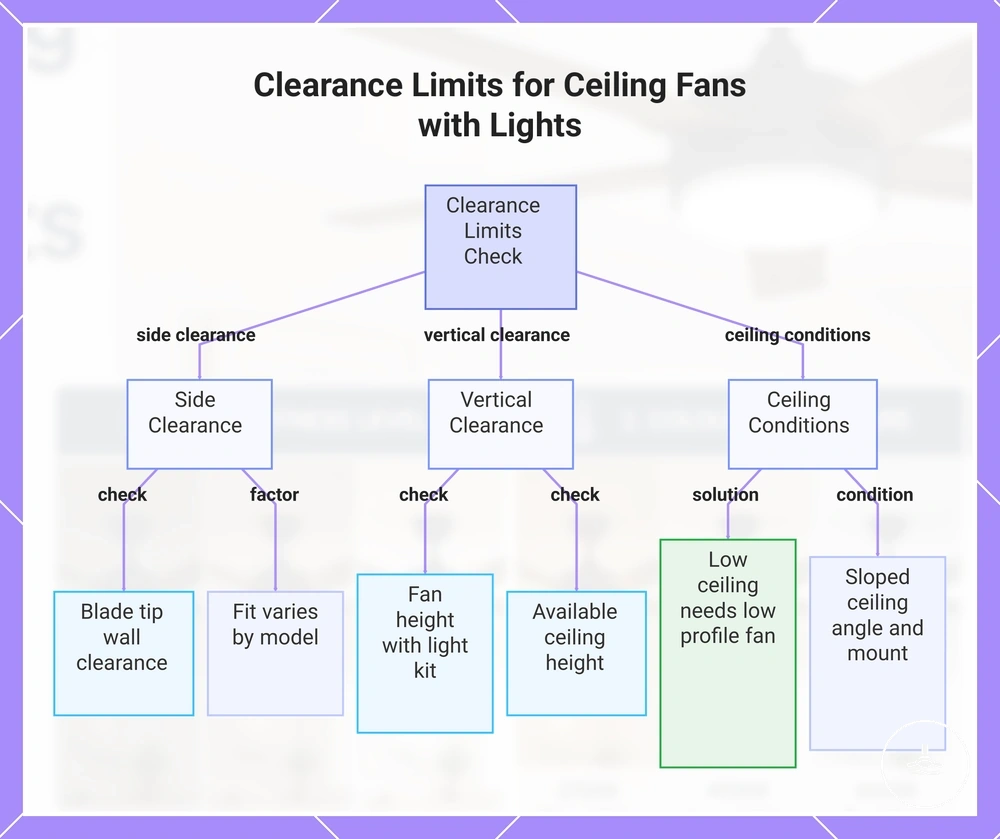
Check that the blade tips have adequate clearance from nearby walls and that the overall fan height, including the light kit, suits the available ceiling height. The final fit can vary by fan model, mounting method, ceiling height, and room conditions, so clearance should be assessed before selecting a size.
Low ceilings and light kits can reduce the available vertical space, while sloped ceilings may change how the fan fits within the room. These conditions should be treated as compatibility checks rather than assuming the same fan size suits every ceiling configuration.
If ceiling height is limited, review low profile ceiling fan fit to determine whether a lower-profile installation may better suit the available clearance.
Where the ceiling is angled, sloped ceiling fan fit depends on the ceiling angle, mounting arrangement, and the available clearance around the fan rather than blade span alone.
This chart shows the key clearance checks and ceiling conditions that determine whether a ceiling fan with lights fits safely.
| Compatibility check | Attribute to verify | Decision value |
|---|---|---|
| Side clearance | Blade-tip sweep relative to walls, beams, cabinetry and fixtures | No conflict with surrounding surfaces and compliance with the selected fan's installation instructions. |
| Vertical clearance | Blade plane and lowest point of the light kit | Both must suit the available ceiling height and required installation clearances. |
| Ceiling form | Flat, sloped or vaulted surface | The mounting system must be compatible with the ceiling angle and fan model. |
| Mounting method | Standard, low-profile or downrod configuration | Choose the mounting format that provides the required fan position without creating clearance conflicts. |
Blade-tip Distance from Walls
Blade-tip distance from walls depends on whether the selected ceiling fan has enough side clearance for its blade span within the available space. Side clearance should be checked before confirming fan size because room layout, nearby vertical surfaces, and fan placement can affect compatibility.
Walls, cabinets, beams, and other nearby surfaces may reduce the usable space around the rotating blades. When side clearance is limited, a smaller blade span or a different fan position may provide a more suitable fit, depending on the room configuration and fan model.
Required side clearance can vary by fan and installation. Confirm the minimum clearance in the selected model's installation instructions and ensure the intended blade sweep does not conflict with walls, beams, cabinetry or nearby fixtures.
Blade Height and Light-kit Drop
Blade height and light-kit drop are separate vertical-fit attributes. The blade plane determines rotating clearance, while the lowest point of the light kit determines how far the fixture projects into the room.
- Blade plane
- Verify the rotating blades have the required vertical clearance for the installation.
- Light-kit drop
- Check the lowest point of the light against usable headroom and the room's ceiling height.
- Decision rule
- A room-size match is not enough if either vertical dimension creates a clearance problem.
Vertical fit should be assessed as a compatibility condition rather than assumed from blade span alone. A fan may match the room size but still need closer review if the light kit drops lower than expected or if the ceiling height leaves limited usable space below the fixture.
Choosing between Compact and Wide Blade Spans
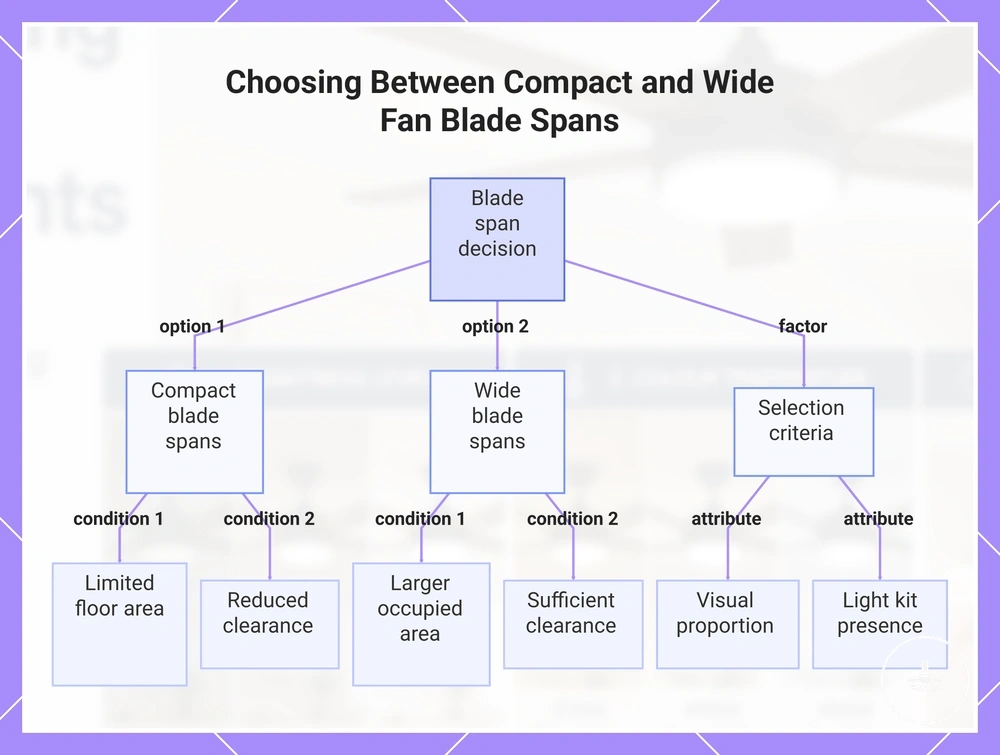
Choose between compact and wide spans by matching the fan to area, clearance, placement and visual scale rather than assuming the largest fan is best. The table below makes those trade-offs explicit before the product examples.
| Criterion | Compact span tends to fit better when… | Wider span tends to fit better when… |
|---|---|---|
| Area | The room or occupied zone falls in a smaller size band. | The occupied zone falls in a larger size band. |
| Side clearance | Nearby walls, beams or cabinetry limit the blade sweep. | There is ample unobstructed space around the intended mount. |
| Placement | The target zone is compact or the mount must avoid nearby obstacles. | The fan can be positioned over a broad primary occupied zone. |
| Visual proportion | A wide fixture would dominate the room. | A small fixture would appear underscaled in the space. |
| Vertical fit | Blade span does not solve light-kit drop or low-ceiling clearance; evaluate the mounting profile separately. | |
If the fan includes a light, evaluate the light-kit depth separately from blade span. A smaller diameter may solve lateral crowding but does not automatically improve vertical headroom.
The best choice is the span that fits the measured area and passes placement and clearance checks; there is no benefit in moving to a wider band when the room cannot accommodate it.
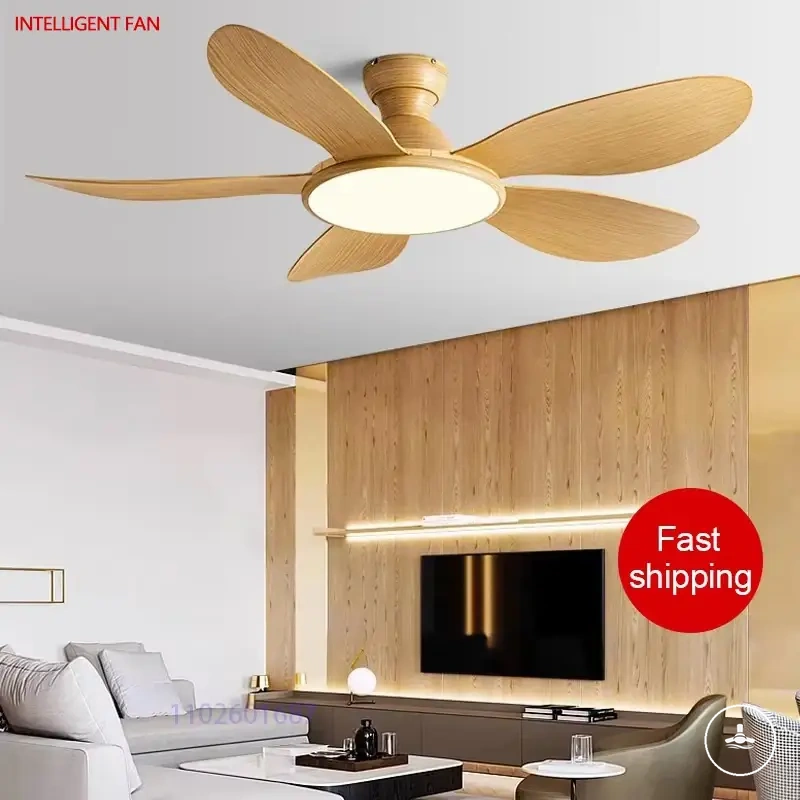
After identifying the appropriate size profile, use these existing product examples for comparison. Verify each model's actual dimensions, mounting requirements and listed features at the destination before buying.
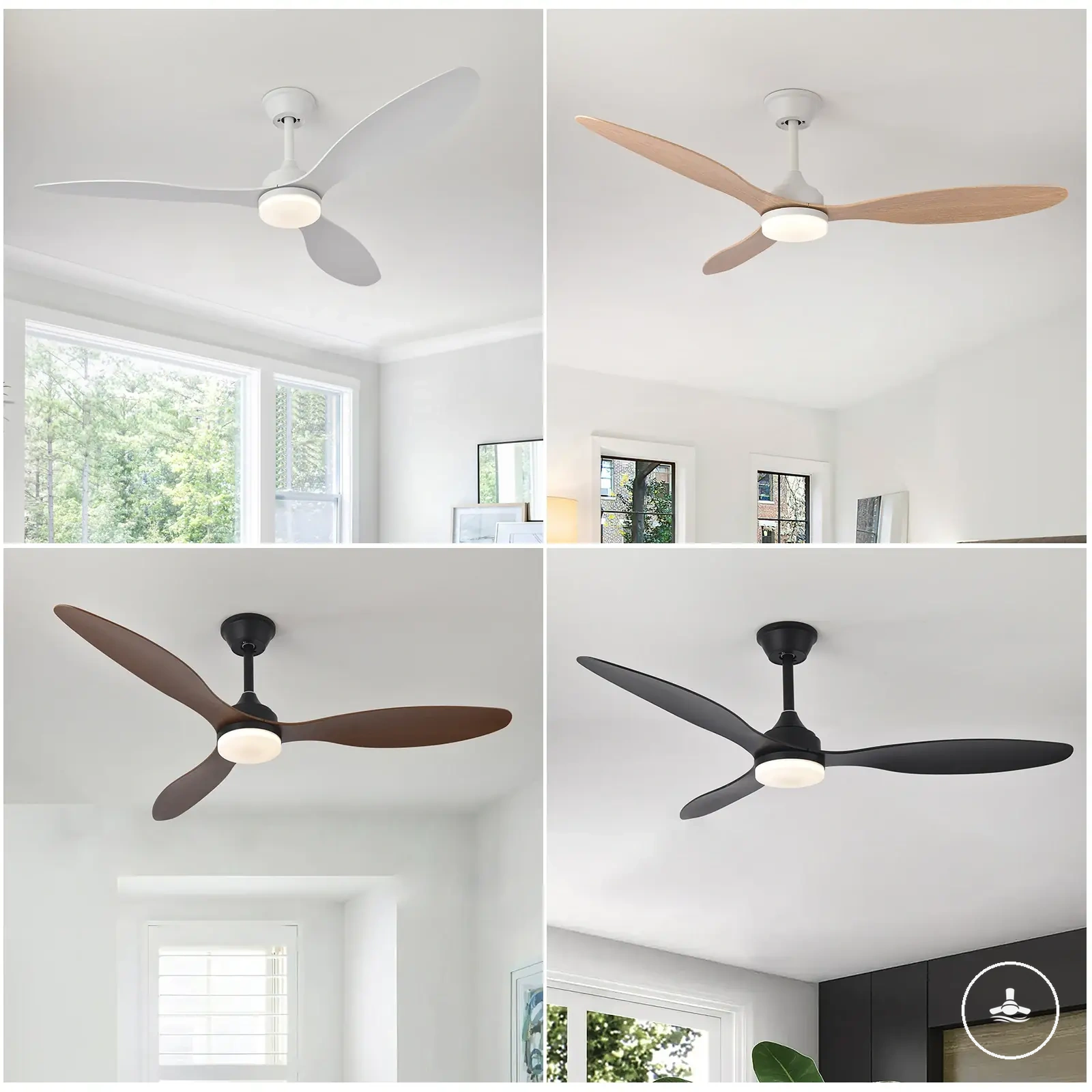
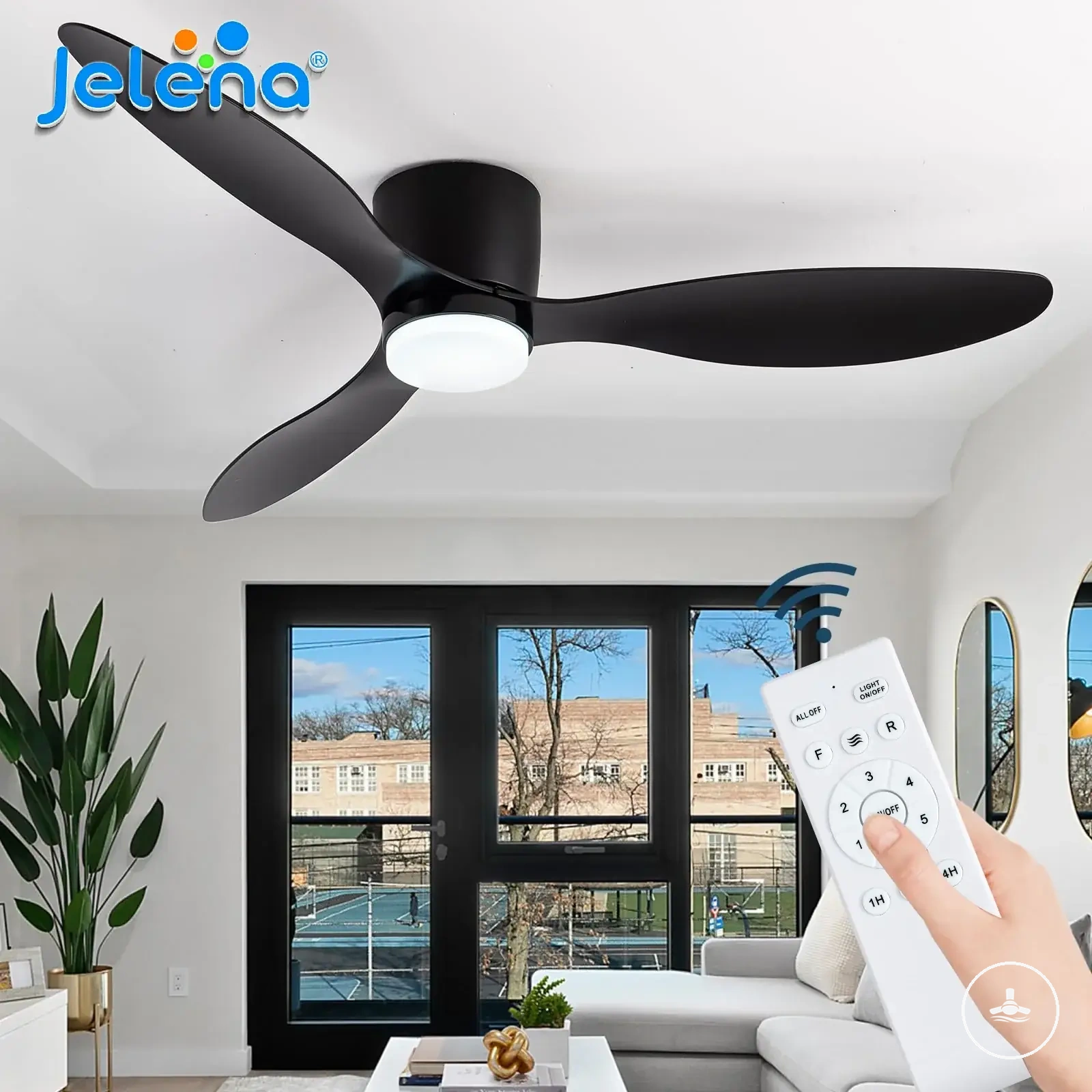
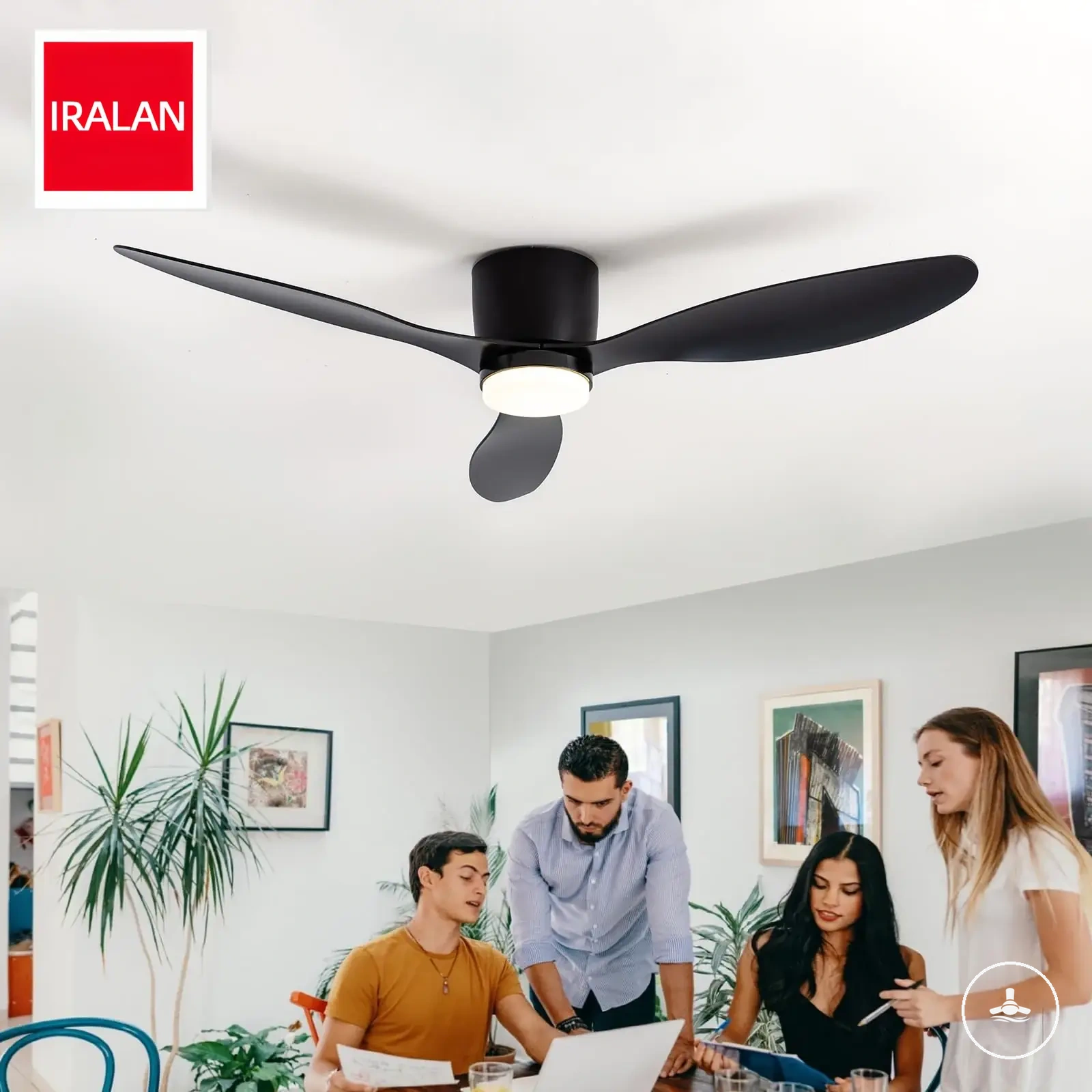
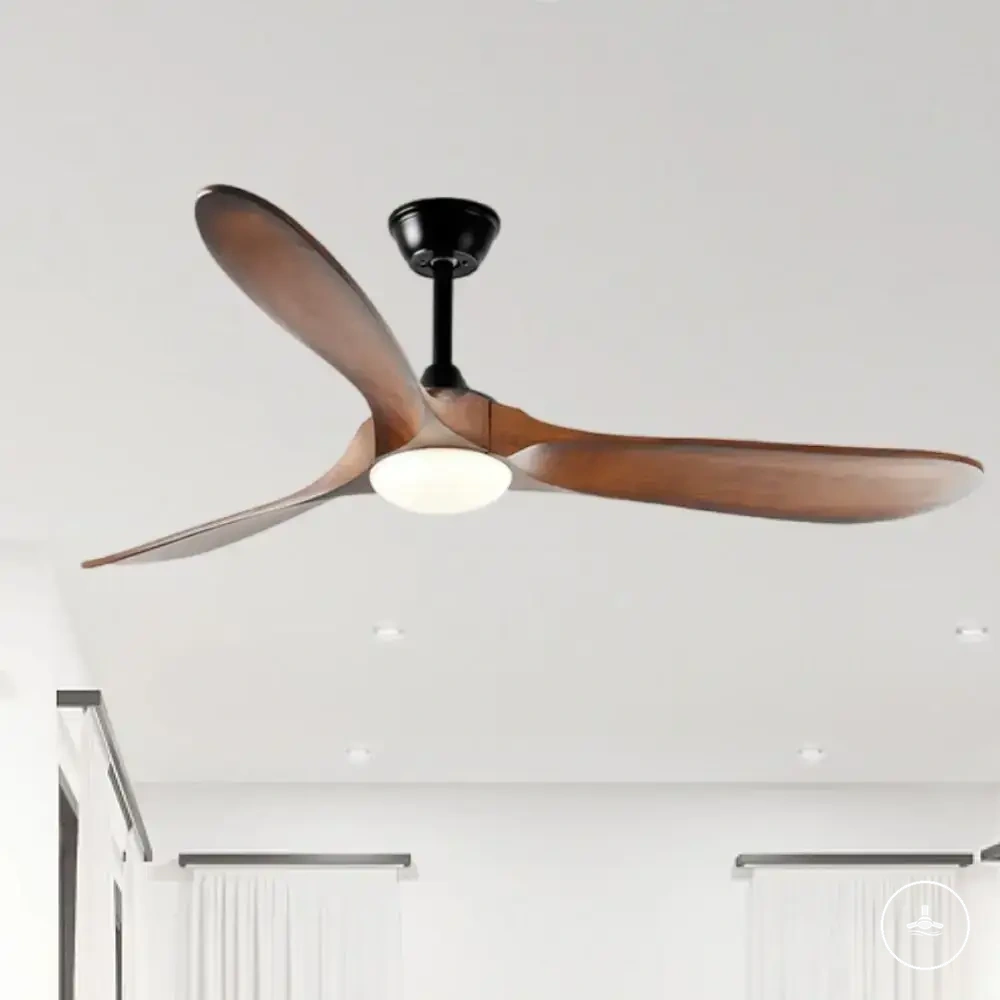
This chart shows the main factors and conditions for selecting between compact and wide blade spans, including room size, clearance, visual proportion, and light kit presence.
When a Smaller Fan Is the Better Fit
A smaller fan is the better fit when the room-size band allows it and a wider sweep would create lateral crowding or poor proportion. Smaller span solves lateral fit, not vertical fit; low ceilings still require the correct mounting profile and light-kit clearance.
- The room or occupied zone belongs in a smaller area band.
- Walls, beams, cabinetry or fixtures constrain the available blade sweep.
- The intended mount serves a compact occupied zone without needing a wider reach.
- The fan remains proportionate to the room after the light kit is included.
Low ceilings and compact rooms can also make a smaller fan feel more proportionate, especially when the light kit adds visible depth below the fan body. The final choice should still depend on the fan model, ceiling height, mounting format, and how the room is used.
When a Larger Fan Improves Room Coverage
A larger fan can be the better size match when the occupied zone is larger and the room provides enough unobstructed space for a wider sweep. Wider span increases physical sweep, not a guaranteed airflow rating.
- The measured room or occupied zone falls in a larger size band.
- The intended mount can sit over the main occupied area rather than at its edge.
- Walls, beams, cabinetry and other fixtures do not constrain the larger sweep.
- Airflow performance is checked separately from physical fan diameter.
A larger blade span should be chosen only when it suits both the room dimensions and the installation conditions. If clearance is limited or the layout includes significant obstructions, a wider fan may not provide the most practical coverage for the space.
Sizing Checks before Comparing Ceiling Fans with Lights
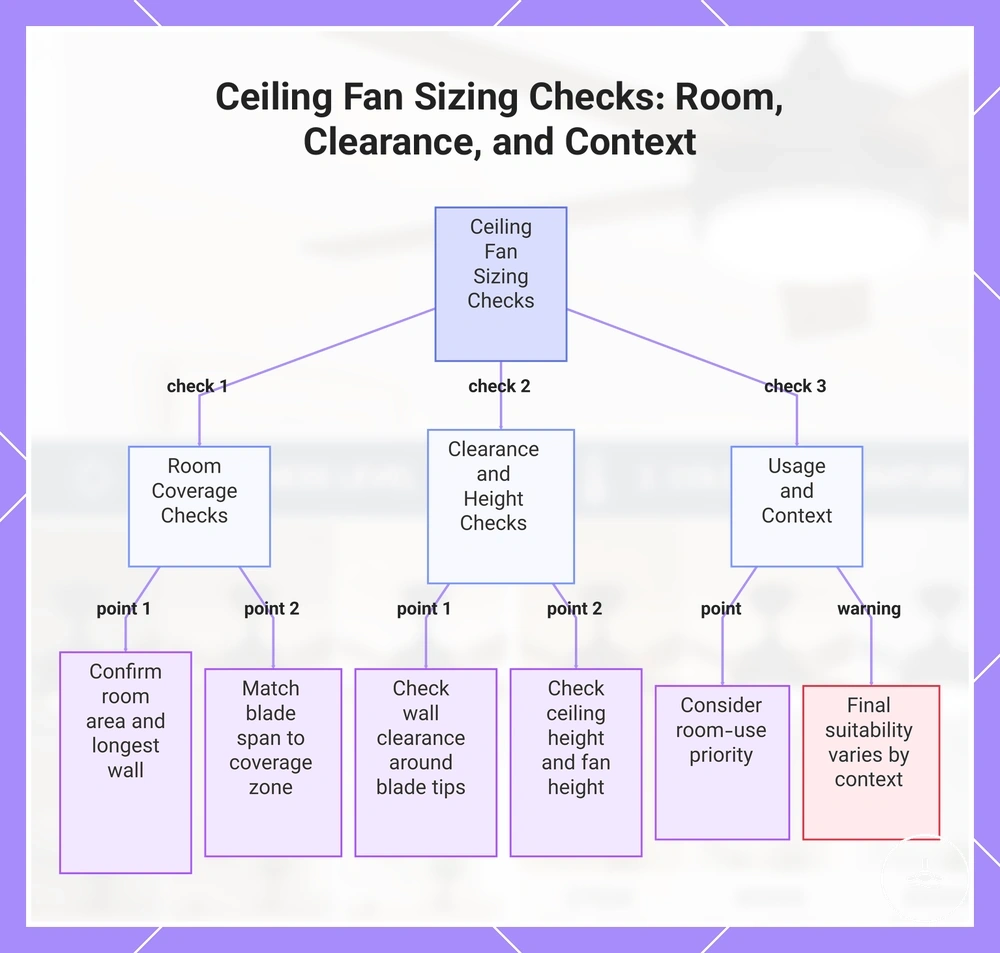
Complete the fit checks before comparing models so product choice starts with room compatibility rather than appearance or a marketplace listing. The sequence is area → occupied zone → placement → clearance → performance.
Confirm the measured room area, longest wall, and likely blade-span range first. Then define the usable coverage zone, because furniture placement, openings, and occupied areas can change which part of the room the fan needs to serve.
These checks make product examples easier to compare without treating them as guaranteed matches. Final suitability can still vary by fan model, room layout, ceiling condition, and installation context.
This chart shows the three main categories of sizing checks—room coverage, clearance and height, and usage context—to filter ceiling fan options before comparing specific models.
Use these existing examples only after the size and clearance filters are defined. Confirm the model-specific dimensions and installation requirements on the linked product page before making a selection.