Low Profile Ceiling Fans with Lights for Low Ceiling Compatibility and Fit Decisions
A low-profile ceiling fan with an integrated light is suitable for a low ceiling only when the complete installed assembly—mount, motor housing, blades and light—still meets the selected model’s required floor and obstruction clearances. For a restricted ceiling, prioritise a flush or hugger mounting configuration with the shortest verified installed drop, then match blade span and airflow, lighting performance and operating noise to the room; if required clearance or structural support cannot be confirmed, the fan should not be treated as compatible.
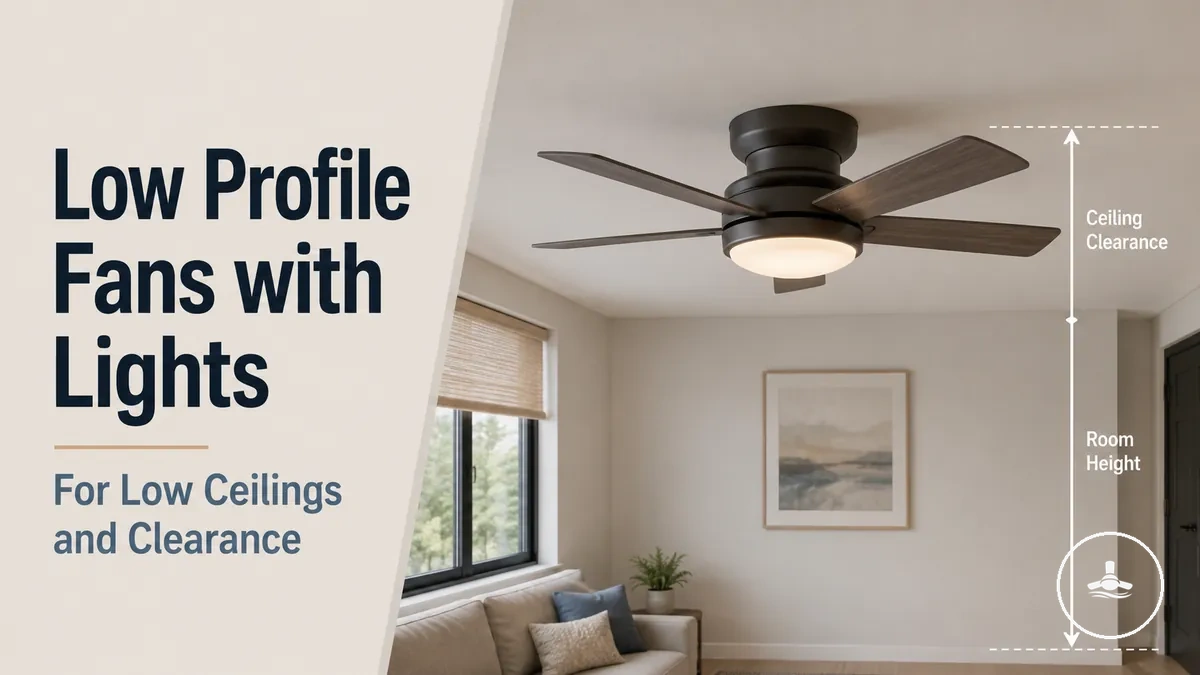
Low-ceiling fit decision assistant
Use the room and product conditions below as a first compatibility screen. The result is based on clearance, mounting support, mounting style and room-performance fit; it does not replace the exact fan’s installation instructions.
Decision boundary: a low-profile label reduces vertical drop; it does not override required blade clearance, structural support or the exact model’s installation limits.
Use the fit check as a screening step, then verify the exact model’s installed dimensions and instructions before purchase or installation. For wider category context, see ceiling fans with lights; the sections below explain the specific clearance, mounting, airflow, lighting and room-fit relationships that determine low-ceiling compatibility.
What Low Profile Ceiling Fans with Lights Are and How They Differ from Standard Ceiling Fans
A low-profile ceiling fan with an integrated light is a ceiling fan whose motor housing and blades sit close to the ceiling, usually without a long downrod. “Hugger”, “flush mount” and “low profile” are overlapping product labels rather than guaranteed dimension standards, so the reliable comparison is the installed ceiling-to-blade and ceiling-to-light drop stated for the specific model. Integrated lighting combines the fan and room light in one fixture, but the light module can still add to the lowest point of the assembly.
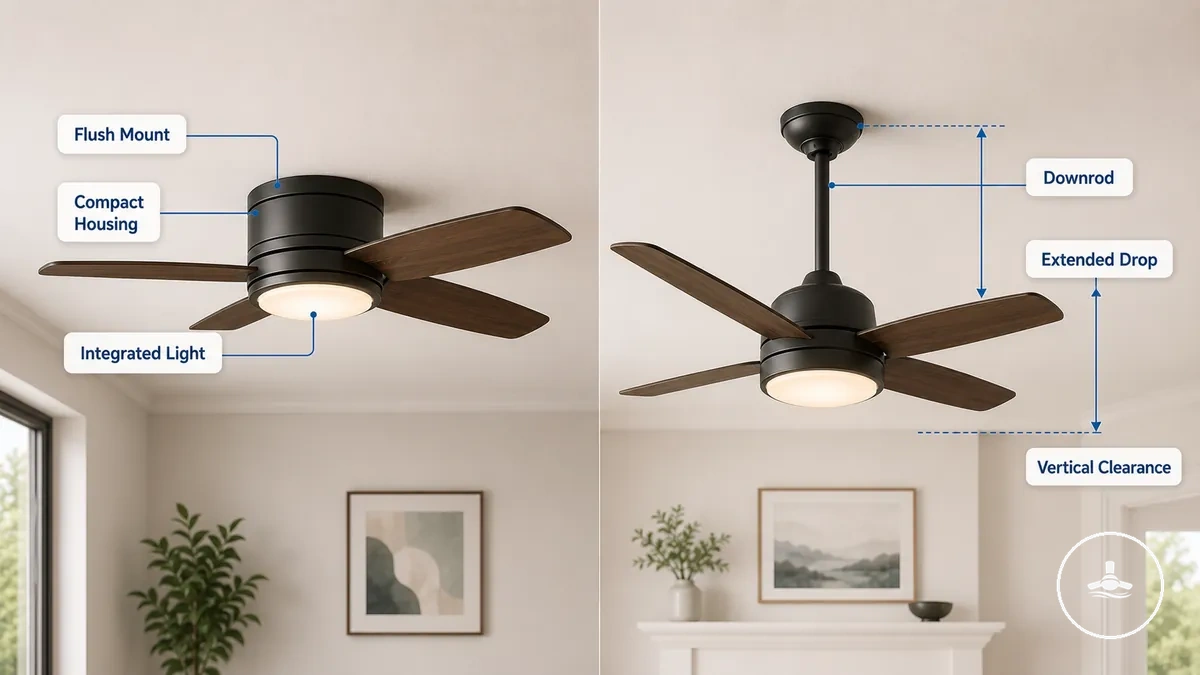
The structural difference from a standard ceiling fan is primarily the mounting geometry. The comparison below keeps the relevant attributes aligned.
| Attribute | Low-profile / flush / hugger | Standard downrod fan |
|---|---|---|
| Mounting position | Motor housing sits close to the ceiling, with little or no downrod. | Fan is suspended below the ceiling by a downrod. |
| Vertical drop | Usually lower, which preserves more usable height. | Greater because the downrod adds hanging distance. |
| Space above the blades | Reduced; airflow performance depends on the fan’s near-ceiling design. | More separation from the ceiling when the downrod length is appropriate. |
| Best-fit condition | Low-ceiling rooms where the final blade and light positions still meet all required clearances. | Rooms with enough ceiling height for the added drop, or installations that need a downrod. |
| Integrated light | Common, but total light-module depth must be included in the fit check. | Also available; lighting is not exclusive to low-profile designs. |
Low profile describes reduced mounting depth, not guaranteed suitability. A specific fan can still be too deep, too wide, too noisy or too weak for the room even when its product name says “flush” or “hugger”.
Low Ceiling Clearance Requirements and Minimum Safe Drop Distance for Ceiling Fan and Light Installation
Clearance is the decisive safety constraint. The values that matter are the completed ceiling-to-blade drop, the lowest point of the light, blade position relative to people and fixed obstructions, and whether the mounting point can support the fan as required. A compact housing reduces the fan’s drop from the ceiling, but it does not create an exemption from the model-specific or locally applicable installation clearances.
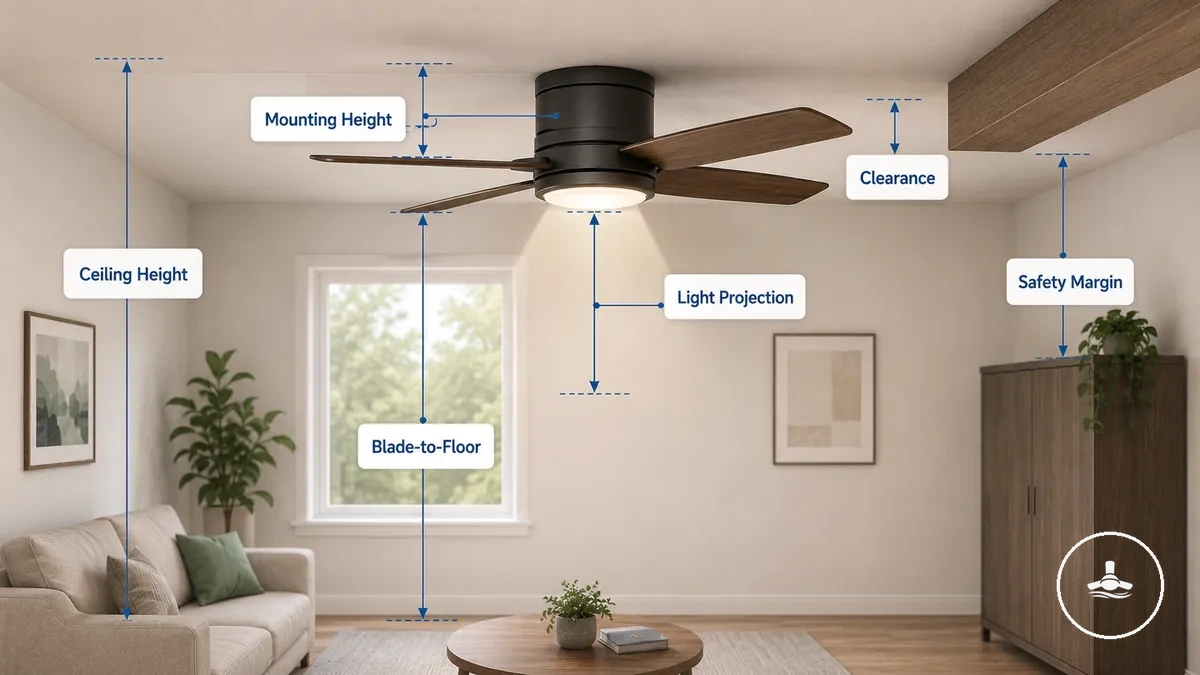
What “minimum safe drop” means in practice
There is no reliable product-independent “minimum fan drop” to assume for every room. The practical test is whether the final blade height and lowest light position meet the selected fan’s required clearances and leave moving blades clear of walls, beams, doors, tall furniture and normal occupant space.
Use this sequence before treating a fan as compatible:
- Measure the room: record the finished floor-to-ceiling height at the intended mounting point and note beams, slopes, doors and other nearby obstructions.
- Read the model dimensions: find the installed ceiling-to-blade drop and the total ceiling-to-lowest-light drop for the exact mounting configuration.
- Calculate the final positions: blade height equals ceiling height minus ceiling-to-blade drop; lowest fixture height equals ceiling height minus the complete fixture drop.
- Compare with the requirements: check those final positions against the fan’s installation instructions and any applicable local installation requirements, including structural support and obstruction clearances.
A fan that passes only the visual “looks compact” test is not yet verified. Use installed dimensions, not housing height or marketing terms, for the compatibility decision.
Flush Mount vs Hugger vs Downrod Ceiling Fans and Their Impact on Low Ceiling Compatibility
Mounting style changes the distance between the ceiling and the moving blades. A flush-mount or low-profile configuration minimises hanging distance; “hugger” is commonly used for the same near-ceiling design idea, although manufacturers do not use these labels identically. A downrod deliberately lowers the fan, which can be useful on higher or sloped ceilings but consumes more vertical clearance.
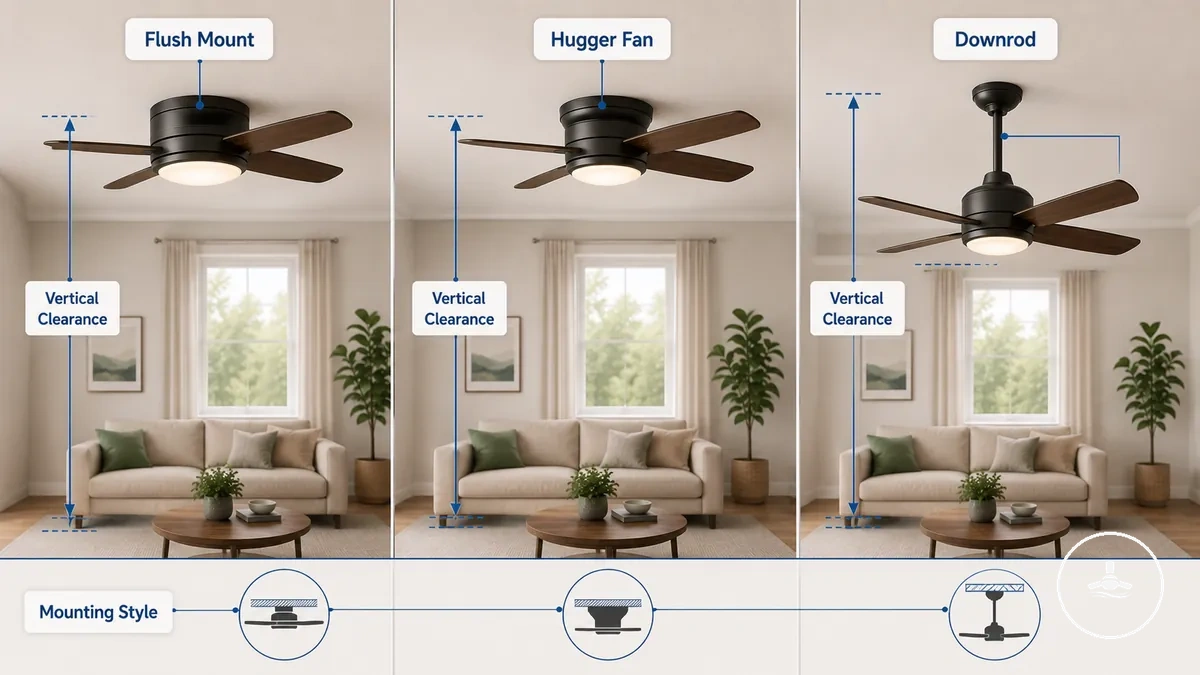
Compare mounting systems by installed geometry and fit condition rather than by label alone.
| Mount type | Clearance effect | Best-fit condition | Important limitation |
|---|---|---|---|
| Flush mount / low profile | Usually produces the smallest ceiling-to-blade drop. | Restricted-height rooms where every centimetre of usable clearance matters. | The exact housing, blade and light depths still have to pass the required clearance checks. |
| Hugger | Places the fan close to the ceiling and is often another label for a low-profile design. | Low-ceiling applications when the model is designed to operate near the ceiling. | The term is not a universal dimension standard; compare the installed drop. |
| Downrod | Adds hanging distance below the ceiling. | Higher ceilings, some sloped-ceiling installations, or models that require a downrod. | On a low ceiling, added drop can cause the blade or light position to fail the clearance requirement. |
The selection rule is simple: use the mounting configuration that satisfies the fan’s installation requirements while preserving the required usable clearance. Do not choose a downrod merely for appearance when vertical space is already constrained.
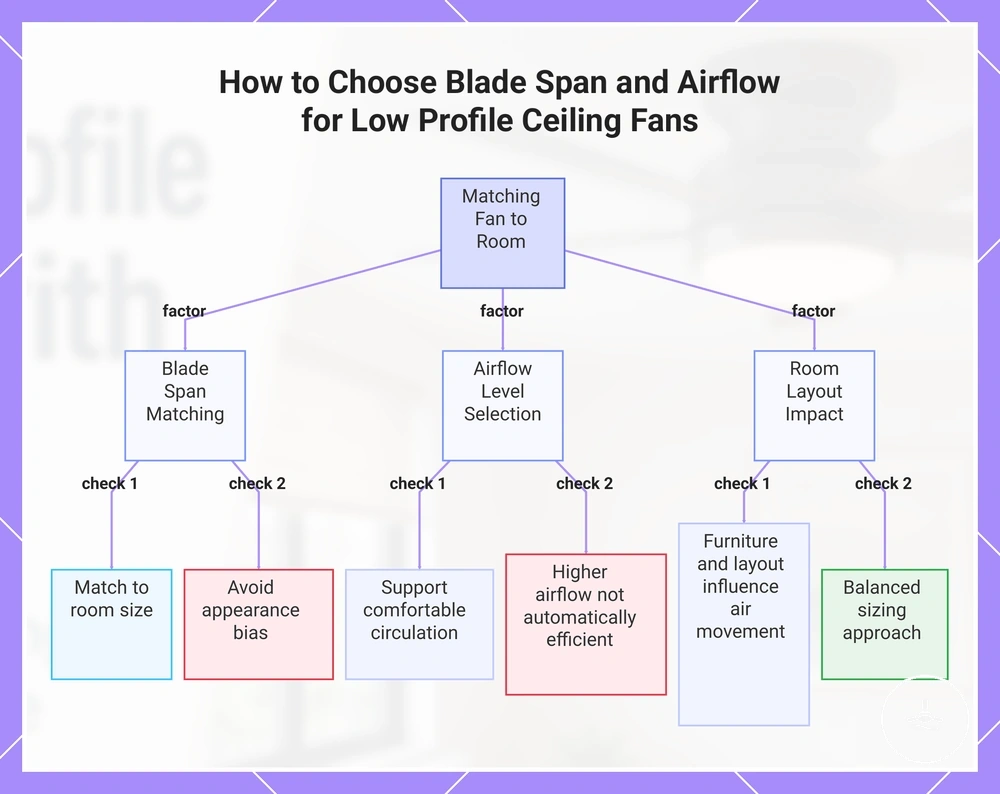
Choosing Blade Span and Airflow Levels for Low Profile Ceiling Fan Compatibility in Small and Medium Rooms
Blade span and airflow should be matched to the room together. A larger blade span does not by itself guarantee more airflow; blade geometry, pitch, rotational speed, motor control and the fan’s installed clearance also affect performance. When an airflow rating is provided, compare that rating and the usable speed range alongside blade span rather than treating diameter as the only sizing value.
Use the room condition to decide which attribute needs more weight:
| Room condition | Blade-span decision | Airflow decision | What to verify |
|---|---|---|---|
| Small, compact room | Use a span that fits the circulation area without crowding walls or fixed obstacles. | Prioritise controllable airflow, including a useful lower speed for comfort. | Blade-tip clearance, furniture layout and whether airflow feels excessive at normal use speeds. |
| Medium, relatively open room | Compare a broader span only when the room and obstruction clearances allow it. | Compare the model’s stated airflow performance where available, not size alone. | Whether the fan can circulate the occupied area without sacrificing required vertical clearance. |
| Irregular or obstructed room | Placement can matter more than simply increasing span. | Choose airflow for the occupied zone and available circulation path. | Beams, tall furniture, door swings, alcoves and other features that interrupt airflow or blade clearance. |
For a low ceiling, the best-size fan is therefore the one that fits the room envelope and provides adequate controllable airflow, not automatically the largest model that can physically fit.
The existing sizing chart below visualises the same relationship between room size, layout, blade span and airflow.
Lighting Options and Brightness Constraints in Low Profile Ceiling Fans with Lights
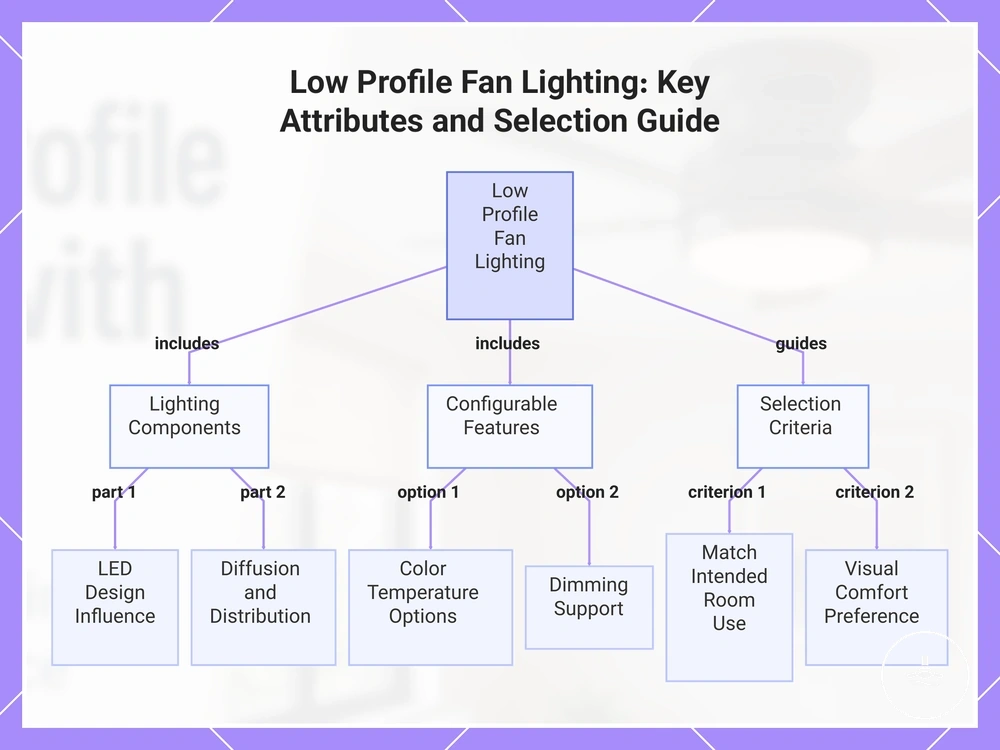
An integrated light shares the same ceiling fixture as the fan, so lighting performance and physical depth must be checked together. For brightness, lumens are the useful light-output value when the specification is available; wattage alone is not a direct measure of perceived brightness for LED systems. The diffuser, room surfaces and mounting height influence how evenly that light is distributed.
These attributes are the most useful comparison points for a low-profile fan light:
| Lighting attribute | Value or state to look for | Practical implication |
|---|---|---|
| Light output | Lumens, when stated for the integrated light. | Lets you compare usable light output more directly than LED wattage alone. |
| Colour temperature | Kelvin (K). Common LED labels are approximately warm white at 2700–3000 K, neutral around 3500–4500 K, and daylight around 5000–6500 K; manufacturer labels vary. | Warmer light tends to feel softer; higher-K light appears cooler and can suit task-oriented use. |
| Dimming | Dimmable or non-dimmable, plus the supported remote or wall-control method. | Useful when the same room needs both general illumination and lower evening light. |
| Diffuser and glare | Frosted/covered diffuser versus more exposed light source. | Affects light spread, visible hotspots and comfort when the fixture is close overhead. |
| Light-module depth | Ceiling-to-lowest-light dimension for the installed configuration. | Directly affects usable headroom and must be included in the clearance calculation. |
| Serviceability | Integrated LED module or replaceable lamp, according to the exact model. | Determines what can be replaced if the light source fails; do not assume every integrated LED is user-replaceable. |
Choose the light by the room’s task, atmosphere and headroom. A model with suitable airflow can still be a poor fit if the light is too dim, too glaring, not dimmable when needed, or projects lower than the room can accommodate.
The lighting chart below groups brightness, diffusion, colour temperature and control as one selection system.
How Low Profile Ceiling Fans with Lights Perform in Bedrooms and Compact Living Spaces
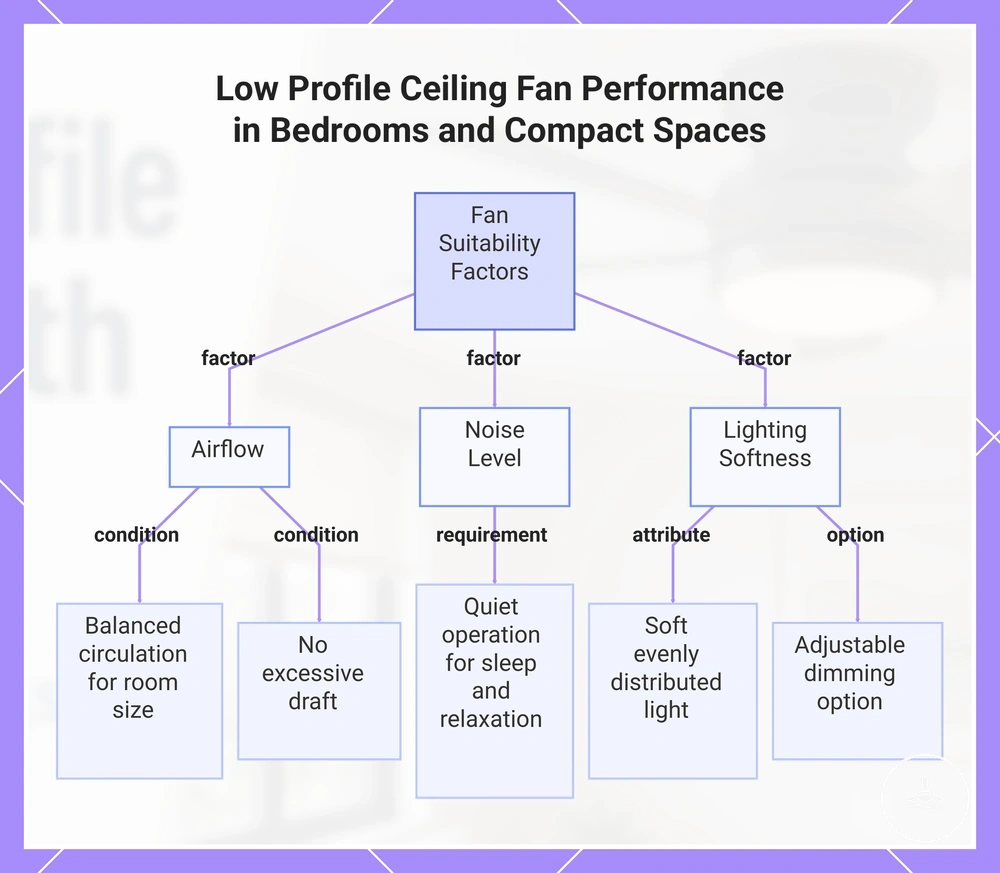
In bedrooms and compact living spaces, fit depends on more than physical clearance. Low-speed airflow, operating noise and lighting control determine whether the fan supports sleep, reading, relaxation or multi-purpose use. Motor type alone does not guarantee quiet operation, so the practical target is stable low-speed operation without distracting hum, vibration or rattling in the installed position.
Match the room activity to the performance attribute you need to verify:
| Room use | Attribute to prioritise | Good-fit signal |
|---|---|---|
| Sleep | Low-speed noise and vibration | The fan can run at a comfortable low speed without distracting mechanical or aerodynamic noise for the intended sleeper. |
| Reading or evening relaxation | Dimming, colour temperature and glare control | The integrated light can be reduced or adjusted to the preferred visual comfort level when those controls are needed. |
| Compact living area | Airflow range and blade fit | Air movement covers the occupied area without the span crowding nearby obstructions or the lowest useful speed feeling excessive. |
| Multi-use room | Speed and light controls | The fan provides practical control over both circulation and lighting for different activities. |
A low-profile fan is therefore a good bedroom or compact-room choice when the installed clearance passes first and the controllable airflow, noise and light characteristics then match how the room is used.
The performance chart below reinforces the combined role of airflow, noise and lighting softness.
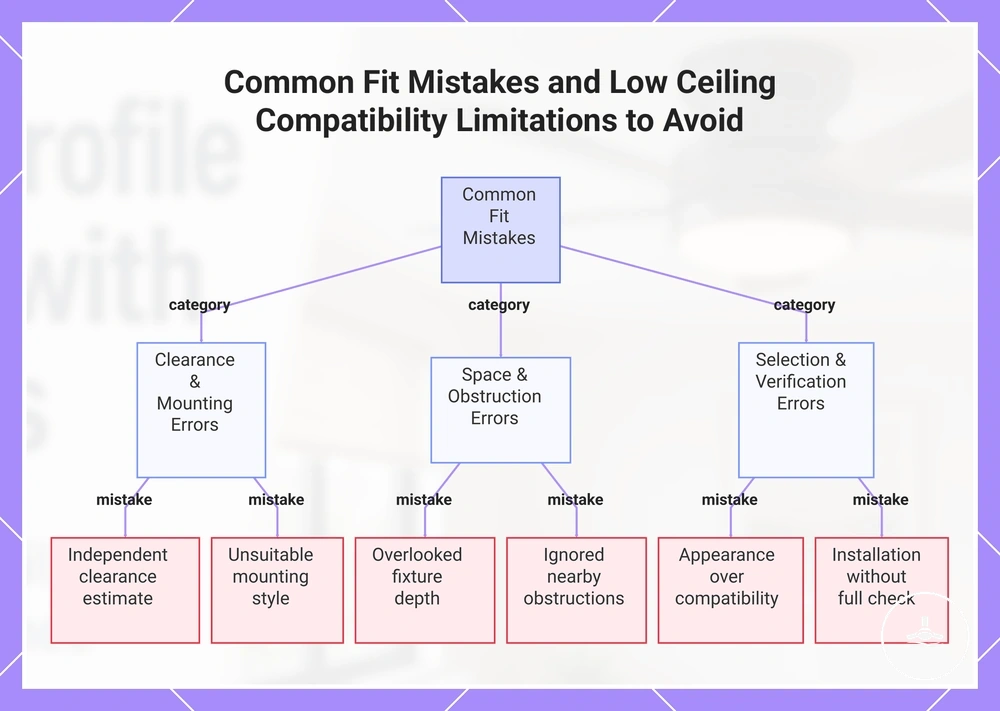
Common Fit Mistakes and Low Ceiling Compatibility Limitations to Avoid
Most low-ceiling fit mistakes come from checking one specification in isolation. Clearance, mount type, blade radius, fixture depth, room layout and structural support form one compatibility system; a failure in any critical part can make an otherwise appealing fan a poor or unsafe fit.
| Common mistake | Why it matters | Better check |
|---|---|---|
| Using housing height instead of installed drop | The blades or light can finish lower than expected. | Verify ceiling-to-blade drop and ceiling-to-lowest-light drop for the exact mount. |
| Assuming “flush” or “hugger” guarantees compatibility | Labels do not define a universal installed dimension. | Compare the exact model dimensions with the room’s required clearances. |
| Choosing blade span mainly by appearance | Blade tips may crowd obstructions, while span alone does not define airflow. | Match span, room layout and stated airflow performance where available. |
| Ignoring the integrated light depth | The light may become the lowest point and reduce usable headroom. | Include the complete light assembly in the vertical-fit calculation. |
| Ignoring beams, doors or tall furniture | Fixed objects can interfere with blade clearance or circulation. | Check the full blade sweep and the occupied space around and below the fan. |
| Assuming the mounting point is suitable | A ceiling location that works for a light fitting is not automatically verified for a rotating fan. | Confirm the mounting/support requirements for the selected model before installation. |
| Treating marketplace details as permanently current | Live price, stock, seller terms and variant availability can change. | Re-check the linked listing and the exact variant’s specifications before purchase. |
The existing fit-mistake chart below groups the same failure points by their effect on safety, airflow and everyday usability.
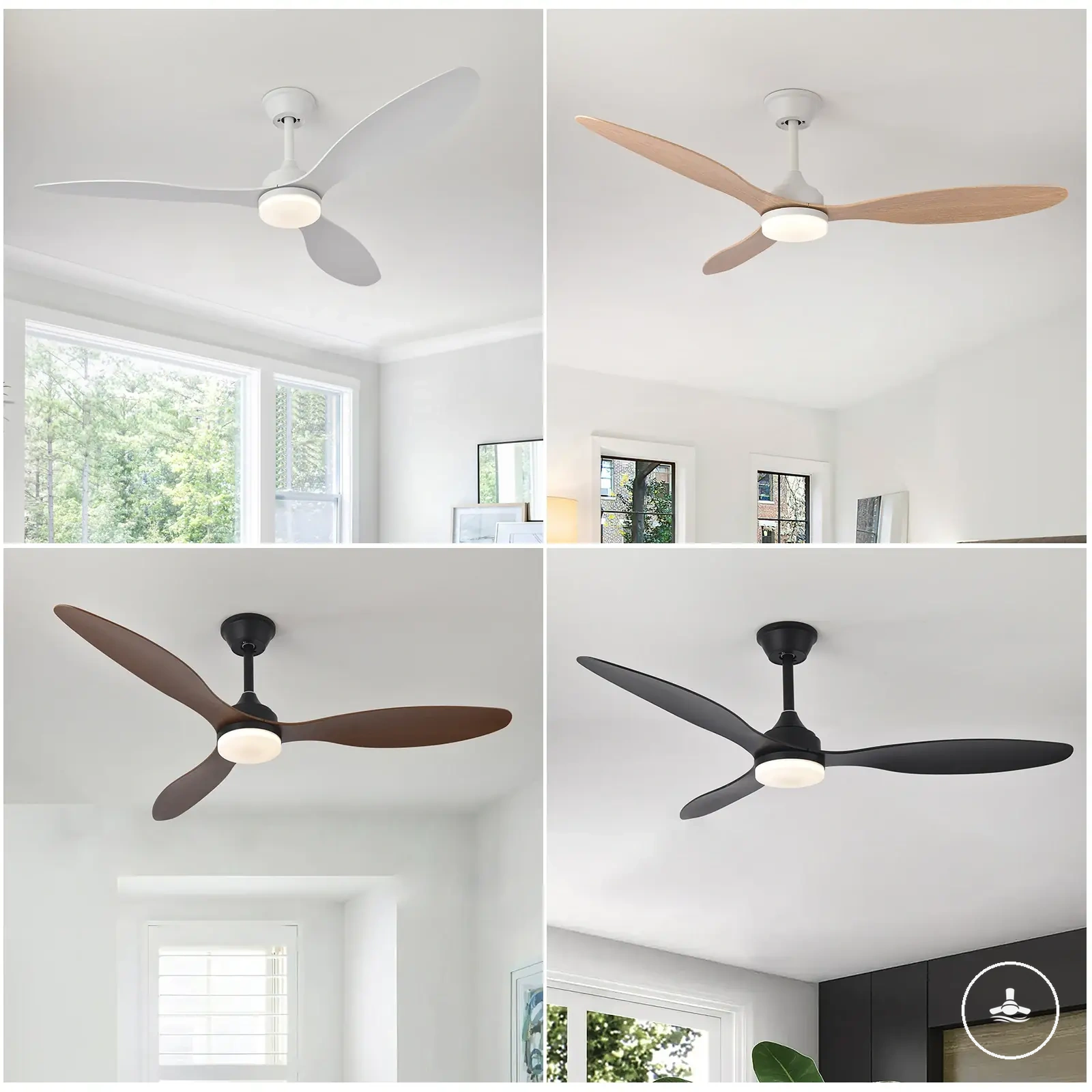
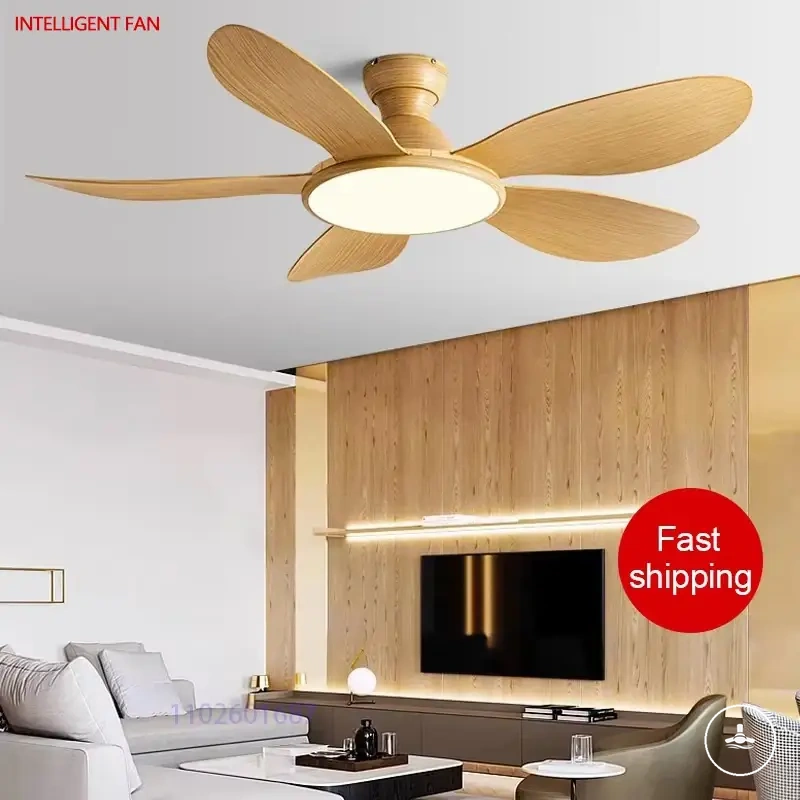
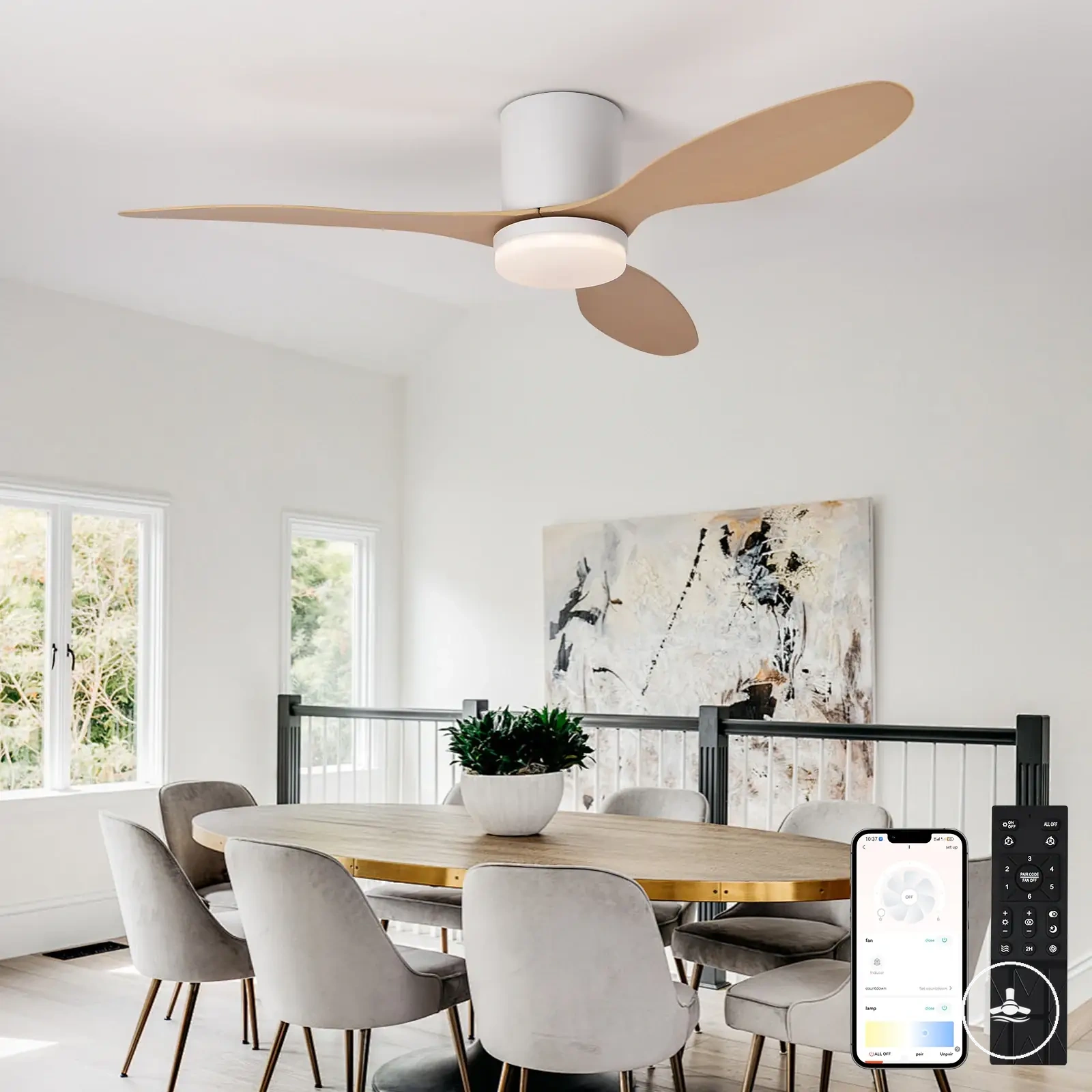
After the room passes the clearance and mounting checks, these existing product examples can be used for comparison. Treat them as discovery links: verify the exact variant’s installed dimensions, mounting method, blade span, airflow information and light specifications on the destination before deciding; live marketplace price, stock and seller conditions can change.
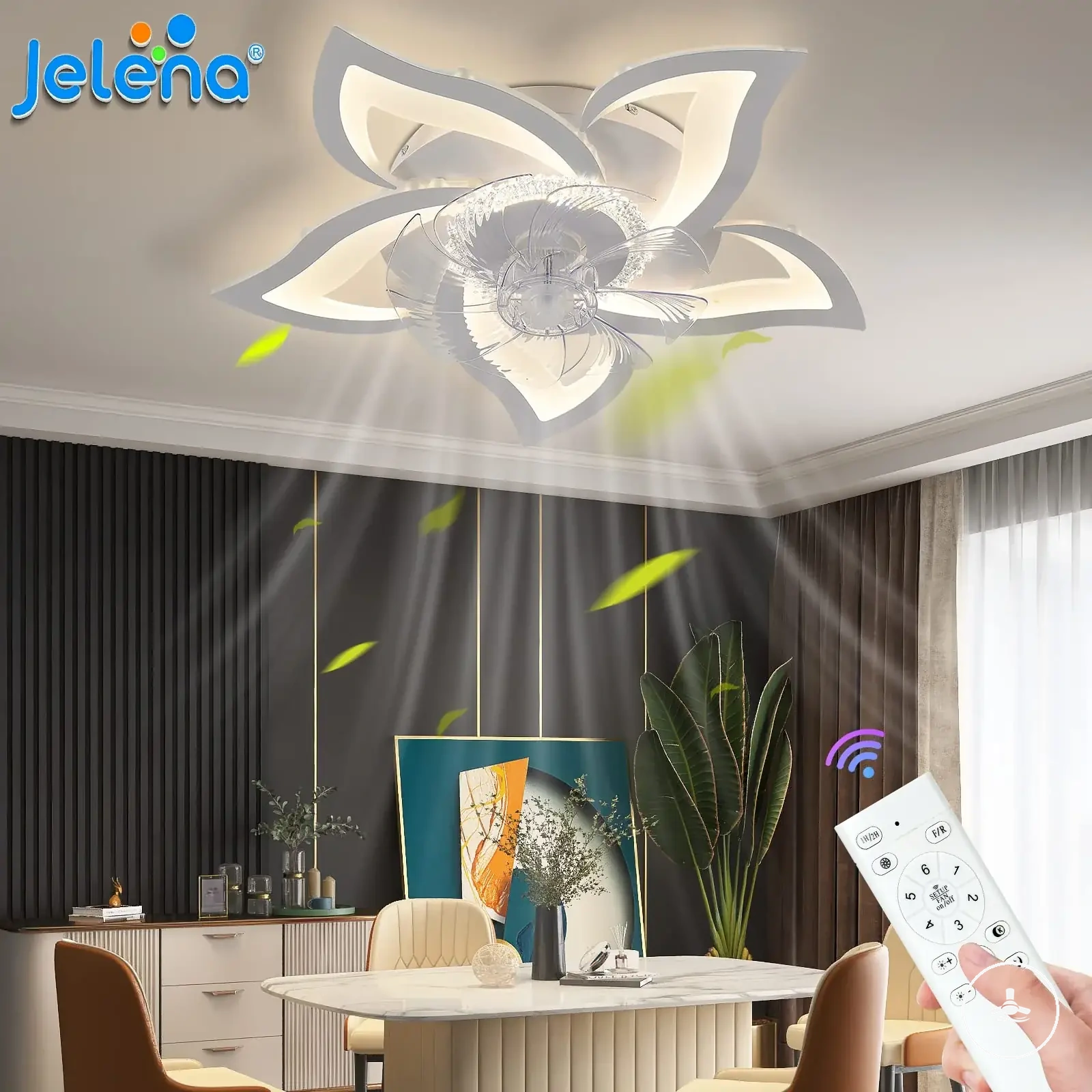
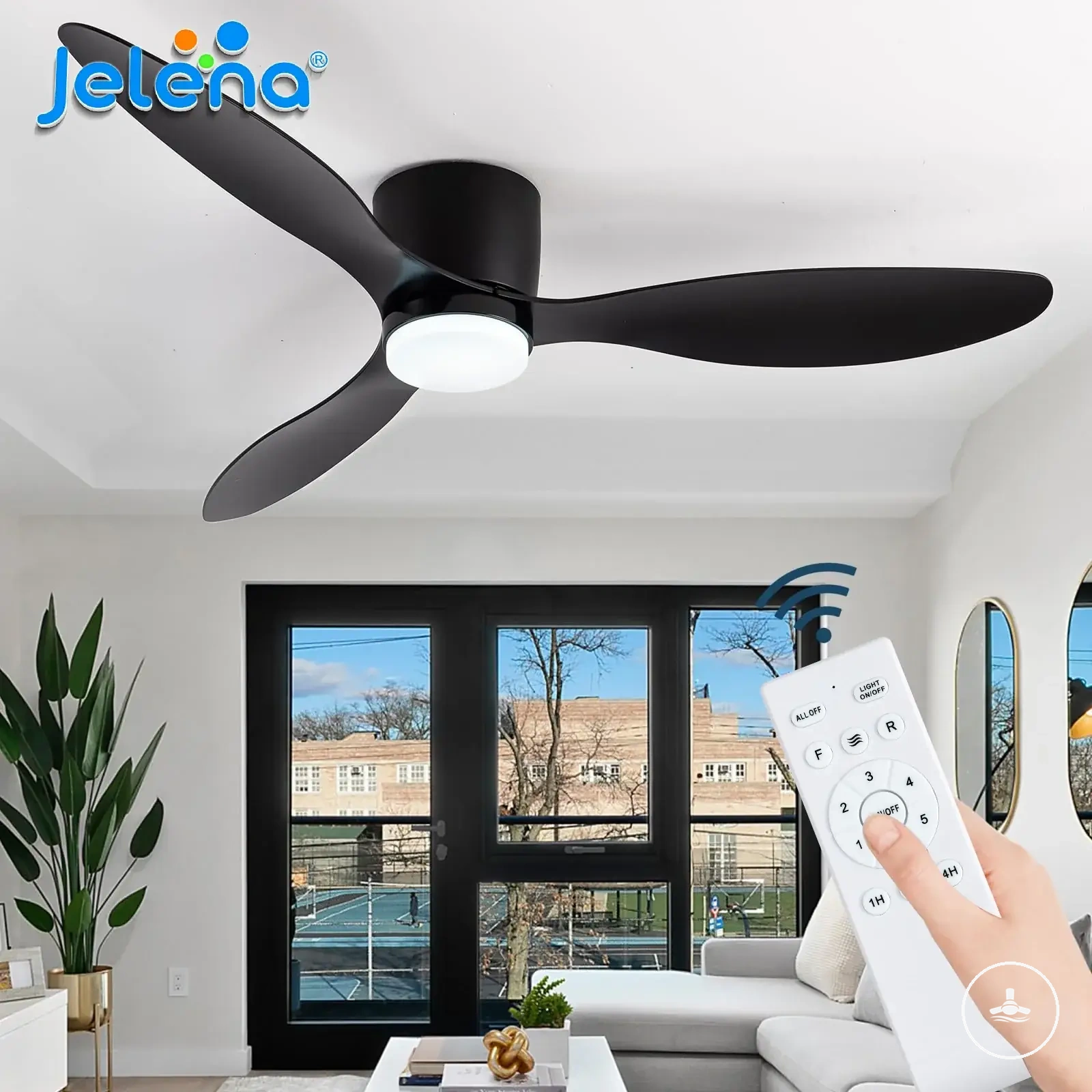
When a Low Profile Ceiling Fan with Light Is Not Suitable for a Room
A low-profile ceiling fan with light is not suitable for a particular installation when a critical requirement cannot be met. Reduced drop solves only one compatibility problem; it does not compensate for inadequate blade clearance, unsuitable structural support, obstructed blade sweep, insufficient room airflow, or a light/noise profile that does not meet the room’s intended use.
| Room or installation condition | Decision |
|---|---|
| The final blade or light position cannot meet the selected model’s required floor or obstruction clearances. | Do not treat that model/configuration as suitable. Choose a shallower compatible fan, a different location, or a non-ceiling-fan solution. |
| The intended mounting point cannot provide the support required by the fan’s installation instructions. | Use another verified mounting location or another cooling approach rather than relying on the existing point. |
| Beams, slopes, doors or permanent fixtures conflict with the blade sweep or approved mounting geometry. | Reposition the fan or choose a configuration designed for the actual ceiling geometry. |
| The room needs more circulation than the selected fan can provide at comfortable speeds. | Select a more suitable fan configuration or use additional/non-ceiling air movement. |
| The integrated light cannot provide the required brightness, colour, dimming or glare control and supplementary lighting is not practical. | Choose a different fan-light combination or separate the fan and lighting functions. |
| Even the low-profile assembly intrudes into normal occupant space once installed. | A wall, pedestal or other non-ceiling fan paired with separate lighting may be the more appropriate arrangement. |
The final compatibility question is therefore not “Is it a low-profile fan?” but “Does this exact installed configuration satisfy the room’s clearance, support, airflow and lighting conditions?” If the answer to a critical condition is no, the correct decision is to change the model, mounting plan or type of cooling rather than force the installation.
The incompatibility chart below summarises the room conditions that should stop or redirect the installation decision.